⛏ 1. Extracting and processing raw materials
Getting the materials out of the Earth or from living things, then processing them so they can be used. Think of drilling for crude oil or cutting down trees.
Sign up to access the complete lesson and track your progress!
Unlock This Course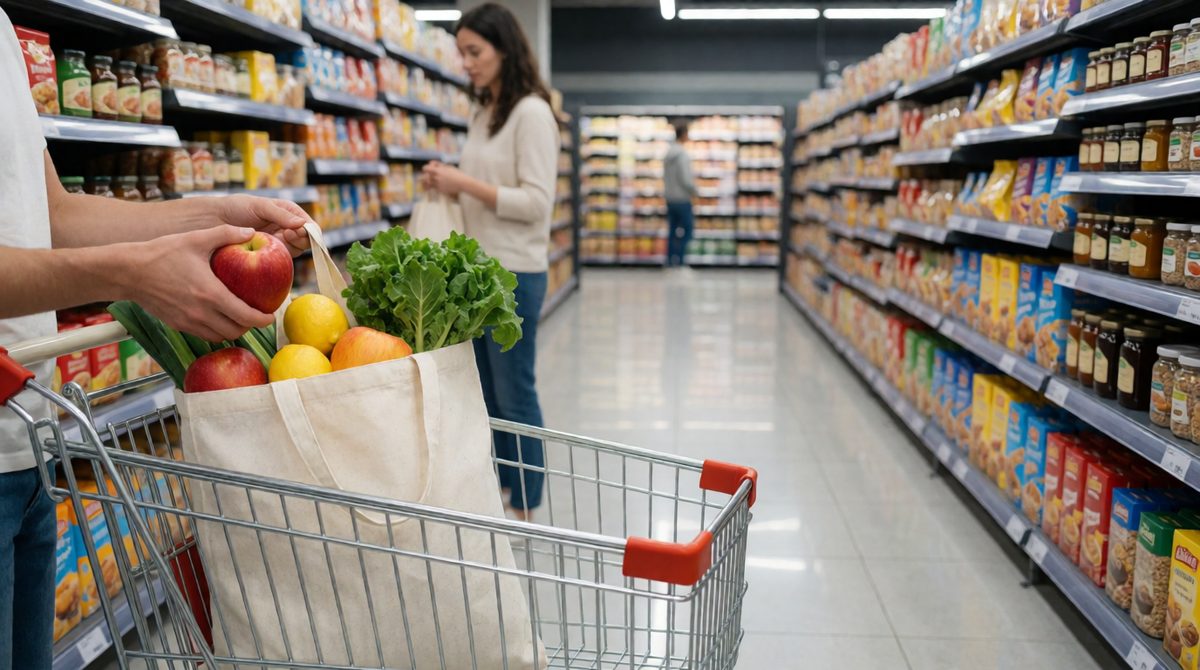
Every product on these shelves has a life story, and an LCA tracks its harm from raw materials to the bin
Every product has a story, from the ground it came from to the bin it ends up in. A life cycle assessment (LCA) looks at that whole story and asks one question: what harm does this product do to the environment?
Remember, a life cycle means all the stages in the life of a product. An LCA puts facts and numbers on the impact of each stage. Companies, governments and scientists use LCAs to help them choose between products.
Key terms:
An LCA looks at the four stages below. Transport and distribution are counted at every stage, not just once.
Getting the materials out of the Earth or from living things, then processing them so they can be used. Think of drilling for crude oil or cutting down trees.
Making the product in a factory and wrapping it up ready to sell.
What happens while someone uses the product during its lifetime. Some products need energy or cleaning when used. Some can be used again and again.
What happens at the end of its useful life. It may go to landfill, be burned or be recycled. Transport to get it there counts too.
At every stage, an LCA asks about:
The use of water, resources and energy sources, and the production of some wastes, can be fairly easily quantified. That means we can measure them and give a number, such as the litres of water used or the kilograms of waste made.
The effect of pollution is much harder. How do you put a number on the damage done by a pollutant? Is a bit of harm to a river worse than a bit of harm to the air? Giving numbers to pollutant effects is less straightforward. It needs value judgements, which means people have to decide how important each effect is. Different people may decide differently.
Because of this, an LCA is not a purely objective process. The easy measurements are facts. The pollution scores partly depend on opinion.
Do not say that an LCA gives one perfect, fixed answer. Say that some values (water, energy, resources) are easy to measure, but pollutant effects need value judgements, so the result is not purely objective.
A full LCA takes a lot of work. So selective or abbreviated LCAs can be made, which only look at some stages or some effects. These can be misused to reach a conclusion that someone decided in advance.
For example, a company might only include the stages where its product looks good. It can then use the result in an advert to claim that the product is better for the environment. Missing out a stage can completely change the answer.
When you read an environmental claim in an advert, ask which stages were included.
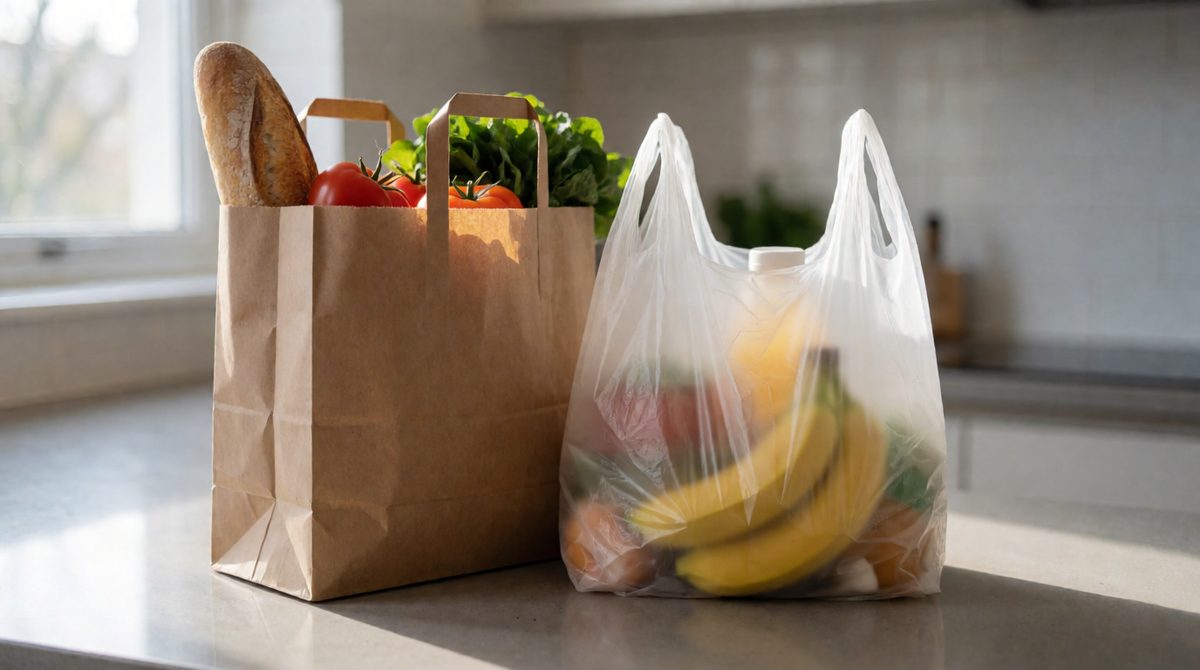
Paper or plastic? A paper bag comes from trees, a plastic one from crude oil, and an LCA compares every stage
You should be able to carry out a simple comparative LCA for shopping bags made from plastic and paper. Go through the four stages and compare the same things for each bag.
| Stage | Plastic bag (poly(ethene)) | Paper bag |
|---|---|---|
| Raw materials | Made from crude oil, a finite resource that is drilled and processed. | Made from trees, which are cut down and processed. Trees can be replanted. |
| Manufacturing | Made from crude oil by chemical processes that use energy. | Making paper uses energy and large amounts of water. |
| Use | Strong. Can be used many times. | Weaker and can tear, especially when wet, so often used fewer times. |
| Disposal | Does not rot away. It can be recycled, burned or sent to landfill. | Rots away naturally and can be recycled. |
Neither bag is a clear winner at every stage. Plastic bags use a finite resource and last a long time as waste. Paper bags use more water to make and tend to be used fewer times. How many times a bag is reused matters a lot.
A shop wants to know which bag is better. A student makes a simple LCA table. They go through all four stages and write the same four things for each bag: water, resources, energy and waste. They notice that the paper bag uses more water to make but rots away, while the plastic bag uses crude oil but can be used many times. They conclude that the answer depends on how many times each bag is reused and how it is disposed of, and they say which stages they compared.
Do not compare only one stage, such as disposal, and then decide. A fair comparison covers all four stages for both bags.
A supermarket uses an LCA to compare plastic and paper bags. (a) Name the four stages of an LCA. (b) Give one reason why the LCA is not purely objective. (c) The supermarket only includes the disposal stage in an advert. Suggest why this is a problem.
(a) Extracting and processing raw materials; manufacturing and packaging; use and operation during its lifetime; disposal at the end of its useful life (including transport and distribution at each stage).
(b) Giving numbers to the effects of pollutants is not straightforward and needs value judgements, which depend on opinion.
(c) A selective or abbreviated LCA can be misused to reach a conclusion decided in advance. Missing out the other stages could make the bag look better than it really is.
In a comparison, use the stage names as headings and write something for both products at each stage.