Using Materials » Corrosion and Its Prevention
What you'll learn this session
Study time: 30 minutes
AQA spec: 4.10.3.1
- What corrosion is and why iron rusts
- How to show that both air and water are needed for rusting
- How barriers stop corrosion: greasing, painting and electroplating
- How sacrificial protection works, using zinc and iron
🔒 Unlock Full Course Content
Sign up to access the complete lesson and track your progress!
Unlock This CourseWhat is corrosion?
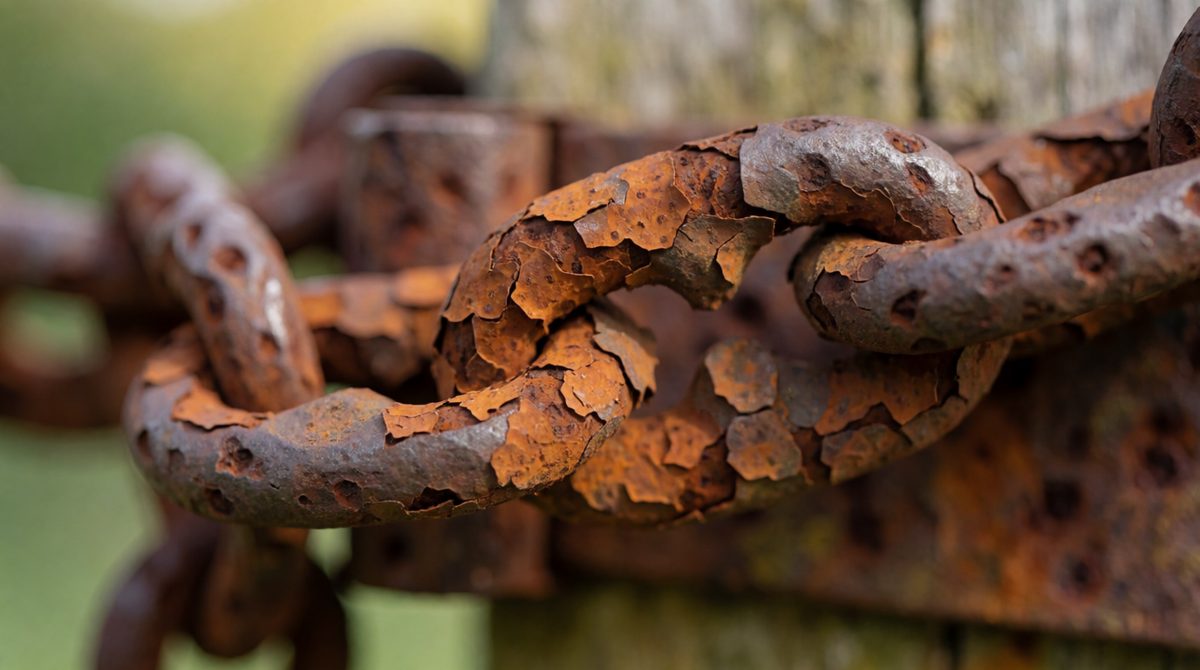
That orange crust is rust: iron slowly oxidised by oxygen and water, eating away the metal
Metals do not last for ever. Over time, many of them are slowly eaten away by chemical reactions with the things around them, such as air and water. Bridges, cars, garden gates and ships all suffer from this.
Key terms:
- Corrosion: the destruction of materials by chemical reactions with substances in the environment.
- Rusting: the corrosion of iron. It is the best-known example of corrosion.
- Rust: the orange-brown, flaky substance that forms when iron corrodes.
Rusting is only about iron (and steel, which is mostly iron). Other metals corrode too, but we do not call it rusting.
Rust is weak and flaky. It crumbles away and exposes fresh iron underneath, so the rusting carries on until the metal has been eaten right through. This is why rust is such a problem for anything made of steel.
What does iron need to rust?
Both air and water are necessary for iron to rust. If either one is missing, iron does not rust. The part of the air that matters is oxygen. Remember, oxidation is a reaction where a substance gains oxygen. Rusting is a slow oxidation of iron, which is why iron needs oxygen to do it.
Experiments on the conditions for rusting
You can test this with iron nails in three test tubes, each set up with different conditions. You then leave them for several days and look at the nails.
💧 Tube 1: air and water
A nail sits in tap water that is in contact with the air. Both air and water are present.
🌊 Tube 2: water but no air
A nail sits in boiled water, which has had the dissolved air driven out. A layer of oil on top stops new air dissolving in.
☀ Tube 3: air but no water
A nail sits above a drying agent such as calcium chloride, which absorbs water. The tube is sealed with a bung, so the air inside is dry.
Interpreting the results
After a few days, only the nail in tube 1 (air and water) is rusty. The nail in boiled water under oil has no air, so it stays shiny. The nail with the drying agent has no water, so it also stays shiny. This shows that both air and water are needed for rusting. Removing either one is enough to stop it.
The tubes must be a fair test. Use identical nails, the same amount of time and the same size of tube. The only thing that should change is the condition you are testing.
Preventing corrosion with a barrier
If iron cannot touch both air and water, it cannot rust. So we can protect it by covering it with a coating that acts as a barrier. Here are three ways to do this.
🛢 Greasing
A layer of oil or grease keeps air and water away. It is used on moving parts such as bike chains, where paint would rub off.
🎨 Painting
Paint makes a solid layer over the metal. It is used on car bodies, bridges and railings, and it can also make them look better.
⚡ Electroplating
An electric current is used to coat an object with a thin layer of another metal, such as chromium or tin, which keeps air and water away from the iron.
All three only work while the coating is complete. If the paint is scratched or the plating is worn away, air and water reach the iron and it begins to rust.
Aluminium is different. Aluminium has an oxide coating on its surface which protects the metal from further corrosion. This thin layer sticks firmly to the metal, so the aluminium underneath is not attacked.
Sacrificial protection
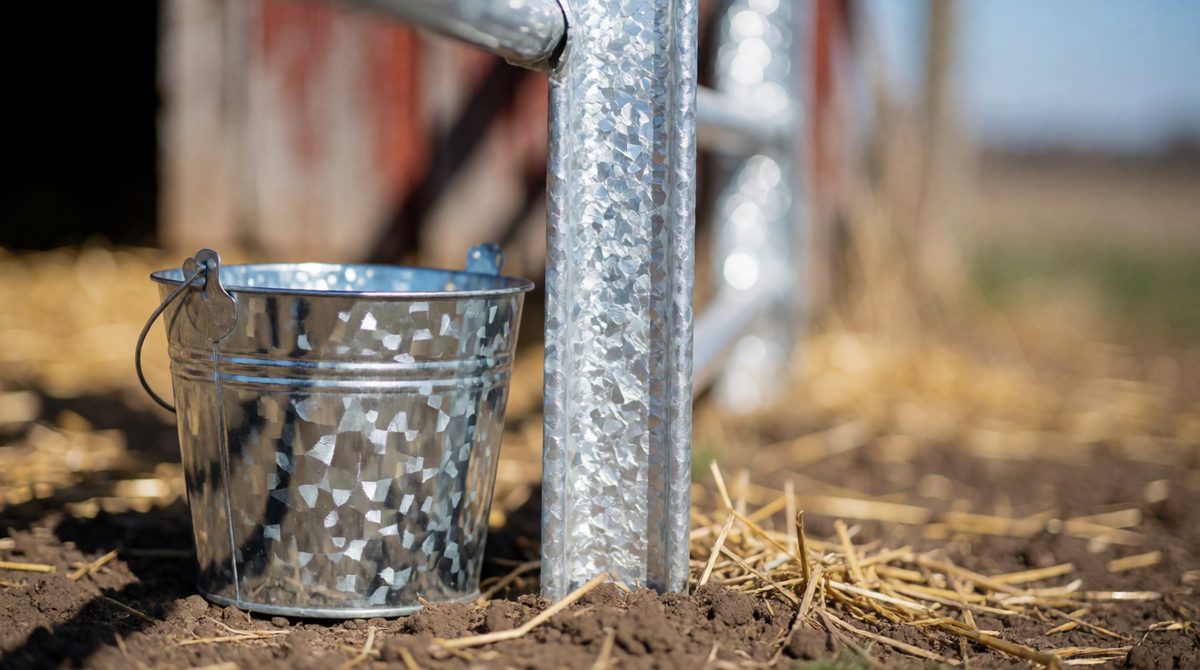
Galvanised steel is coated in zinc, which is more reactive than iron and corrodes first to protect it
Some coatings do more than act as a barrier. They contain a metal that is more reactive than iron. This gives sacrificial protection.
Key terms:
- Sacrificial protection: protecting a metal by using a more reactive metal, which corrodes instead.
- Galvanising: coating iron or steel with a layer of zinc.
Zinc is more reactive than iron. When zinc and iron are exposed to air and water together, the zinc reacts instead of the iron. The zinc is used up (it is "sacrificed") and the iron is protected.
This works even if the coating is scratched and the iron is exposed. Zinc is still nearby and is more reactive, so it still corrodes first. A barrier alone, such as paint, stops working once it is scratched. Galvanised steel is used for buckets and crash barriers.
Common mistakes
1. Saying that rust and corrosion are the same thing. Rusting is one example of corrosion, and it happens only to iron.
2. Saying that only water is needed. Both air (oxygen) and water are needed.
3. Saying that zinc protects iron because it is "stronger". Sacrificial protection works because zinc is more reactive.
4. Saying that a scratch ruins galvanised iron. The zinc still protects the iron.
Exam-style question
A steel bridge is painted. A steel bucket is galvanised. (a) Describe how the paint protects the bridge. (b) A scratch exposes the steel on both. Explain why the bucket is still protected but the bridge is not. [4 marks]
Model answer
(a) The paint forms a barrier. It stops air and water from reaching the steel, so it cannot rust. (b) The bridge has only a barrier, and the scratch lets air and water reach the steel, so it rusts. The bucket is coated in zinc, which is more reactive than iron. The zinc reacts in preference to the iron, so the zinc is used up instead and the steel is protected by sacrificial protection.
Exam tip
For sacrificial protection, always use the words "more reactive". For a rusting experiment, always name both air (or oxygen) and water.