🔔 Bronze
Copper + tin. Bronze is used for statues, medals and bells.
Sign up to access the complete lesson and track your progress!
Unlock This CourseLook around you. The taps in your kitchen, the knife and fork you eat with and the frame of a plane are all made from alloys. Remember, an alloy is a mixture of a metal with other elements. Most metals in everyday use are alloys, not pure metals, because we can choose the mix to give the properties a job needs.
In this lesson you will learn the alloys the spec names, what they are made from and what they are used for.
Key terms:
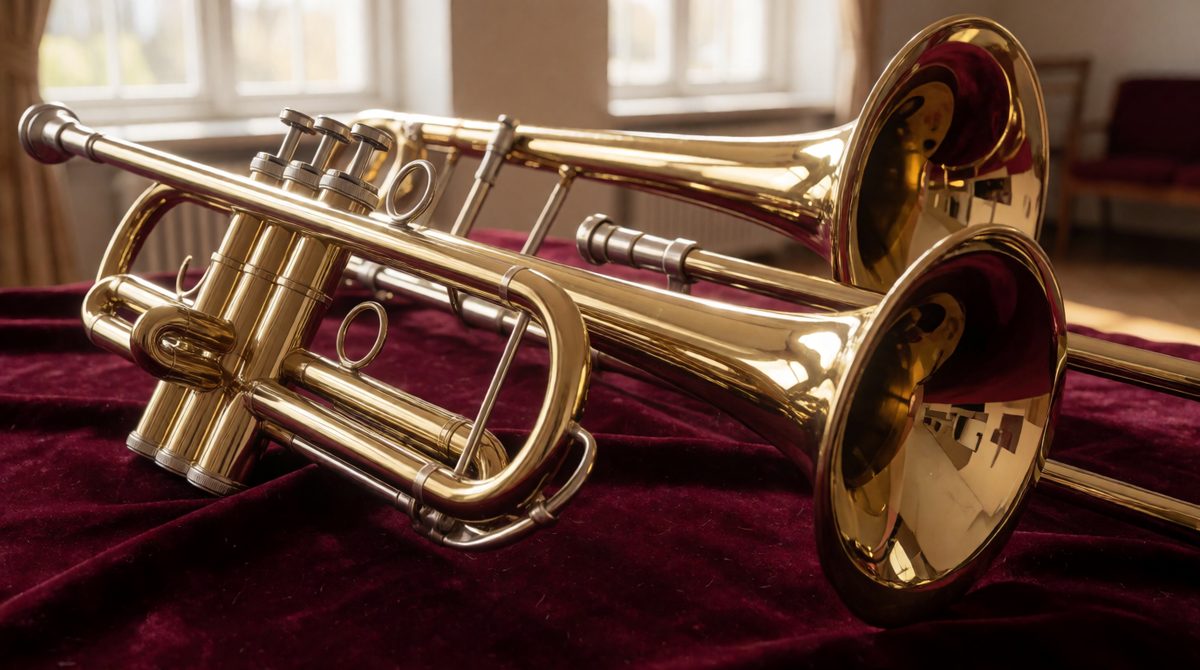
Brass is copper mixed with zinc, giving trumpets that warm golden shine
Both of these alloys have copper as the main metal. What changes is the second metal.
Copper + tin. Bronze is used for statues, medals and bells.
Copper + zinc. Brass is used for musical instruments, door handles and taps.
Bronze has tin. Brass has zinc. Both start with copper.
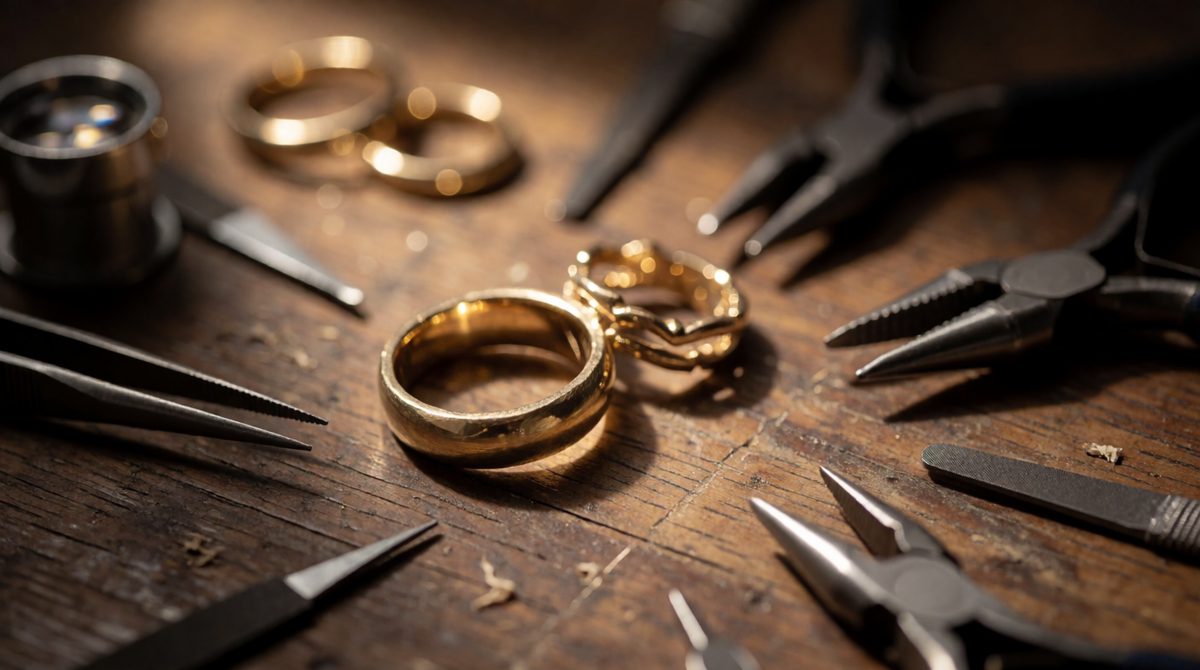
Pure 24 carat gold is too soft, so rings like these are alloyed with silver, copper and zinc - 18 carat is 75% gold
Pure gold is very soft, so it bends and scratches easily. Gold used as jewellery is usually an alloy of gold with silver, copper and zinc. This makes it harder wearing.
The proportion of gold in the alloy is measured in carats.
The scale has 24 parts, so each carat is 1/24 of the total. To find the percentage of gold:
percentage of gold = (carats ÷ 24) × 100
A ring is 9 carat gold. What percentage of it is gold?
(9 ÷ 24) × 100 = 0.375 × 100 = 37.5%
So 62.5% of the ring is other metals such as silver, copper and zinc.
18 carat should come out at 75%. (18 ÷ 24) = 0.75, and 0.75 × 100 = 75%. The higher the carat number, the more gold the alloy contains.
Steels are alloys of iron. They contain specific amounts of carbon and sometimes other metals. Changing the amount of carbon, or adding other metals, gives steels with very different properties.
Strong but brittle. Used where strength matters, such as cutting tools.
Softer and more easily shaped. Used for car body panels and nails.
Contains chromium and nickel. Hard and resistant to corrosion. Used for cutlery and sinks.
Brittle means that something breaks or snaps instead of bending. Ordinary iron rusts, as you saw in the lesson on corrosion. Adding chromium and nickel to make stainless steel is why cutlery can be washed again and again without rusting.
Aluminium alloys have a low density. This means they are light for their size. That is useful when a heavy material would be a problem, for example in aircraft and bicycle frames.
In the exam you may be given the composition and properties of an alloy you have not met before. Do not panic. Follow these steps:
Alloy X contains 90% copper and 10% tin. It is hard and does not corrode easily. What could it be used for?
Copper and tin make it a bronze. Because it is hard and does not corrode easily, it could be used for a ship's bell or a statue.
Mixing up bronze and brass. Saying 18 carat gold is 18% gold (it is 75%). Saying high carbon steel is softer than low carbon steel. It is the other way round: high carbon steel is strong but brittle.
A jeweller makes a necklace from 18 carat gold. (a) What percentage of the necklace is gold? (b) Give one reason why the jeweller does not use 24 carat gold. (c) Name the metals that can be mixed with gold in jewellery.
(a) 75%.
(b) 24 carat gold is pure gold, which is too soft for jewellery. Mixing it into an alloy makes it harder wearing.
(c) Silver, copper and zinc.
For carat questions, always divide by 24 first. Write your working down, even if you can do it in your head.