☁ Nitrogen
Nitrogen comes from the air. The air is about four-fifths nitrogen, so there is a huge free supply.
Sign up to access the complete lesson and track your progress!
Unlock This Course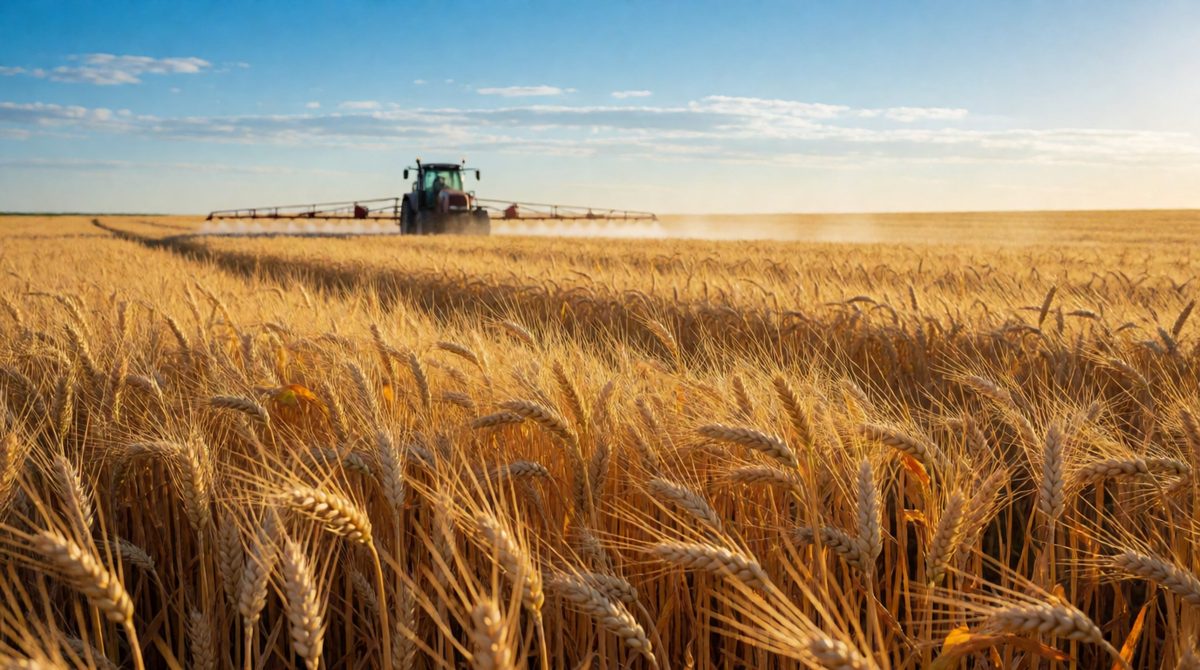
Crops like this wheat need nitrogen compounds, and the Haber process makes the ammonia for their fertilisers
Plants need nitrogen to grow. The air is nearly four-fifths nitrogen, but plants cannot use nitrogen gas. They need nitrogen in compounds. Farmers add nitrogen-based fertilisers to the soil to give crops more of it.
The Haber process is the industrial process used to manufacture ammonia, NH3. Ammonia is then used to produce nitrogen-based fertilisers.
Key terms:
The raw materials for the Haber process are nitrogen and hydrogen. You need to recall a source for each one.
Nitrogen comes from the air. The air is about four-fifths nitrogen, so there is a huge free supply.
Hydrogen comes from natural gas, which is mainly methane, CH4.
The gases are purified before they go into the process.
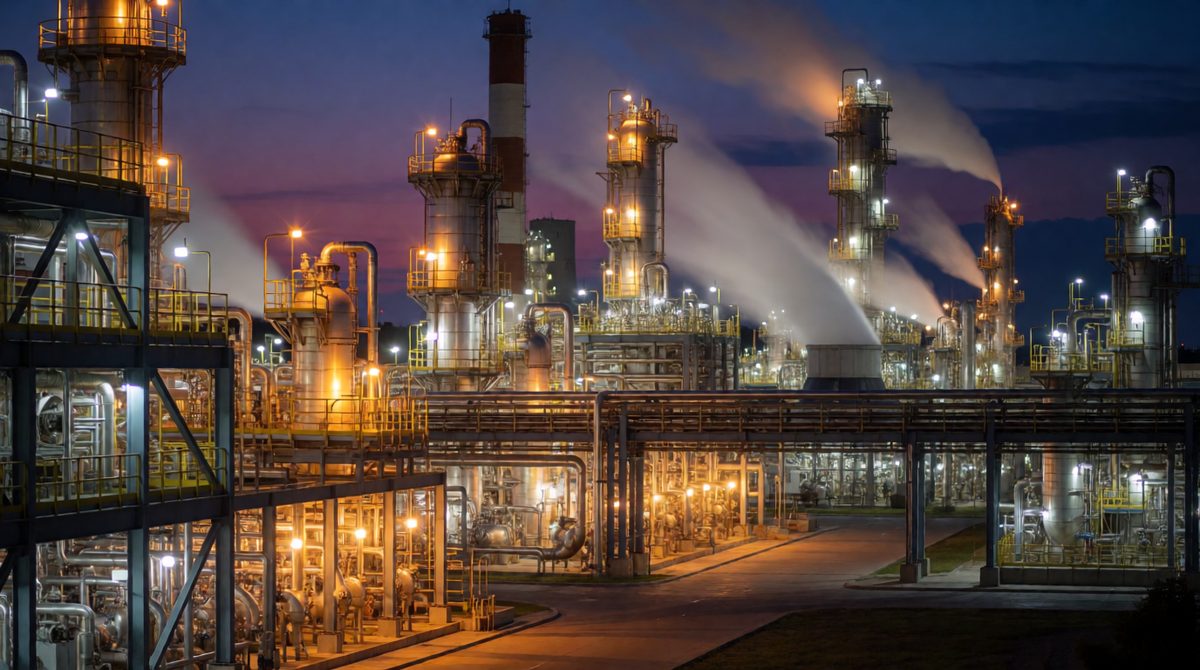
Inside plants like this, nitrogen and hydrogen pass over an iron catalyst at about 450 °C and 200 atmospheres
The purified nitrogen and hydrogen are mixed and passed over a catalyst of iron. The conditions are:
Some of the nitrogen and hydrogen reacts to form ammonia. The reaction is reversible, so some of the ammonia breaks down again into nitrogen and hydrogen. The equation uses the reversible arrow:
nitrogen + hydrogen ⇌ ammonia
N2 + 3H2 ⇌ 2NH3
Because the reaction is reversible, not all of the gases turn into ammonia in one pass. (Reversible reactions are covered in the lesson Reversible Reactions and Equilibrium.)
The gases leaving the reactor are a mixture of ammonia, nitrogen and hydrogen. This mixture is cooled. The ammonia turns into a liquid (it liquefies) and is run off and removed. The nitrogen and hydrogen stay as gases because they need much lower temperatures to liquefy.
The remaining hydrogen and nitrogen are recycled. They are fed back into the reactor to react again. Very little is wasted, and almost all of the raw materials end up as ammonia.
1. Nitrogen from the air and hydrogen from natural gas are purified. 2. The gases are passed over an iron catalyst at about 450 °C and 200 atmospheres. 3. Some of the gases react to make ammonia. 4. The mixture is cooled and the ammonia liquefies and is removed. 5. Unreacted nitrogen and hydrogen are recycled.
Question: A scientist says, "Only part of the gas turns into ammonia each time it passes through the reactor, but the factory still wastes very little." Explain why.
Answer: The reaction is reversible, so some ammonia breaks down again. The ammonia is removed by cooling, and the unreacted nitrogen and hydrogen are recycled back into the reactor, so they get another chance to react.
In the reactor, the equilibrium is dynamic: the forward and reverse reactions carry on at the same rate, so the amounts of nitrogen, hydrogen and ammonia stay constant. You need to explain why the conditions are a compromise. Two things matter: how much ammonia is made at equilibrium (the position of equilibrium) and how fast it is made (the rate).
Pressure. There are 4 molecules of gas on the left (N2 + 3H2) and 2 on the right (2NH3). A higher pressure moves the equilibrium towards the side with fewer molecules, so it gives more ammonia. It also increases the rate. But very high pressures need thick, strong pipes and powerful pumps. This costs a lot to build and run and is more dangerous. So about 200 atmospheres is used, not a much higher pressure.
Temperature. The forward reaction is exothermic. A lower temperature moves the equilibrium towards the products, giving a higher percentage of ammonia. But a low temperature makes the reaction too slow. A high temperature gives a faster rate but a lower percentage of ammonia at equilibrium. About 450 °C is a compromise: a reasonable amount of ammonia is made at a reasonable rate.
Catalyst. The iron catalyst speeds up the reaction without changing the position of equilibrium. This lets a fairly low temperature give a good rate, which saves energy.
Cost and supply. The conditions also depend on the availability and cost of raw materials and energy. Nitrogen from the air is free. Heating and compressing the gases uses energy, which costs money. Recycling means the raw materials are used efficiently. The company wants the best balance of rate, yield and cost, not just the highest possible yield.
You may be given graphs of the percentage of ammonia at equilibrium against temperature or pressure, or graphs of rate against conditions. Read them like this: as temperature goes up, the rate goes up but the percentage of ammonia goes down. As pressure goes up, both the rate and the percentage of ammonia go up. Always say what happens to each, then link it to the compromise.
1. Saying hydrogen comes from air. It comes from natural gas. 2. Saying the catalyst is nickel or platinum. In the Haber process it is iron. 3. Saying all the gas turns into ammonia. The reaction is reversible, so only some does. 4. Saying the unreacted gases are thrown away. They are recycled. 5. (Higher tier) Saying the catalyst increases the amount of ammonia. It only makes the reaction faster.
Ammonia is made in the Haber process. (a) Name a source of nitrogen and a source of hydrogen for the process. (b) Give the conditions used. (c) Describe how ammonia is separated from the unreacted gases and what happens to those gases. (d) Higher tier: Explain why a temperature of about 450 °C is used and not a much lower temperature.
(a) Nitrogen comes from the air. Hydrogen comes from natural gas. (b) A temperature of about 450 °C, a pressure of about 200 atmospheres and an iron catalyst. (c) The gas mixture is cooled so the ammonia liquefies and is removed. The unreacted nitrogen and hydrogen are recycled back into the reactor. (d) The forward reaction is exothermic, so a lower temperature would give a higher percentage of ammonia at equilibrium. But the rate would be too slow. 450 °C is a compromise that gives a reasonable rate and a reasonable amount of ammonia.
For a "compromise" question, always mention both the rate and the amount of ammonia made, and say which way each one changes.