⚠ Below 7
The solution is acidic. The lower the number, the more acidic it is. pH 1 is more acidic than pH 5.
Sign up to access the complete lesson and track your progress!
Unlock This Course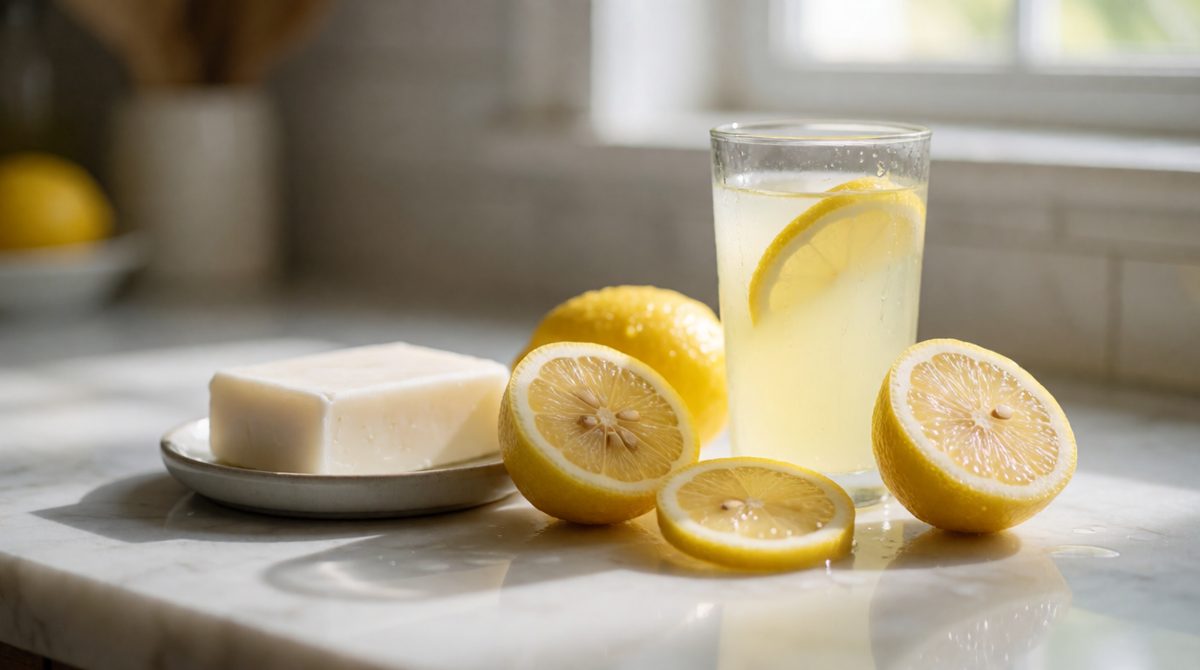
Lemon juice is full of hydrogen ions, H⁺ - that's what gives it its sour, acidic kick
Acids and alkalis look like ordinary liquids, so how can we tell them apart? The answer is in the ions they contain. When an acid dissolves in water, it produces hydrogen ions, written H+. These ions are what make a solution acidic.
Alkalis are different. An aqueous solution of an alkali contains hydroxide ions, written OH-. These ions are what make a solution alkaline.
So the rule is simple:
Key terms:
The pH scale runs from 0 to 14. It tells us how acidic or alkaline a solution is. The number you read off the scale tells you which type of solution you have.
The solution is acidic. The lower the number, the more acidic it is. pH 1 is more acidic than pH 5.
The solution is neutral. It is neither acidic nor alkaline. Pure water is a good example.
The solution is alkaline. The higher the number, the more alkaline it is. pH 13 is more alkaline than pH 9.
So aqueous solutions of acids have pH values of less than 7, and aqueous solutions of alkalis have pH values greater than 7. This lets you sort any solution once you know its pH.
A solution has a pH of 3. It is below 7, so it is acidic. A second solution has a pH of 11. It is above 7, so it is alkaline. A third has a pH of 7, so it is neutral. Which is the most acidic of the three? The one with pH 3, because it is the lowest number.
There are two ways to measure pH in your GCSE course.
Add a few drops to the solution, or dip in a strip of paper soaked in it. The colour changes. You then compare the colour with a chart. This gives you an approximate pH, not an exact one.
Dip the probe into the solution. A meter shows the pH as a number. It gives a more precise reading, and you do not have to judge a colour by eye.
Universal indicator is also called a wide range indicator, because it changes colour across the whole pH scale. Universal indicator tells you roughly how acidic or alkaline a solution is.
The usual colours are:
Always check the colour chart that comes with your indicator. The exact shades can vary a little between brands.
You add universal indicator to three colourless solutions. A turns red, B turns green and C turns purple. A is acidic, with a very low pH. B is neutral, with pH 7. C is very alkaline, with a very high pH. You can only say the pH is approximate, because you matched a colour by eye.
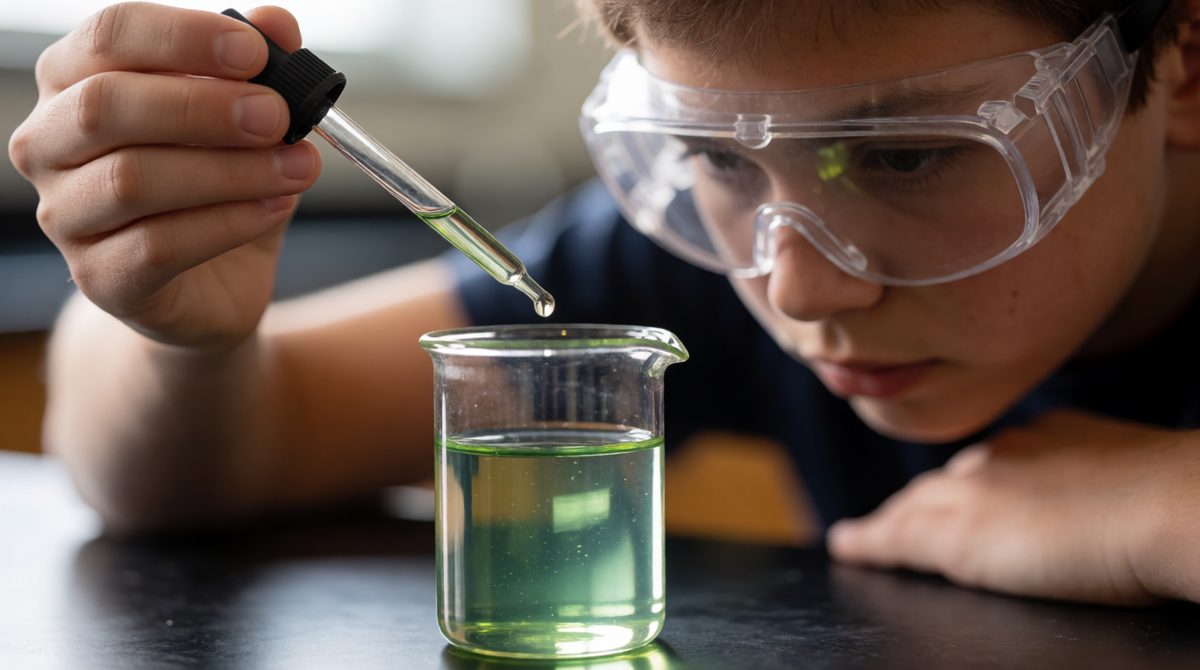
As the alkali goes in, H⁺ meets OH⁻ to make water: H⁺ + OH⁻ → H₂O, and the indicator heads for neutral green
You already know that an acid and an alkali react together in a neutralisation reaction. Now we can see what is really happening to the ions.
In neutralisation reactions between an acid and an alkali, hydrogen ions react with hydroxide ions to produce water. The equation is:
H+(aq) + OH-(aq) → H2O(l)
Each H+ ion joins with one OH- ion to make one molecule of water. This is the whole of the reaction, whichever acid and alkali you use.
Now think about what this does to the pH. Imagine you start with an acid at a low pH and slowly add alkali:
You can follow this with universal indicator or a pH probe. With universal indicator the colour moves from red, through orange and yellow, to green at pH 7, and on to blue and purple if too much alkali is added.
pH goes up as the H+ ions are used up.
pH goes down as the OH- ions are used up.
1. Writing H- or OH+. Hydrogen ions are always positive (H+) and hydroxide ions are always negative (OH-).
2. Thinking a higher pH means more acidic. It is the other way round. Low pH means more acidic.
3. Saying universal indicator gives an exact pH. It gives an approximate pH. A pH probe is more precise.
4. Forgetting that pH 7 is neutral, not 0 or 14.
A student adds a few drops of universal indicator to a solution of sodium hydroxide. It turns purple. The student then slowly adds dilute hydrochloric acid until the indicator turns green.
(a) Name the ion that makes sodium hydroxide solution alkaline. (1 mark)
(b) What is the approximate pH when the indicator is green? (1 mark)
(c) Write the ionic equation for the reaction that happens as the acid is added. Include state symbols. (2 marks)
(d) Name a piece of equipment that would give a more precise pH reading than universal indicator. (1 mark)
(a) Hydroxide ions, OH-.
(b) pH 7 (neutral).
(c) H+(aq) + OH-(aq) → H2O(l)
(d) A pH probe.
Always include the charges on the ions in your equation. H+ and OH- without charges will lose marks.