⚡ At the cathode
Positive aluminium ions move here and are discharged. Molten aluminium metal is produced.
Sign up to access the complete lesson and track your progress!
Unlock This CourseMany metals are made by heating their oxides with carbon. But some metals cannot be made this way. Electrolysis is used if the metal is too reactive to be extracted by reduction with carbon, or if the metal reacts with carbon.
Metals higher than carbon in the reactivity series, such as aluminium, hold on to their oxygen very tightly. Carbon is not reactive enough to take the oxygen away from them. So we use electricity instead.
The compound must be molten. This is for the reason you met in the lesson on the process of electrolysis: the ions must be free to move to the electrodes. A solid ionic compound cannot do this.
Key terms:
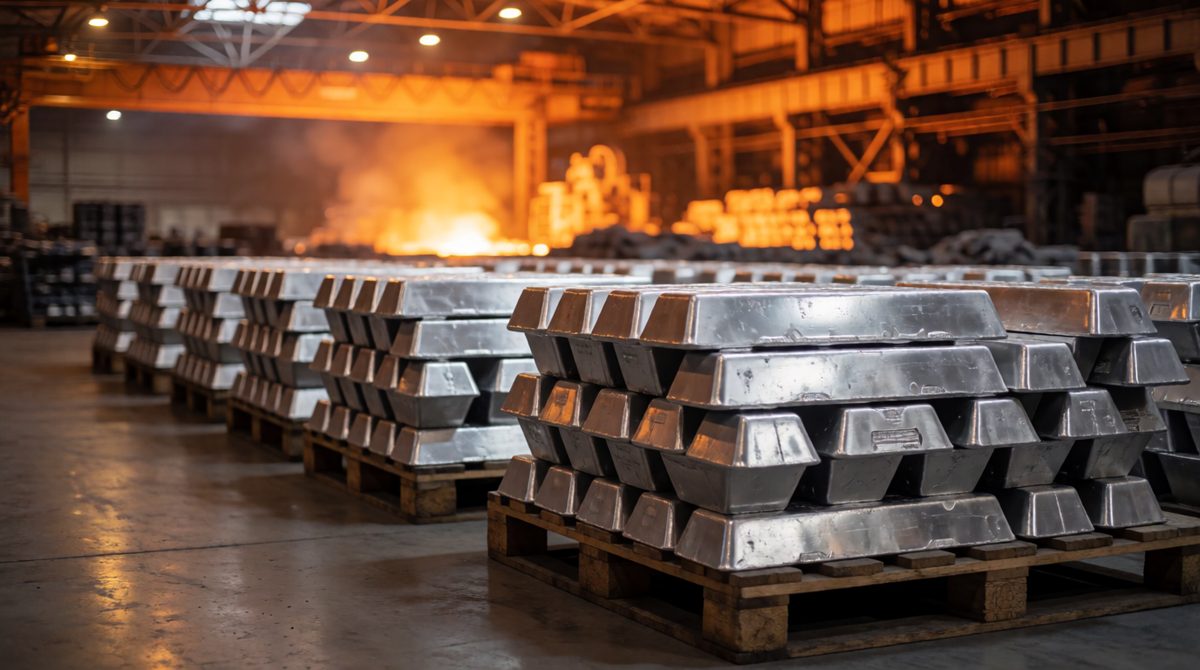
All this shiny aluminium started as bauxite, split by electrolysis of aluminium oxide dissolved in cryolite
Aluminium is made from aluminium oxide, which comes from an ore called bauxite. Aluminium is manufactured by the electrolysis of a molten mixture of aluminium oxide and cryolite. The positive electrode (anode) is made of carbon.
Aluminium ions are positive, so they move to the negative electrode (the cathode). Aluminium metal forms there as a liquid and collects at the bottom of the cell.
Positive aluminium ions move here and are discharged. Molten aluminium metal is produced.
Negative oxide ions move here and are discharged. Oxygen is produced.
Aluminium oxide has a very high melting point, over 2000 °C. Melting it on its own would need a huge amount of energy and would be very expensive.
When aluminium oxide is dissolved in molten cryolite, the mixture melts at a much lower temperature, about 900 °C. So the mixture is used as the electrolyte because it lowers the melting point. This saves energy and money.
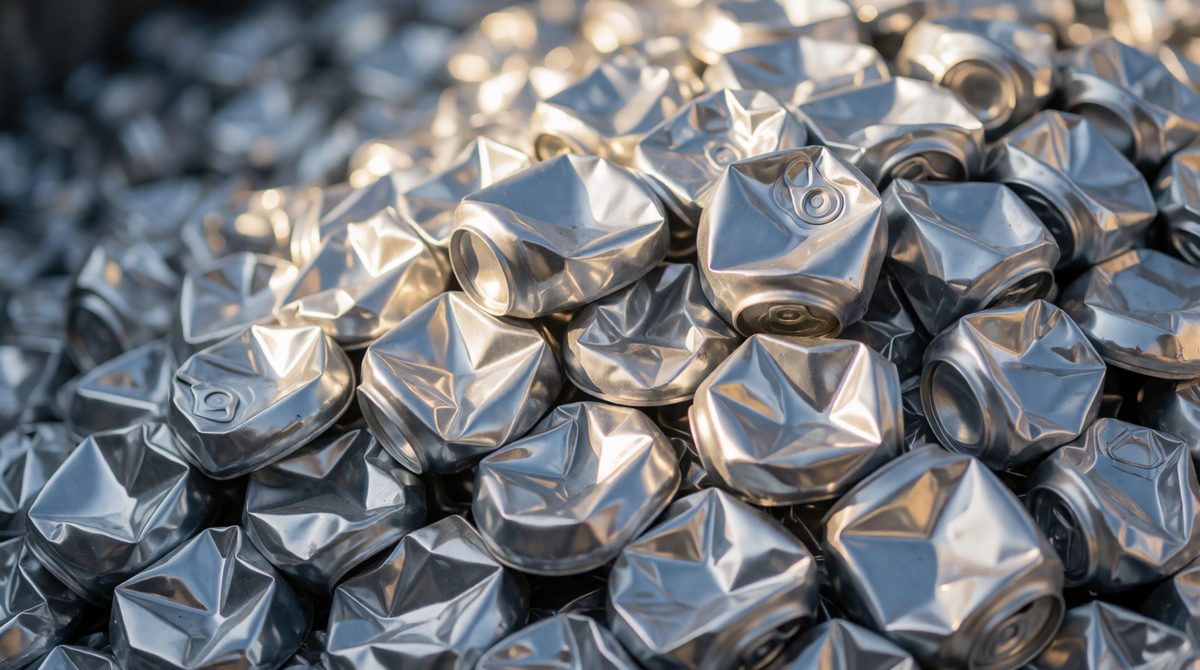
Recycled cans save energy - making new aluminium burns through carbon anodes and huge amounts of electricity
The oxygen made at the anode is very hot, and the anode is carbon. They react together:
carbon + oxygen → carbon dioxide
C + O2 → CO2
So the carbon anodes slowly burn away and get smaller. The positive electrode must be continually replaced because it is used up in this reaction.
Large amounts of energy are used in two ways: to melt the compounds and to produce the electrical current. This is why extracting metals by electrolysis is expensive. Using cryolite cuts the first cost, but a large current is still needed.
Question: Why can iron oxide be reduced with carbon but aluminium oxide cannot?
Answer: Aluminium is more reactive than carbon, so carbon cannot take the oxygen from aluminium oxide. Iron is less reactive than carbon, so carbon can.
Question: A factory makes aluminium by electrolysis. Give two reasons why the cost of the process is high.
Answer: A lot of energy is needed to melt the aluminium oxide and cryolite mixture. A lot more energy is needed to produce the large electrical current. The carbon anodes also have to be replaced, which adds to the cost.
Think of it as a set of steps. The metal is too reactive for carbon, so the compound is melted. A mixture with cryolite keeps the temperature lower. The current splits the compound, with metal at the cathode and oxygen at the anode. The oxygen burns the carbon anode, so it is replaced again and again.
Saying the cryolite "makes the reaction faster" is wrong. It lowers the melting point. Saying the anode "dissolves" is also wrong. It reacts with oxygen to make carbon dioxide gas. Remember too that only the anodes burn away. The aluminium forms at the cathode, so the cathode is not used up in this way.
Aluminium is extracted by electrolysis of aluminium oxide mixed with cryolite. Explain why a mixture is used, and why the carbon anodes have to be replaced regularly. [4 marks]
Aluminium oxide has a very high melting point. Mixing it with cryolite lowers the melting point, so less energy is needed and it costs less. Oxygen is produced at the carbon anode. The oxygen reacts with the carbon to make carbon dioxide, so the anodes burn away and must be replaced.
For "explain why a mixture is used", always say it lowers the melting point and link it to saving energy.