⚡ Metal more reactive than hydrogen
The metal ion stays in solution. Hydrogen gas is produced. Sodium, potassium, calcium and magnesium all behave like this.
Sign up to access the complete lesson and track your progress!
Unlock This CourseIn the last two lessons the ionic compounds were melted. A melt contains only the ions of the compound, so the choice was easy: the metal formed at the cathode and the non-metal at the anode.
A solution is different. It contains the ions of the dissolved compound and water. Water molecules break down a tiny bit to make hydrogen ions (H+) and hydroxide ions (OH-). So there are now two positive ions heading for the cathode and two negative ions heading for the anode. Only one of each pair is discharged.
The ions that are discharged depend on the relative reactivity of the elements involved. We use inert electrodes, so the electrodes themselves do not react.
Remember, halide ions are the negative ions of the halogens, such as chloride, bromide and iodide.
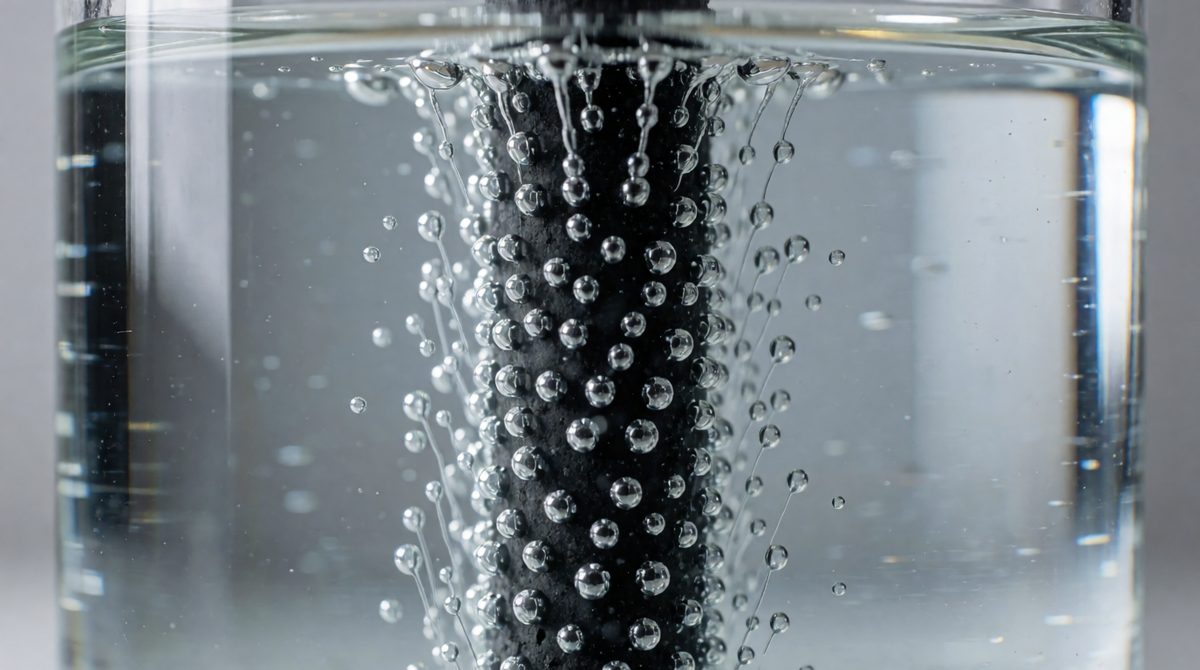
In salt water, sodium is more reactive than hydrogen, so bubbles of hydrogen gas form at the cathode
Positive ions go to the cathode. The two choices are the metal ion and the hydrogen ion from water.
The metal ion stays in solution. Hydrogen gas is produced. Sodium, potassium, calcium and magnesium all behave like this.
The metal ion is discharged. The metal is produced. Copper and silver behave like this.
The rule is simple: the less reactive element is the one that forms. A very reactive metal likes being an ion, so it stays in solution and hydrogen forms instead.
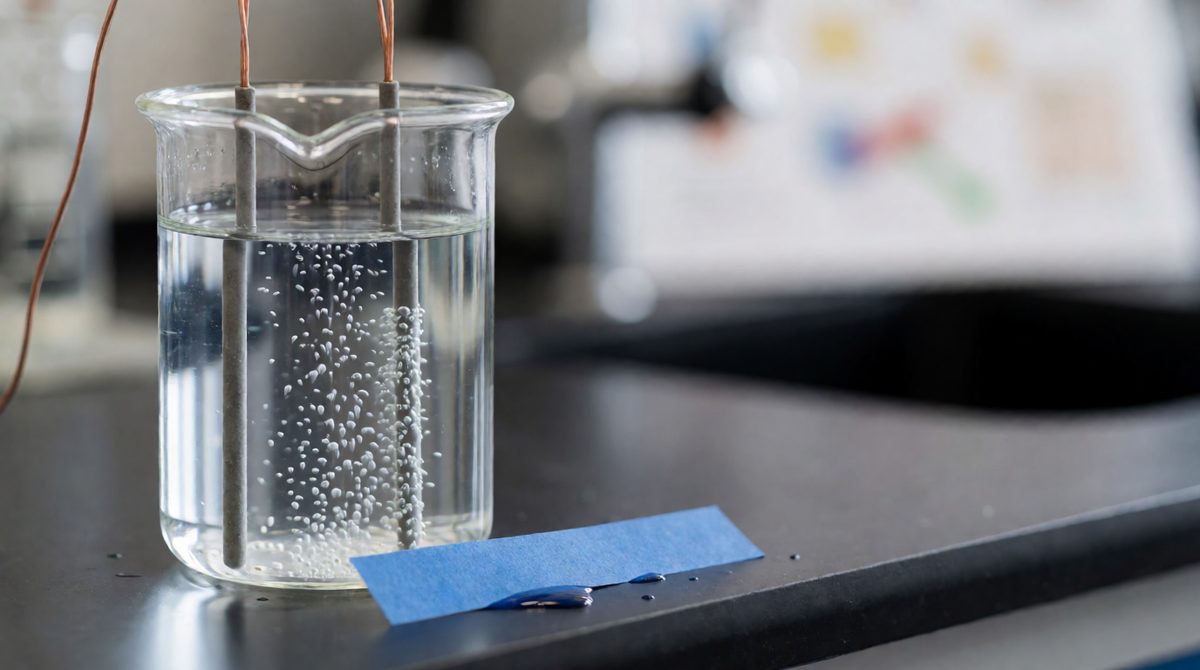
Chloride ions are a halide, so chlorine forms at the anode - it's why salt water electrolysis makes bleach
Negative ions go to the anode. The two choices are the ion from the compound and the hydroxide ion from water.
The hydroxide ions from water are the source of the oxygen. The other ions, such as sulfate, stay in solution.
Cathode: hydrogen if the metal is more reactive than hydrogen, otherwise the metal.
Anode: a halogen if there is a halide ion, otherwise oxygen.
You should be able to predict the products for a solution containing a single ionic compound. Follow three steps:
Sodium is more reactive than hydrogen, so hydrogen forms at the cathode. Chloride is a halide ion, so chlorine forms at the anode.
Copper is less reactive than hydrogen, so copper forms at the cathode. Sulfate is not a halide, so oxygen forms at the anode.
Potassium is more reactive than hydrogen, so hydrogen forms at the cathode. Nitrate is not a halide, so oxygen forms at the anode.
Copper is less reactive than hydrogen, so copper forms at the cathode. Bromide is a halide ion, so bromine forms at the anode.
Only two types of ion. The metal always forms at the cathode and the non-metal at the anode.
Four types of ion, because water adds H+ and OH-. Reactivity decides what forms.
1. Saying sodium forms at the cathode in a solution. It does not, because sodium is more reactive than hydrogen.
2. Saying a sulfate gives a halogen. It never does, because sulfate is not a halide, so oxygen forms.
3. Forgetting that water is there. The H+ and OH- ions are the reason the products can change.
A student electrolyses silver nitrate solution using inert electrodes. Name the product at each electrode and explain your answers. (4 marks)
At the cathode, silver is produced because silver is less reactive than hydrogen. At the anode, oxygen is produced because the solution does not contain halide ions. The oxygen comes from the hydroxide ions in water.
Always give the reason as well as the product. Say "more reactive than hydrogen" or "no halide ions" to earn the explanation marks.