⚡ Two different metals
If both electrodes are the same metal, there is no voltage. The metals must be different.
Sign up to access the complete lesson and track your progress!
Unlock This CourseA cell contains chemicals that react to produce electricity. The chemical energy stored in the cell is transferred as electrical energy when the cell is connected in a circuit. The reaction only happens while the circuit is complete, so a torch battery does not run down on the shelf.
Remember, an electrode is a solid that carries electric current and an electrolyte is a liquid that conducts electricity because it contains ions. A cell uses both of these.
Key terms:
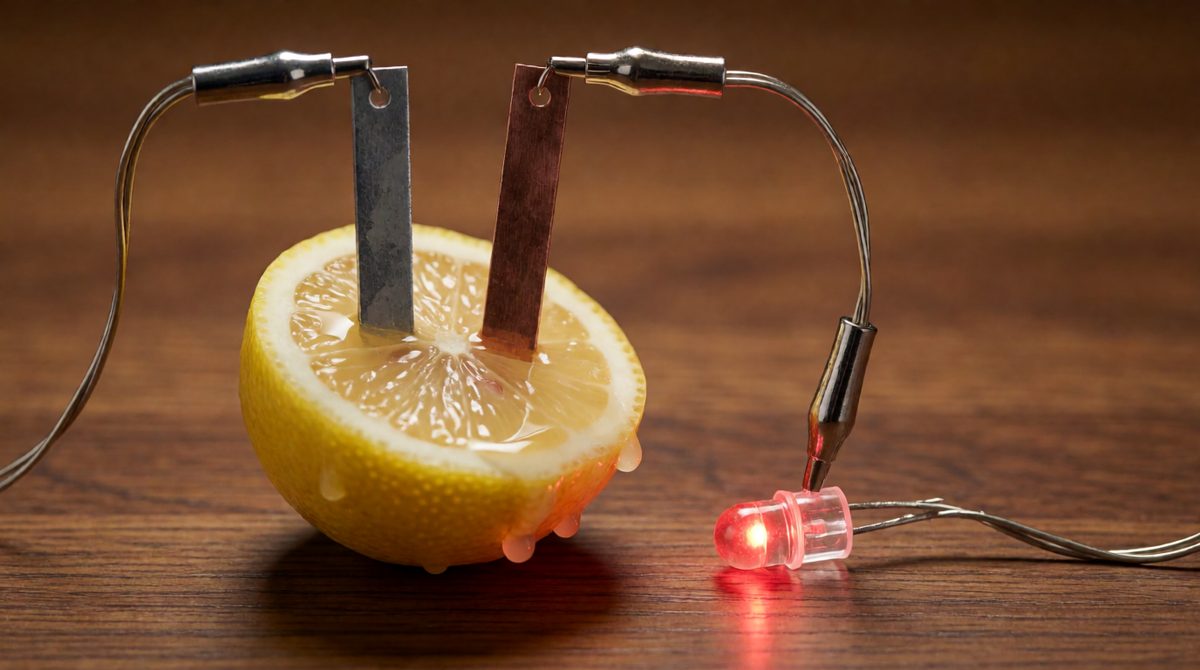
Two different metals in an electrolyte make a cell - even a lemon with zinc and copper strips can light an LED
You can make a simple cell with very little equipment. Connect two different metals so that both touch an electrolyte. For example, put a strip of zinc and a strip of copper into a beaker of dilute sulfuric acid. Then connect the two strips with wires to a voltmeter or a small bulb.
If both electrodes are the same metal, there is no voltage. The metals must be different.
The metals must touch an electrolyte. The ions in it carry charge through the cell.
When you use liquids in this practical, wear eye protection and take care with the acid. This is the safe and careful use of liquids.
The voltage a cell produces depends on a number of factors. Two of them are the type of electrode and the type of electrolyte. If you change either of them, you change the voltage.
You can use data about the relative reactivity of metals to predict this. The bigger the difference in reactivity between the two metals, the bigger the voltage. So a cell made from magnesium and copper gives a higher voltage than one made from zinc and copper, because magnesium is further from copper in the reactivity series.
A student makes three cells, each with a copper electrode and a different second metal, using the same electrolyte. Results: iron 0.8 V, zinc 1.0 V, magnesium 1.6 V. The order of reactivity is magnesium, zinc, iron, copper. The voltage gets larger as the second metal gets further from copper in reactivity. Magnesium is furthest away, so it gives the biggest voltage. A cell using two identical copper strips would give no voltage.
A single cell gives a fairly small voltage. A battery consists of two or more cells connected together in series to provide a greater voltage. In series means the cells are joined end to end, one after another, so their voltages add up.
A common alkaline cell gives 1.5 V. Three of these cells in series make a battery of 3 × 1.5 = 4.5 V.
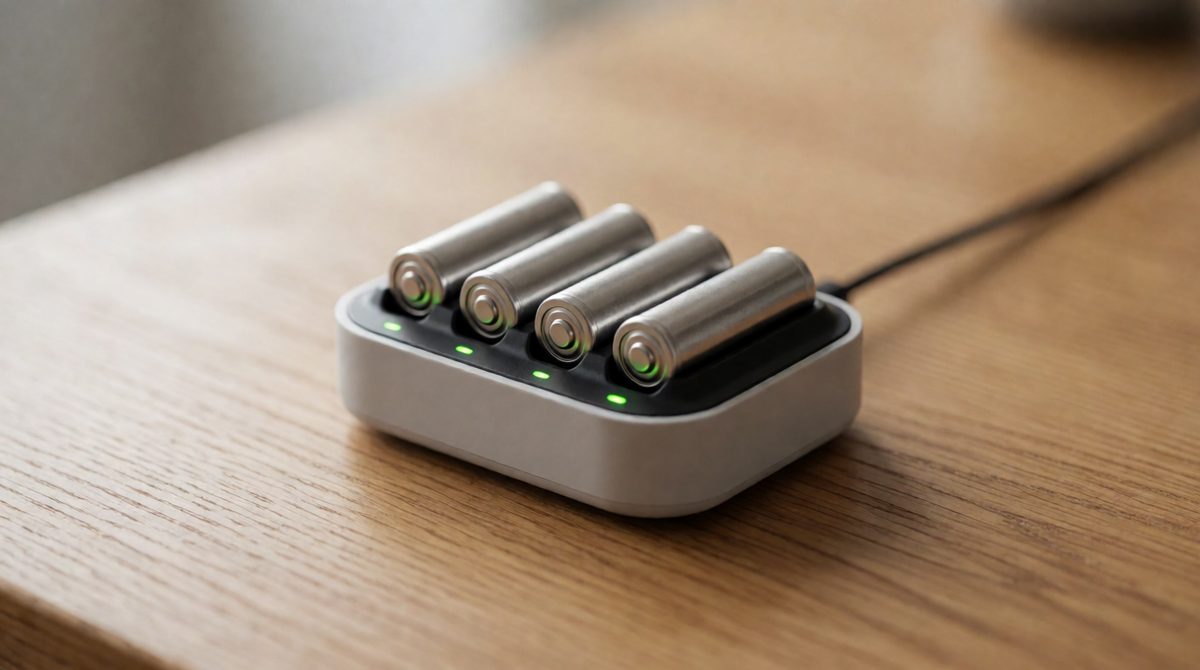
Rechargeable cells work again because the charger reverses the chemical reactions inside
The chemical reactions stop when one of the reactants has been used up. The cell is then "flat" and cannot be used again. Alkaline batteries are non-rechargeable.
These can be recharged because the chemical reactions are reversed when an external electrical current is supplied. The reactants are made again, so the cell can be used many times.
You may be asked to evaluate a cell or battery. Think about the voltage it gives, how long it lasts, whether it can be recharged, and how it compares with other types. A rechargeable battery can be used again and again, but it must be connected to a supply to recharge. A non-rechargeable battery is ready to use straight away, but it has to be thrown away once the reactants run out. You do not need to know more about the details of cells and batteries than this.
Saying a battery is "out of electricity". It is the reactants that have run out. Another mistake is thinking two strips of the same metal make a cell. The metals must be different. Finally, a battery is not a single cell: it is two or more cells joined in series.
A student makes a simple cell from a zinc strip and a copper strip in an electrolyte. (a) Give two ways she could increase the voltage of the cell. (b) Explain why an alkaline battery stops working. (c) Explain why a rechargeable battery can be used again.
(a) Use a different metal in place of zinc that is further from copper in reactivity, for example magnesium. Or change the electrolyte. (b) An alkaline battery is non-rechargeable, so the chemical reactions stop when one of the reactants has been used up. (c) In a rechargeable battery the chemical reactions are reversed when an external electrical current is supplied, so the reactants are made again.
For a question about voltage, always link it to the metals: a bigger difference in reactivity gives a bigger voltage.