🧪 Concentration
Increasing the concentration of a reactant in solution increases the rate. Magnesium fizzes much faster in concentrated acid than in dilute acid. Diluting a solution slows the reaction down.
Sign up to access the complete lesson and track your progress!
Unlock This CourseSome reactions are over in a flash, like a firework exploding. Others take years, like iron slowly rusting. Chemists often want to control how fast a reaction goes. A factory wants to make a product quickly. A food company wants its products to react slowly so they stay fresh.
The speed of a reaction is its rate. In the last lesson you learned how to measure it. In this lesson you will learn what changes it. There are five factors to know:
You need to be able to recall how changing each one affects the rate. The reasons why are taught in the lesson on Collision Theory and Activation Energy, so here we focus on what happens.
Key terms:
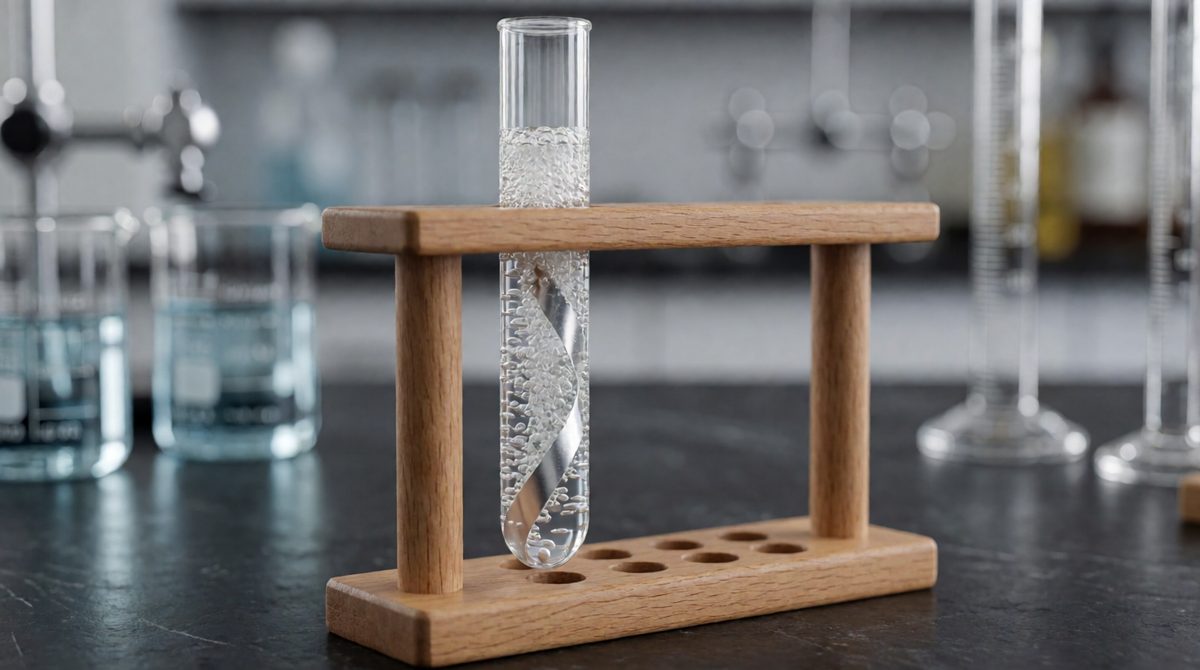
Magnesium fizzes much faster in more concentrated acid - more acid particles, more reactions
Increasing the concentration of a reactant in solution increases the rate. Magnesium fizzes much faster in concentrated acid than in dilute acid. Diluting a solution slows the reaction down.
Increasing the pressure of reacting gases increases the rate. This only matters when the reactants are gases. Squeezing the same gas into a smaller space means a higher pressure.
Increasing the surface area of a solid increases the rate. Powder reacts faster than lumps of the same mass, because more of the solid is exposed to the other reactant.
Increasing the temperature increases the rate. A reaction in a warm water bath is quicker than the same reaction in an ice bath.
Adding a suitable catalyst increases the rate. The catalyst is not used up, so it can be used again and again. See the lesson on Catalysts for more.
More concentrated, higher pressure, smaller pieces, hotter, or a catalyst: all of these make the reaction faster. The opposite changes make it slower.
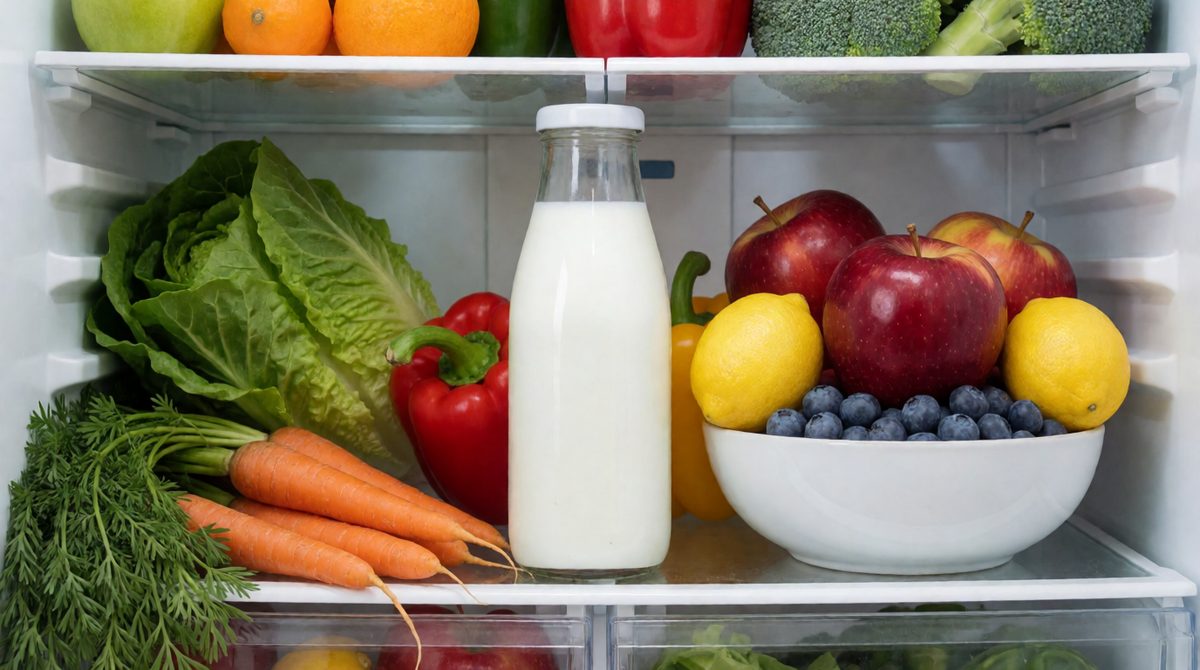
Fridges keep food fresh by lowering the temperature, which slows down the reactions that make it go off
You already see these factors every day.
To find out how one factor affects the rate, you run the same reaction several times and change only that factor. You must also measure the rate each time. Remember from the last lesson that you can do this by measuring how fast a product forms or how fast a reactant is used up.
Two common methods are:
Both methods are used in Required practical 5, which is covered in its own lesson, Required Practical: Rates of Reaction. That investigation should involve developing a hypothesis, for example "if the concentration goes up, the rate will go up".
If you change more than one thing at a time, you cannot tell which change caused the result. So in a fair test, use the three kinds of variable you met earlier in the course:
Repeating the experiment and finding a mean makes your results more reliable.
A student reacts 1.0 g of magnesium ribbon with 50 cm3 of hydrochloric acid at 20°C. They repeat it using 50 cm3 of acid that is twice as concentrated.
Independent variable: concentration of the acid.
Dependent variable: volume of hydrogen gas collected every 10 seconds.
Control variables: mass and length of magnesium, volume of acid, temperature.
Prediction: the stronger acid gives hydrogen faster, so more gas is collected in the first 10 seconds.
1. Saying pressure affects every reaction. It only affects reactions where the reactants are gases.
2. Saying a catalyst gets used up. It does not, and it is there unchanged at the end.
3. Thinking bigger pieces have more surface area. Smaller pieces give a bigger total surface area.
4. Changing two things at once, such as using powder and warmer acid, then claiming one factor caused the result.
A student reacts zinc with dilute sulfuric acid and measures the volume of hydrogen made. Zinc powder gives a faster reaction than zinc granules of the same mass. (a) Give the reason for the difference. (b) Give two other ways to increase the rate of this reaction. (c) Name one variable the student must keep the same.
(a) Powder has a larger surface area than granules of the same mass. (b) Increase the concentration of the acid; increase the temperature (adding a catalyst is also acceptable). (c) Any one of: mass of zinc, volume of acid, concentration of acid, temperature.
When asked how to speed up a reaction, say what you change AND the direction, such as "increase the temperature". Just writing "temperature" does not get the mark.