⚗ In the lab
Catalysts are often substances added to a reaction mixture to make it go faster.
Sign up to access the complete lesson and track your progress!
Unlock This CourseYou have already met catalysts as one of the things that can speed up a reaction. Now let's look at exactly how they work.
A catalyst changes the rate of a chemical reaction, but it is not used up during the reaction. That is the big idea. At the end of the reaction you still have all of the catalyst you started with. It can be filtered off, dried and used again.
Think of a catalyst as a matchmaker at a party. The matchmaker helps people get together, but does not leave as part of a couple. They are still there at the end, ready to help the next pair.
Two more things to know:
Key terms:
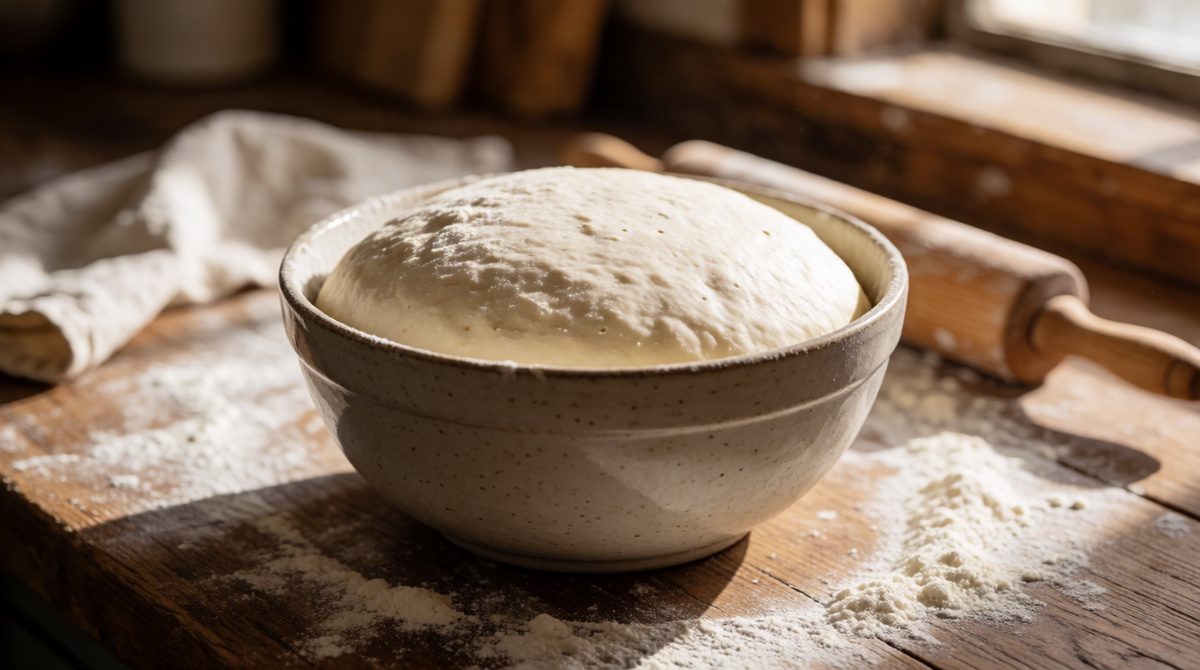
Enzymes in yeast are biological catalysts - they speed up the reactions that make bread dough rise
Your body carries out thousands of chemical reactions. Enzymes act as catalysts in biological systems, so these reactions can happen quickly enough to keep you alive.
Enzymes are not used up either, so one enzyme can work again and again. Each enzyme speeds up one particular reaction, which fits with the idea that different reactions need different catalysts.
Catalysts are often substances added to a reaction mixture to make it go faster.
Enzymes are the catalysts of living cells. They speed up the reactions in the body.
You should be able to identify a catalyst in two ways.
If adding a substance makes the reaction faster, and the substance is still there at the end, it is acting as a catalyst.
A catalyst is not used up, so it is not included in the chemical equation. It is often written above or below the arrow instead.
A student adds three different metal salts, one at a time, to the same amount of hydrogen peroxide solution. They time how long it takes to collect 20 cm3 of gas.
No salt: 400 s
Salt A: 380 s
Salt B: 35 s
Salt C: 410 s
Which salt is the best catalyst? Salt B. It gives the shortest time, so the fastest rate. Salt A makes only a tiny difference. Salt C makes no useful difference. This shows that different substances act very differently as catalysts for the same reaction.
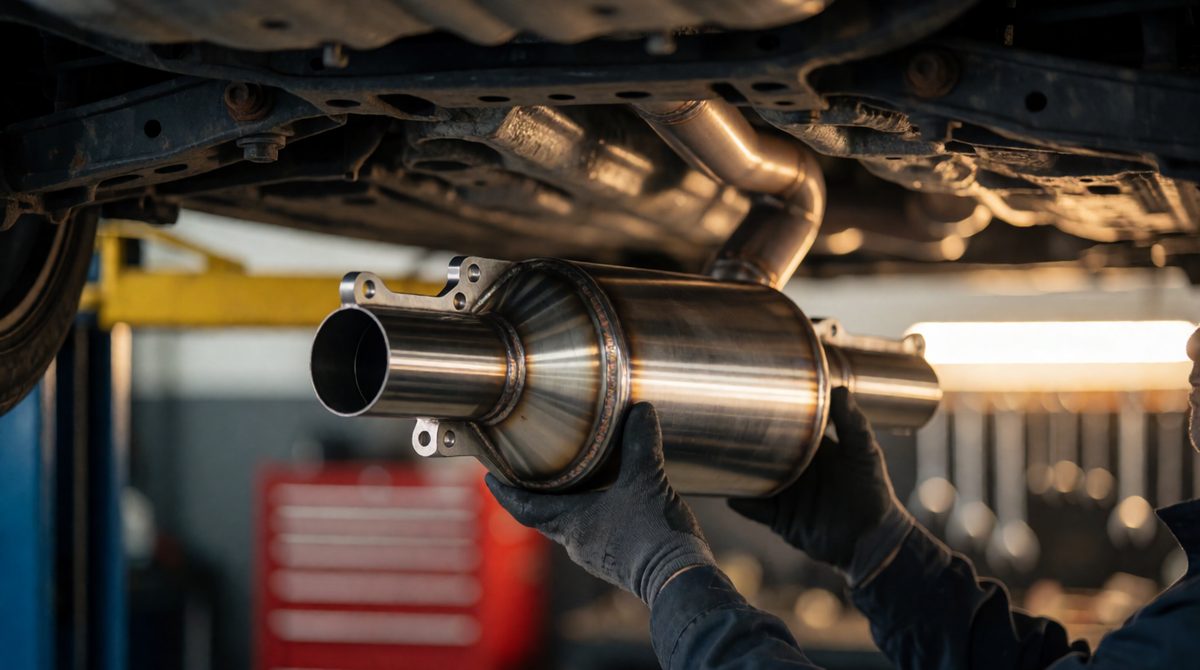
Car catalytic converters give an easier pathway with lower activation energy, so harmful gases react faster
Remember, activation energy is the minimum energy particles need when they collide for the reaction to happen. A catalyst works by changing this.
A catalyst increases the rate of reaction by providing a different pathway for the reaction that has a lower activation energy.
Here is the key point. With a lower activation energy, more of the colliding particles have enough energy to react. More collisions are successful, so the reaction goes faster.
Think of walking over a hill to reach the next village. A catalyst is like a tunnel through the hill. You still end up in the same village, but you do not need as much energy to get there.
You can draw a reaction profile for a reaction with and without a catalyst on the same axes. Draw it like this:
Both curves start and end at the same heights. A catalyst changes the pathway, not the energy of the reactants or the products. Only the height of the peak changes.
1. Saying a catalyst is "used up". It is not. It is there at the end.
2. Saying a catalyst "gives the particles more energy". It does not. It lowers the activation energy needed.
3. Drawing the catalysed curve with different start or end heights. Only the peak is lower.
4. Writing the catalyst as a reactant in the equation.
A catalyst is added to a reaction. The reaction becomes much faster.
(a) Explain, in terms of activation energy, why the reaction becomes faster. (2 marks)
(b) Give one way you could tell from the chemical equation that a substance is a catalyst. (1 mark)
(a) The catalyst provides a different pathway for the reaction. This pathway has a lower activation energy, so more particles have enough energy to react when they collide.
(b) The catalyst is not included in the equation (it is not a reactant or a product), because it is not used up.
When you draw a catalysed reaction profile, only the peak moves down. Keep the reactants and products at the same height as before.