⚗ Hydrocarbon
A molecule made up of hydrogen and carbon atoms only. If a molecule has any other type of atom, such as oxygen, it is not a hydrocarbon.
Sign up to access the complete lesson and track your progress!
Unlock This Course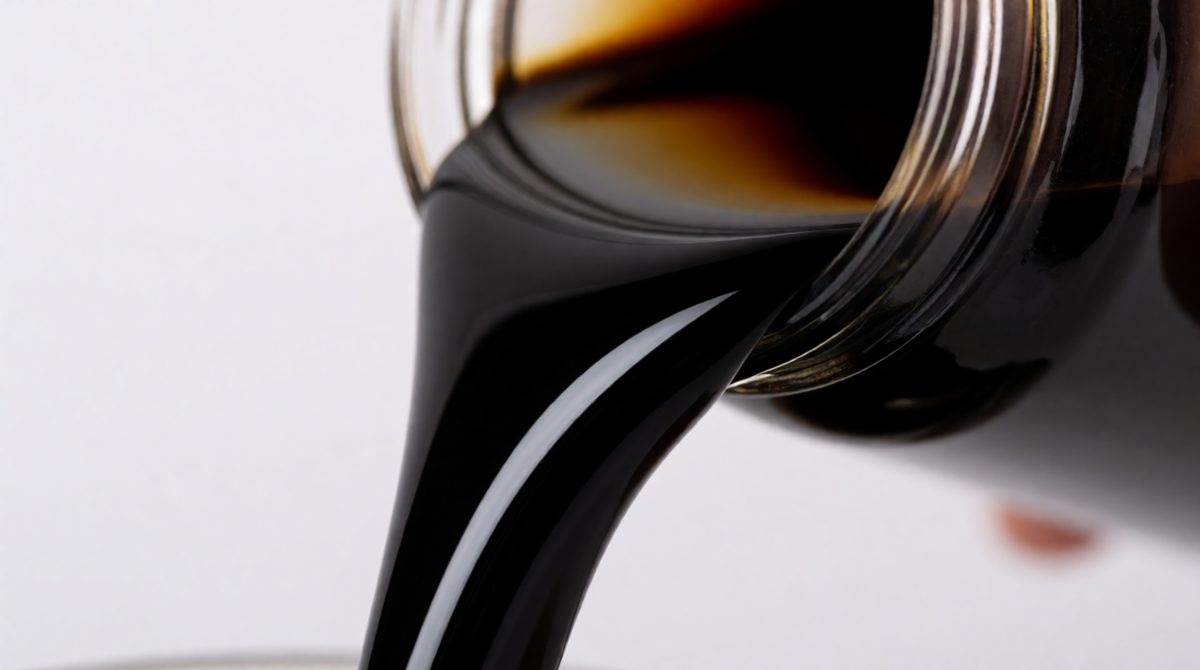
Every drop of this crude oil started as tiny plankton in ancient seas, squashed under mud for millions of years - which is why it's finite
Crude oil is a thick, dark liquid found in rocks underground. It is the remains of an ancient biomass. Biomass means material that comes from living things. The living things were mainly plankton, tiny creatures that lived in ancient seas. When they died, they sank and were buried in mud. Over a very long time, the buried remains changed into crude oil.
This took millions of years. We use crude oil much faster than it forms. So we say crude oil is a finite resource. One day it will run out.
Key terms:
Crude oil is not one substance. It is a mixture of a very large number of different compounds. Most of these compounds are hydrocarbons.
A molecule made up of hydrogen and carbon atoms only. If a molecule has any other type of atom, such as oxygen, it is not a hydrocarbon.
Most of the hydrocarbons in crude oil are a type called alkanes. Crude oil has many other compounds too, so it is not only alkanes.
Key terms:
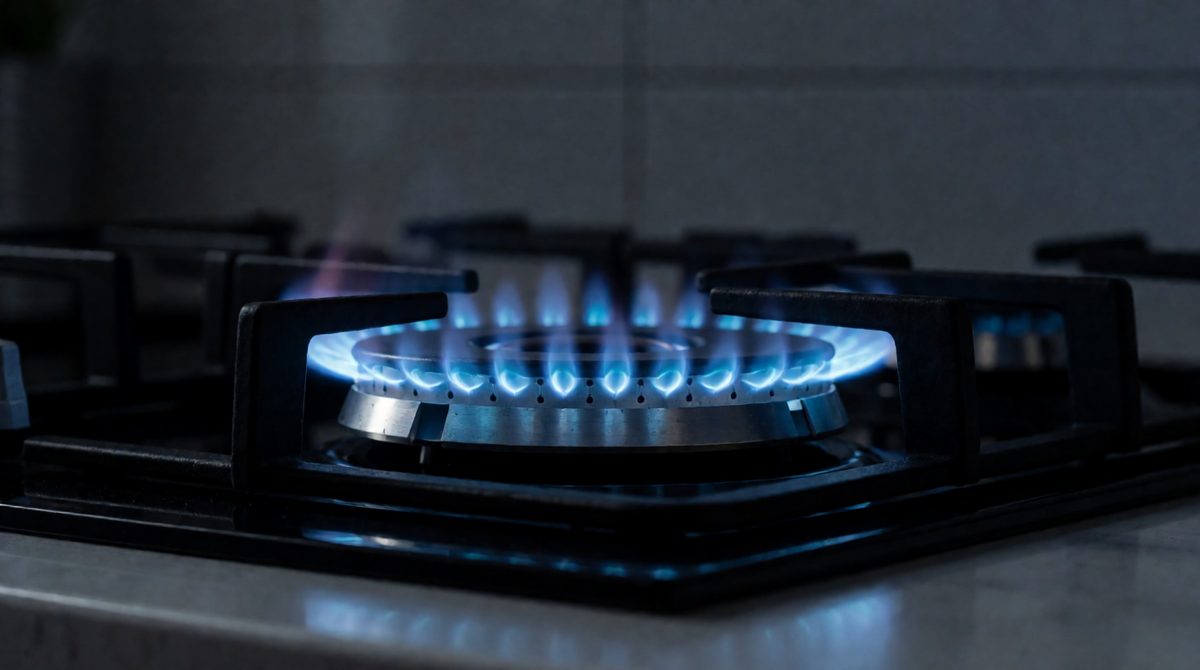
The blue flame on this hob is methane, CH₄ - the smallest alkane, fitting the pattern CₙH₂ₙ₊₂
Alkanes belong to a homologous series. This is a family of compounds that follow the same pattern. Each member is a little bigger than the one before it. The pattern is given by a general formula.
The general formula for the alkanes is:
CnH2n+2
Here, n is the number of carbon atoms. The number of hydrogen atoms is always twice the number of carbon atoms, plus two.
Key terms:
You need to know the names and formulae of the first four alkanes. Use the general formula to check each one.
1 carbon atom (n = 1). Hydrogen atoms: 2 × 1 + 2 = 4. Formula: CH4
2 carbon atoms (n = 2). Hydrogen atoms: 2 × 2 + 2 = 6. Formula: C2H6
3 carbon atoms (n = 3). Hydrogen atoms: 2 × 3 + 2 = 8. Formula: C3H8
4 carbon atoms (n = 4). Hydrogen atoms: 2 × 4 + 2 = 10. Formula: C4H10
A tip to remember the order: Monkeys Eat Peeled Bananas. The first letters match methane, ethane, propane and butane.
You do not need to know the names of any other alkanes. Just learn these four.
Alkane molecules can be shown in different ways. You can write the molecular formula, such as C2H6. You can also draw the molecule showing every atom and bond. In these drawings, each carbon atom has four single bonds and each hydrogen atom has one. The carbon atoms are joined in a chain, and hydrogen atoms fill the remaining bonds.
You should be able to recognise an alkane from its formula or its drawing. Two checks are enough:
Models help too. A molecular modelling kit lets you build alkane molecules. You can see how each carbon atom makes four bonds and each hydrogen atom makes one.
Is C5H12 an alkane?
It contains only carbon and hydrogen. Here n = 5, so 2n + 2 = 2 × 5 + 2 = 12. The formula has 12 hydrogen atoms, so it fits. Yes, it is an alkane.
Is C4H8 an alkane?
Here n = 4, so an alkane would have 2 × 4 + 2 = 10 hydrogen atoms. This formula has only 8. So it is not an alkane.
Write the formula of an alkane with 7 carbon atoms.
n = 7, so hydrogen atoms = 2 × 7 + 2 = 16. The formula is C7H16.
Writing the general formula as CnH2n and forgetting the +2. Saying that crude oil is a single compound, when it is a mixture. Saying that every hydrocarbon is an alkane: alkanes are only one type of hydrocarbon. Saying that crude oil will never run out because it keeps forming: it forms far too slowly to replace what we use.
Crude oil is a mixture of hydrocarbons. (a) Explain how crude oil was formed. (b) What is a hydrocarbon? (c) Name the alkane with 3 carbon atoms and give its formula. (d) Explain why crude oil is described as finite.
(a) It is the remains of ancient biomass, mainly plankton, that was buried in mud. (b) A molecule made up of hydrogen and carbon atoms only. (c) Propane, C3H8. (d) It takes millions of years to form, and we use it faster than it is made, so it will run out.
When asked if a formula is an alkane, show your working. Write down n, work out 2n + 2, and compare it with the number of hydrogen atoms.