🔥 Bottom of the column
Hot. Hydrocarbons with large molecules and high boiling points condense here, low down, because they turn back into liquids easily.
Sign up to access the complete lesson and track your progress!
Unlock This CourseCrude oil is a mixture of many different hydrocarbons, mostly alkanes. Straight from the ground it is a thick, dark liquid that is not much use. A car cannot run on it, and a plastic factory cannot use it either. First it has to be split up.
The hydrocarbons are not chemically joined to each other, so they can be separated by a physical process. We use fractional distillation, which you met in the lesson on mixtures and separation techniques. This time the mixture is crude oil.
Key terms:
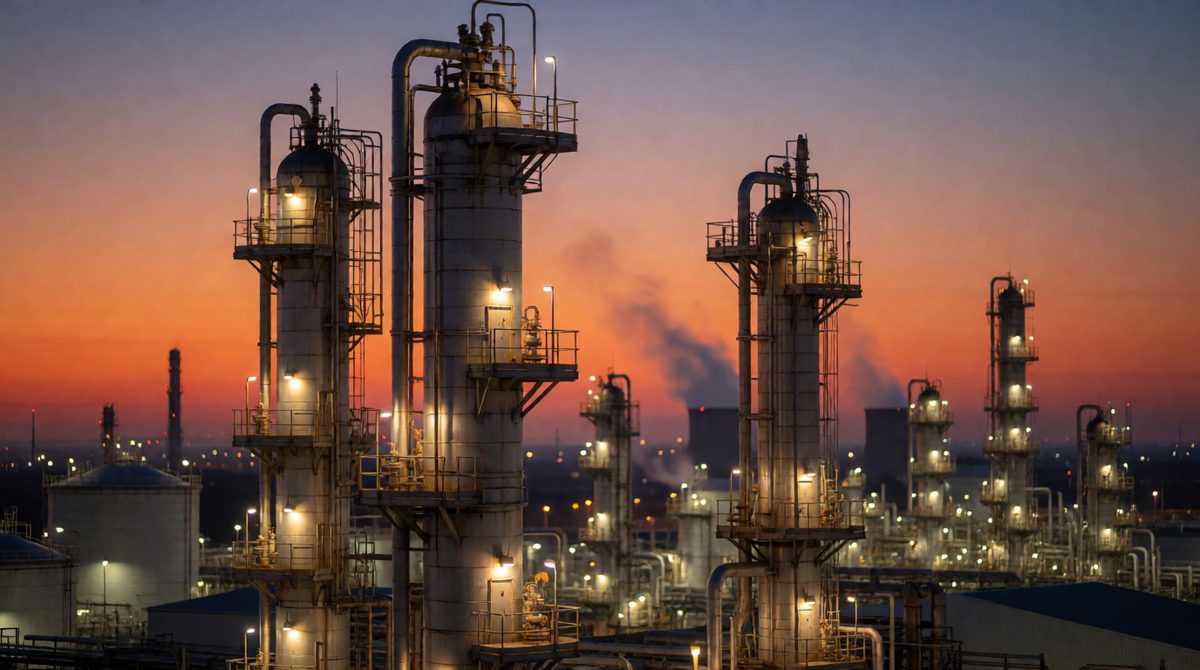
Those tall towers are fractionating columns: hot at the bottom, cooler at the top, so each fraction condenses at its own height
The separation happens in a tall fractionating column at an oil refinery. The column is very hot at the bottom and gets cooler towards the top. Follow the oil through these steps.
Hot. Hydrocarbons with large molecules and high boiling points condense here, low down, because they turn back into liquids easily.
Cooler. Hydrocarbons with small molecules and low boiling points stay as gases all the way up and only condense at the top, or not at all.
So the fractions are sorted by boiling point, and the boiling point depends on the number of carbon atoms in the molecules. The detail of how boiling point changes with molecule size is covered in the lesson on properties of hydrocarbons.
Separation by fractional distillation depends on evaporation (liquid to gas) and then condensation (gas to liquid). Each fraction condenses where the column is just cooler than its boiling point.
Many of the fuels we depend on for our modern lifestyle come from crude oil. You need to know these five.
LPG comes off near the top of the column. Heavy fuel oil is drawn off near the bottom. Petrol, kerosene and diesel are in between. You do not need to learn the names of any other fractions or fuels.
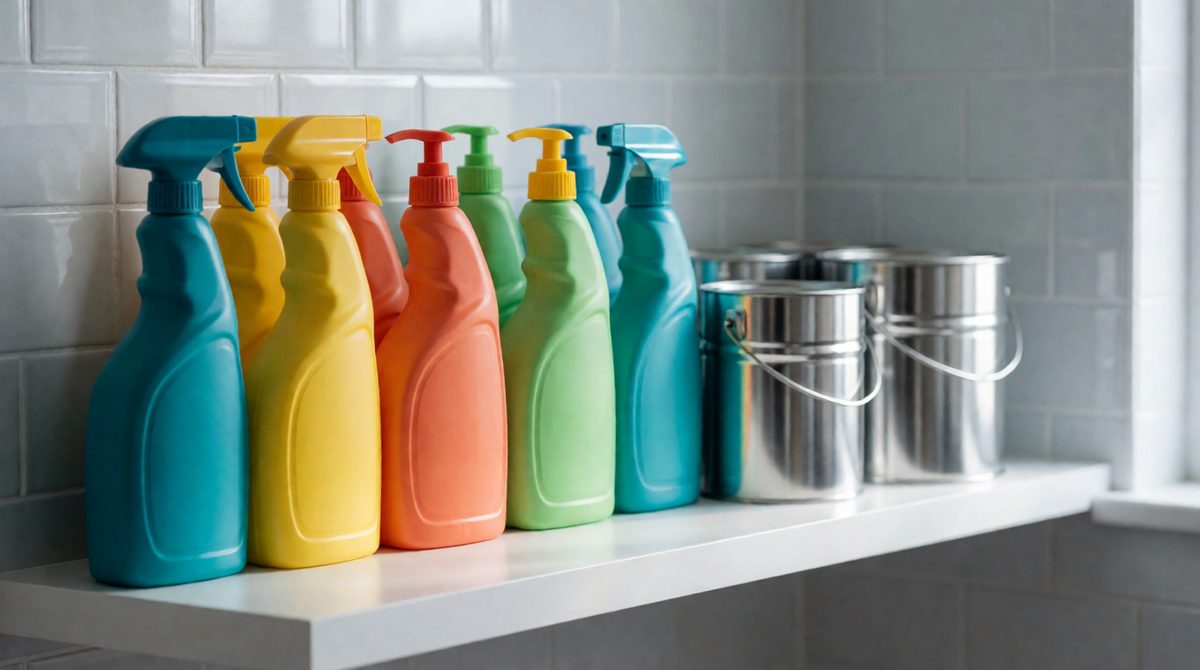
Plastics, solvents, detergents - loads of everyday stuff on this shelf began life as feedstock from crude oil
Fuels are not the only use. Fractions can also be processed to make feedstock for the petrochemical industry. This industry makes many materials that modern life depends on:
Liquids that dissolve other substances, used in paints and cleaning products.
Oils that help parts slide past each other, such as the oil in an engine.
Very large molecules that make plastics.
Cleaning substances used in washing powders and washing-up liquids.
Because crude oil is so useful as a feedstock, burning all of it as fuel uses up a finite resource that we also need for making materials.
There is a vast array of natural and synthetic carbon compounds. This happens because carbon atoms can form families of similar compounds. The alkanes are one family: they all have similar chemical behaviour but different numbers of carbon atoms. You will meet more families later in this course.
Question: Hydrocarbon X has a boiling point of 40 °C. Hydrocarbon Y has a boiling point of 350 °C. Which one is collected lower down the column?
Answer: Y. It has the higher boiling point, so it condenses back to a liquid sooner as it rises, where the column is still hot. X stays as a vapour for longer and condenses higher up.
Saying that the oil is burned or that chemical reactions split it up. Fractional distillation is a physical process. Another mistake is saying that the small molecules are at the bottom. The column is hottest at the bottom, so the large molecules with high boiling points are collected there.
Explain how fractional distillation separates crude oil into fractions. [4 marks]
The crude oil is heated so that it evaporates. The vapour enters the bottom of the fractionating column, which is hot at the bottom and cooler at the top. The vapours rise up the column. Each hydrocarbon condenses when it reaches the part of the column that is below its boiling point. Hydrocarbons with higher boiling points condense lower down and those with lower boiling points condense higher up, so each fraction is collected at a different height.
Always use both words: evaporation and condensation. Say where each happens and link it to boiling points.