🌡 Boiling point
Gets higher. Small molecules boil at low temperatures. Big molecules need much more heat.
Sign up to access the complete lesson and track your progress!
Unlock This CourseHydrocarbons are not all the same. A methane molecule has one carbon atom, but some molecules in crude oil have dozens. Three properties change in a clear pattern as the molecules get bigger: boiling point, viscosity and flammability. These properties decide how each hydrocarbon is used as a fuel.
Key terms:
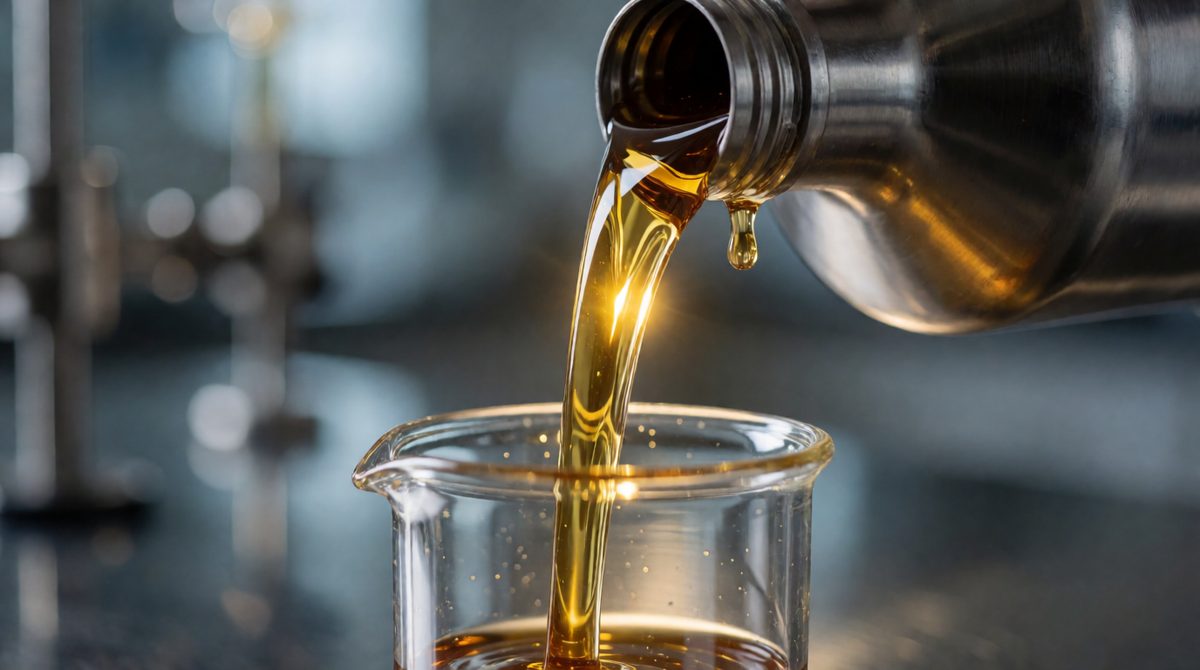
See how slowly that thick oil pours? Bigger hydrocarbon molecules mean higher viscosity and higher boiling points
You must be able to recall what happens to each property as the molecules get bigger (more carbon atoms).
Gets higher. Small molecules boil at low temperatures. Big molecules need much more heat.
Gets higher. Small molecules form runny liquids. Big molecules form thick, sticky liquids.
Gets lower. Small molecules catch fire easily. Big molecules are harder to set alight.
So the pattern is: bigger molecules mean a higher boiling point, a higher viscosity and a lower flammability.
Remember, the bonds inside a molecule do not break when a liquid boils. Only the weak forces between molecules are overcome. Bigger molecules have stronger forces between them, so more energy is needed.
A fuel has to suit the job. Small molecules are easy to ignite and are runny or gaseous, so they work as fuels that need to light quickly. Big molecules are thick and hard to ignite, so they are used where that does not matter.
A runny, easily lit fuel is needed in a car engine. A thick, slow fuel would not flow through the engine properly.
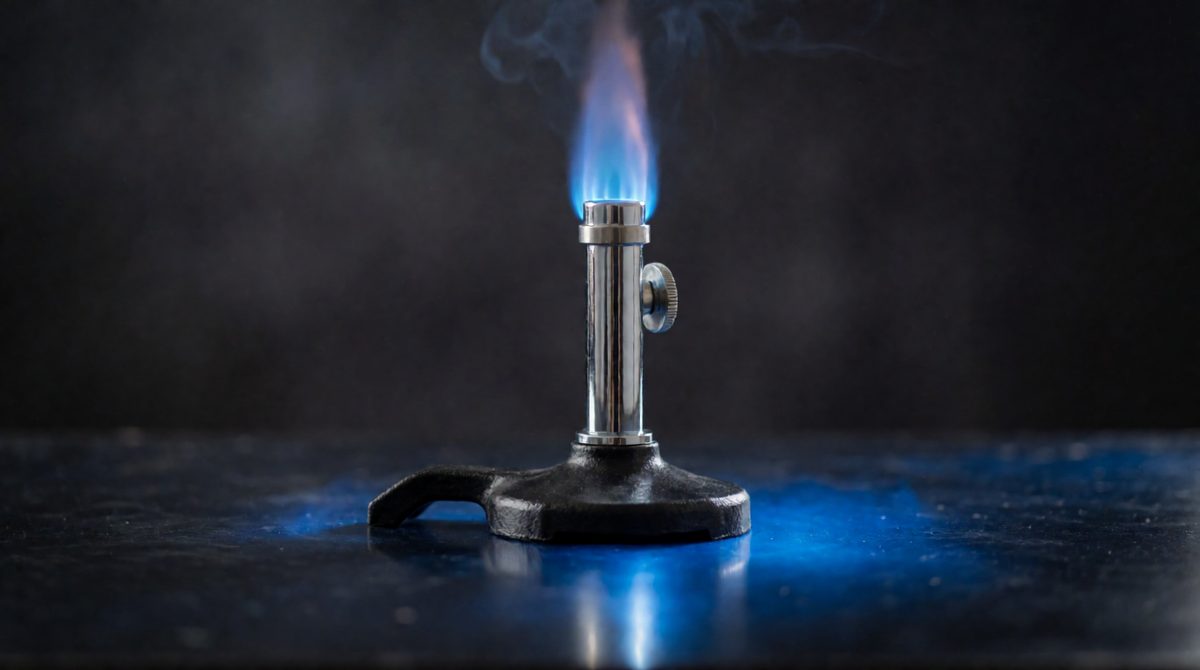
A clean blue flame means complete combustion - the fuel's carbon and hydrogen are oxidised to carbon dioxide and water
When a hydrocarbon fuel burns, it reacts with oxygen and releases energy. In combustion, the carbon and hydrogen in the fuel are oxidised: they gain oxygen.
In complete combustion there is plenty of oxygen. The products are always the same two substances:
The word equation for any complete combustion is:
hydrocarbon + oxygen → carbon dioxide + water
You may be given the formula of a hydrocarbon and asked to write the balanced equation. Follow these steps.
Carbon: 7 carbon, so 7 CO2. Hydrogen: 16 hydrogen, so 8 H2O. Oxygen on the right: 14 + 8 = 22 atoms, so 11 O2.
C7H16 + 11O2 → 7CO2 + 8H2O
Carbon: 4 CO2. Hydrogen: 10 hydrogen, so 5 H2O. Oxygen on the right: 8 + 5 = 13 atoms, which needs 6½ O2. You cannot have half a molecule in the final answer, so double everything.
2C4H10 + 13O2 → 8CO2 + 10H2O
Carbon: 8 CO2. Hydrogen: 18 hydrogen, so 9 H2O. Oxygen on the right: 16 + 9 = 25 atoms, which needs 12½ O2. Double everything.
2C8H18 + 25O2 → 16CO2 + 18H2O
Changing the small numbers in a formula (for example writing CO3) instead of the big numbers in front. Balancing the oxygen first, which makes it much harder. Forgetting that oxygen is O2, not O. Forgetting to count the oxygen in both the CO2 and the H2O.
Pentane has the formula C5H12. Write the balanced equation for the complete combustion of pentane. [3 marks]
Carbon dioxide and water are the products: C5H12 + O2 → CO2 + H2O. Five carbon atoms give 5CO2. Twelve hydrogen atoms give 6H2O. Oxygen on the right: 10 + 6 = 16 atoms, so 8O2.
C5H12 + 8O2 → 5CO2 + 6H2O
Balance in the order carbon, hydrogen, oxygen. Always finish by counting each atom on both sides.