⚗ Alkane with 6 carbons
C6H14 has 2 × 6 + 2 = 14 hydrogens.
Sign up to access the complete lesson and track your progress!
Unlock This Course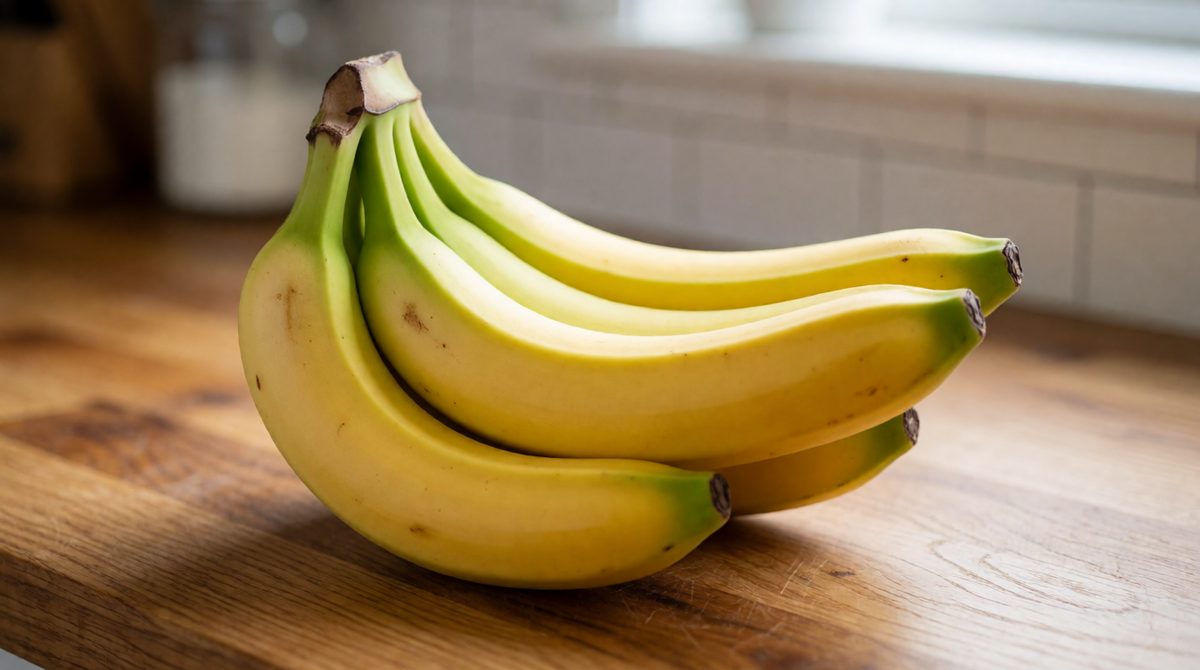
Ripening bananas give off ethene, C₂H₄ - the simplest alkene, with its double C=C bond
Alkenes are hydrocarbons with a double carbon-carbon bond. That double bond is the one feature that makes a hydrocarbon an alkene. Remember, a double bond is drawn as two lines, so here it is written C=C.
The alkenes are a homologous series, so they share a general formula and have similar chemical properties. Their general formula is CnH2n. The number of hydrogen atoms is always double the number of carbon atoms.
Key terms:
Compare an alkane and an alkene with the same number of carbon atoms. The alkene always has two fewer hydrogen atoms. That is the meaning of unsaturated.
C6H14 has 2 × 6 + 2 = 14 hydrogens.
C6H12 has 2 × 6 = 12 hydrogens. Two fewer.
This lesson is about structure only. What alkenes do in reactions comes in the next lesson, Reactions of Alkenes.

These plastic tubs are made from propene, C₃H₆ - the second alkene, swapping -ane for -ene
The names of the first four alkenes come from the number of carbon atoms, just like the alkanes. The ending changes from -ane to -ene.
You do not need to learn the names of any other individual alkenes. Notice that there is no alkene with one carbon. You need two carbon atoms to make a C=C double bond, so the series starts at ethene.
Use CnH2n to find the formula of pentene. Pentene has 5 carbons, so n = 5. Hydrogens = 2 × 5 = 10. The formula is C5H10.
Alkene molecules can be represented in more than one form. You should be able to recognise and use each of them.
Shows the number of each atom only. For example C3H6.
Shows every atom and every bond as a line. The C=C is drawn as a double line, and each carbon has four bonds in total.
To draw the displayed formula of ethene, write two carbon atoms joined by a double line. Then add two hydrogen atoms to each carbon, each joined by a single line. Every carbon now has four bonds: two from the double bond and one to each of its two hydrogens.
Displayed formulae are flat, two-dimensional drawings of molecules that are really three-dimensional. That is fine for the exam. Just make sure every carbon has exactly four bonds.
You may be asked to decide whether a substance is an alkene from its name or its formula. Use these checks:
Is the hydrocarbon C7H14 an alkene? n = 7, so 2n = 14. It fits CnH2n, so yes. Is C7H16 an alkene? No. 2n would be 14, not 16, so it has too many hydrogens.
1. Writing C2H6 for ethene. That has too many hydrogens. Ethene is C2H4.
2. Saying alkenes are saturated. They are unsaturated because of the double bond.
3. Mixing up the endings. -ane means only single bonds. -ene means a double bond.
4. Drawing a carbon with five bonds. Each carbon always has four.
Pentene is an alkene with five carbon atoms. (a) State the molecular formula of pentene. (b) Explain why pentene is described as unsaturated. [3 marks]
(a) C5H10 (1 mark).
(b) Pentene contains a carbon-carbon double bond (1 mark), so it has two fewer hydrogen atoms than the alkane with the same number of carbon atoms (1 mark).
If you forget a formula, work it out. Count the carbons for n, then double it for the hydrogens.