🧪 With a carbonate
Fizzing. Carbon dioxide gas is made, along with a salt and water.
Sign up to access the complete lesson and track your progress!
Unlock This Course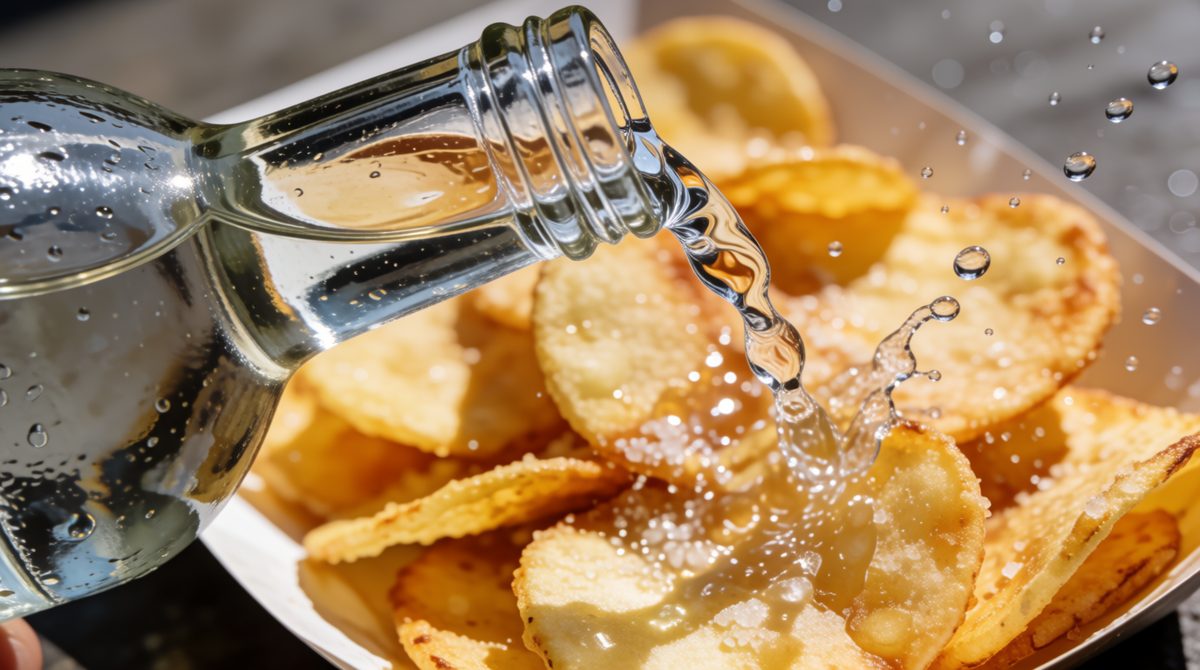
That sharp tang on your chips comes from ethanoic acid, a carboxylic acid with the -COOH group
Vinegar tastes sharp because it contains a carboxylic acid. Carboxylic acids are another family of organic compounds, after alkanes, alkenes and alcohols. Every carboxylic acid has the same functional group: -COOH.
In the -COOH group, one carbon atom is joined to an oxygen atom by a double bond (C=O) and to an -OH group. The functional group decides how the whole molecule reacts. That is why all carboxylic acids behave in a similar way.
Key terms:
Carboxylic acids form a homologous series, just like the alkanes, alkenes and alcohols. Each member has one more CH2 than the one before. The first four are:
| Name | Carbon atoms | Formula |
|---|---|---|
| Methanoic acid | 1 | HCOOH |
| Ethanoic acid | 2 | CH3COOH |
| Propanoic acid | 3 | CH3CH2COOH |
| Butanoic acid | 4 | CH3CH2CH2COOH |
The name tells you the number of carbon atoms: meth- is 1, eth- is 2, prop- is 3 and but- is 4. The carbon in the -COOH group counts. The ending -oic acid shows it is a carboxylic acid. Compare this with -ane for alkanes, -ene for alkenes and -ol for alcohols.
You can show a carboxylic acid in two ways. A short formula such as CH3COOH shows the group at the end. A displayed formula shows every atom and every bond, with the C=O and O-H bonds in the -COOH group drawn out. You only need to know these four names.
Look for the name ending -oic acid, or for -COOH at the end of the formula. CH3CH2COOH is propanoic acid. CH3CH2OH is not a carboxylic acid, because it ends in -OH and has no C=O. It is an alcohol.
You do not have to write balanced equations for these reactions. You do have to describe what happens.
Carboxylic acids dissolve in water and make acidic solutions. The solution has a pH below 7 and turns universal indicator orange or yellow.
Carboxylic acids react with carbonates just like other acids do. You see bubbles of carbon dioxide gas. The other products are a salt and water.
The salt gets its name from the acid. The ending changes from -oic acid to -oate. Ethanoic acid makes an ethanoate. Propanoic acid makes a propanoate. So methanoic acid makes a methanoate and butanoic acid makes a butanoate.
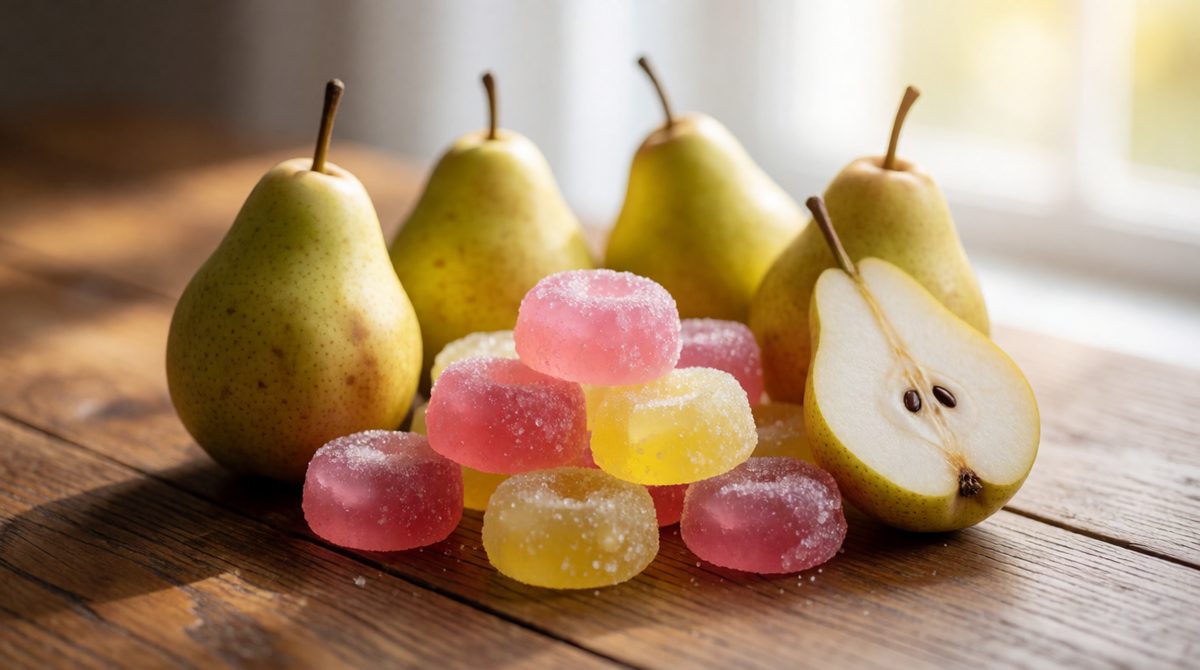
Fruity sweet smells are often esters - made when a carboxylic acid reacts with an alcohol
A carboxylic acid reacts with an alcohol to make an ester and water. The reaction needs a few drops of concentrated sulfuric acid as a catalyst, and the mixture is warmed.
The name of an ester has two parts. The first part comes from the alcohol (ethanol gives ethyl). The second part comes from the acid (ethanoic acid gives ethanoate). Ethyl ethanoate is the only ester you need to know by name.
Esters smell sweet and fruity. They are used in perfumes and food flavourings.
Fizzing. Carbon dioxide gas is made, along with a salt and water.
A sweet, fruity smell. An ester and water are made, using a sulfuric acid catalyst.
Carboxylic acids are weak acids. When they dissolve in water they are only partly ionised. Most of the acid molecules stay as they are, and only a small fraction release H+ ions. A strong acid such as hydrochloric acid is fully ionised. This means a solution of ethanoic acid has fewer H+ ions than a hydrochloric acid solution of the same concentration. So its pH is higher.
Weak does not mean unreactive. Carboxylic acids still fizz with carbonates.
Name the products when propanoic acid reacts with potassium carbonate.
Step 1: a carboxylic acid and a carbonate make a salt, water and carbon dioxide.
Step 2: change -oic acid to -oate and put the metal name first. The salt is potassium propanoate.
Answer: potassium propanoate, water and carbon dioxide.
Students forget to count the carbon in the -COOH group, so they call CH3COOH 'methanoic acid'. It has two carbons, so it is ethanoic acid. Another mistake is to name an ester with the acid first. Ethyl ethanoate has the alcohol part (ethyl) first. A third mistake is to say the sulfuric acid is used up. It is a catalyst.
Butanoic acid is a carboxylic acid. (a) Give the formula of its functional group. (b) Describe what you would see when butanoic acid is added to sodium carbonate. (c) Name the ester made when ethanoic acid reacts with ethanol. (d) Higher tier: explain why butanoic acid is a weak acid.
(a) -COOH
(b) Bubbles of gas (fizzing) as carbon dioxide is made.
(c) Ethyl ethanoate
(d) It is only partly ionised in water, so only a small fraction of its molecules release H+ ions. This gives a higher pH than a strong acid of the same concentration.
When naming an ester, write the alcohol part first and the acid part second: ethanol + ethanoic acid gives ethyl ethanoate.