⚛ Two polymer chains
Most DNA molecules are made of two long polymer chains. Each chain is a polymer, so each is made of many repeating small units.
Sign up to access the complete lesson and track your progress!
Unlock This CourseYou have met polymers made in a factory, like poly(ethene). But living things make polymers too. Your body is full of them. Plants make them. They are called naturally occurring polymers.
The idea is the same as before. Many small monomers join in a long chain. The type of monomer decides which natural polymer you get. In this lesson you need to name the monomers for four important natural polymers: DNA, proteins, starch and cellulose.
Key terms:
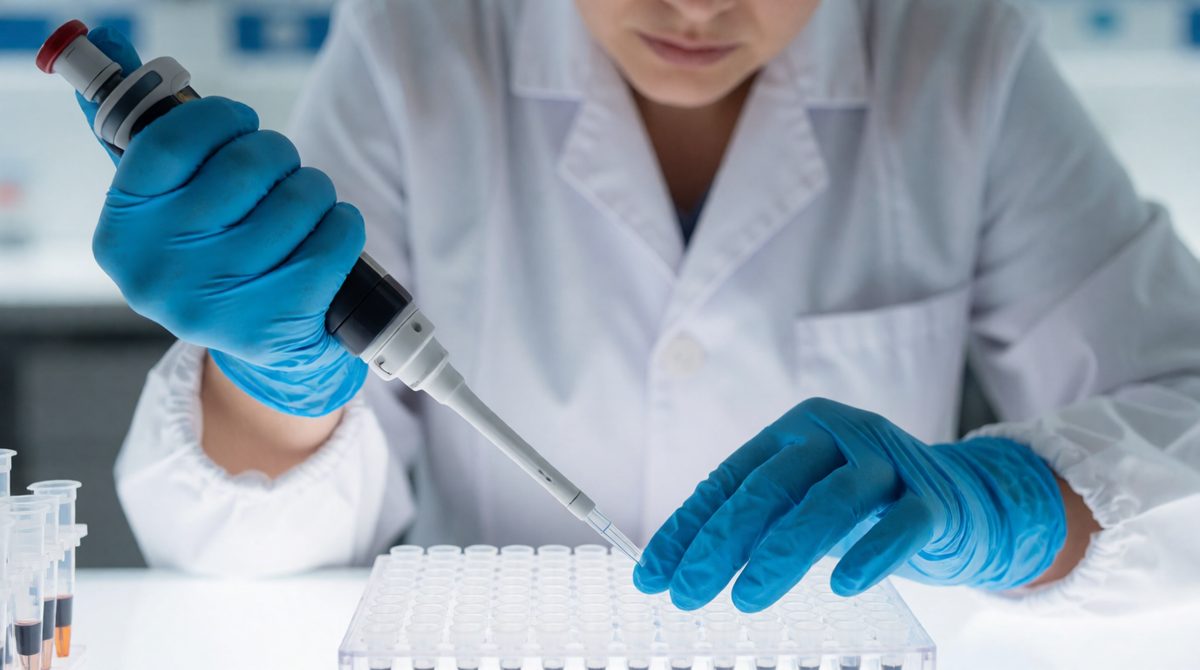
These scientists are reading DNA, two polymer chains twisted into a double helix that carries the genetic instructions
DNA is a large molecule that is essential for life. It encodes genetic instructions. These are the instructions for the development and functioning of living organisms and viruses. In other words, DNA holds the plan that tells a living thing how to grow and how to work.
Most DNA molecules are made of two long polymer chains. Each chain is a polymer, so each is made of many repeating small units.
The monomers are called nucleotides. There are four different nucleotides. The order they are arranged in is what carries the genetic instructions.
The two chains are not laid side by side like two ropes. They twist around each other in the form of a double helix. Picture a twisted ladder or a spiral staircase.
The four different nucleotides work a bit like the letters of an alphabet. Only a few letters are used, but they can be put in a huge number of different orders. A very long chain gives a very long message.
DNA: monomer = nucleotide. Four different nucleotides. Two polymer chains. Shape = double helix.
Proteins are important for life. You met them in the last lesson. Proteins are polymers made from amino acids. The amino acids are the monomers. Different proteins have different amino acids in different orders, which is why proteins can do so many different jobs.
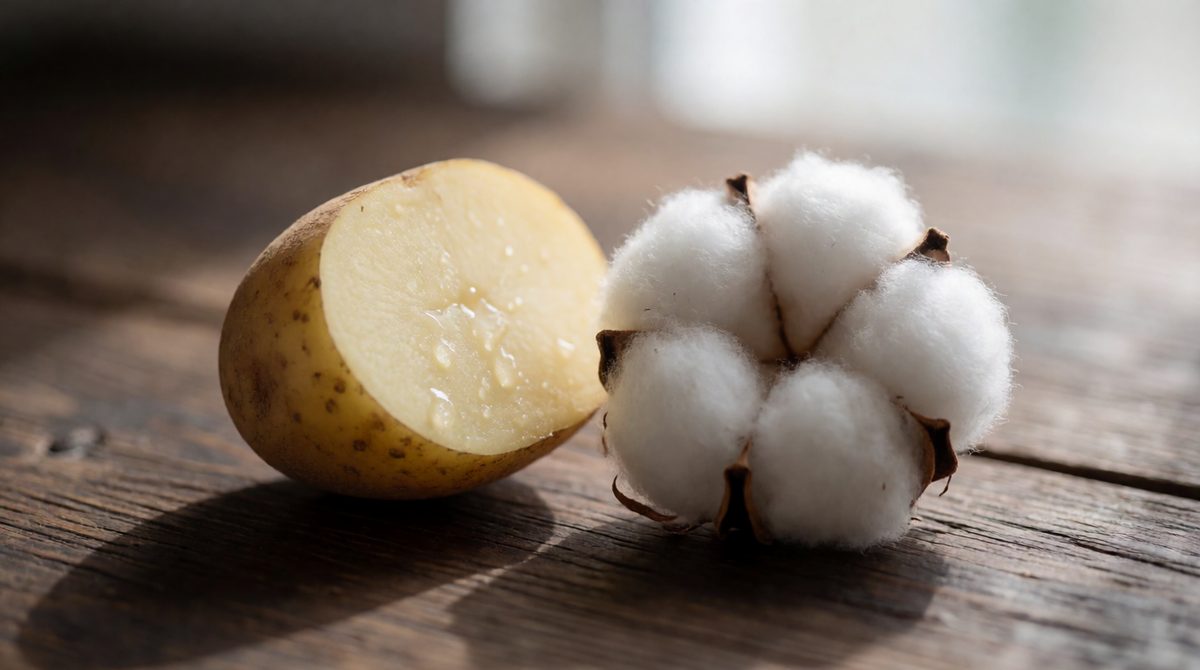
Potatoes store energy as starch while cotton is almost pure cellulose - two natural polymers built from the same glucose monomers
Starch and cellulose are both natural polymers found in plants. Both are made from the same type of monomer: sugars. The sugar involved is glucose.
Starch is a polymer made from sugar monomers. Plants use it to store energy. You eat it in foods such as potatoes, bread and pasta.
Cellulose is also a polymer made from sugar monomers. It is found in plant cell walls, and it helps to make plants strong and stiff.
Starch and cellulose are different substances even though both are made from sugar monomers. The sugar units are joined together in a different way, so the polymers behave differently.
Question: A scientist breaks a natural polymer down into its monomers. She finds only amino acids. What was the polymer?
Step 1: Match the monomer to the polymer using the list above.
Step 2: Amino acids are the monomers of proteins.
Answer: A protein.
Saying DNA is made from amino acids. It is made from nucleotides. Saying DNA has one chain. Most DNA has two. Mixing up starch and cellulose. Both are made from sugar monomers, so the monomer does not tell them apart. Forgetting that the four nucleotides are different from each other.
DNA, starch and proteins are all naturally occurring polymers.
(a) Name the monomers that make up DNA. (1 mark)
(b) Describe the structure of most DNA molecules. (2 marks)
(c) Name the type of monomer that makes up starch. (1 mark)
(a) Nucleotides.
(b) Two polymer chains, in the form of a double helix.
(c) Sugars (glucose).
Learn the list of polymers and monomers. A question that says "name the monomers" wants one word or short phrase, so give it straight away.