❓ They were incomplete
Many elements had not been discovered yet. The early tables had no spaces for them. So the elements that were known got squashed together, and the patterns broke down further along the table.
Sign up to access the complete lesson and track your progress!
Unlock This Course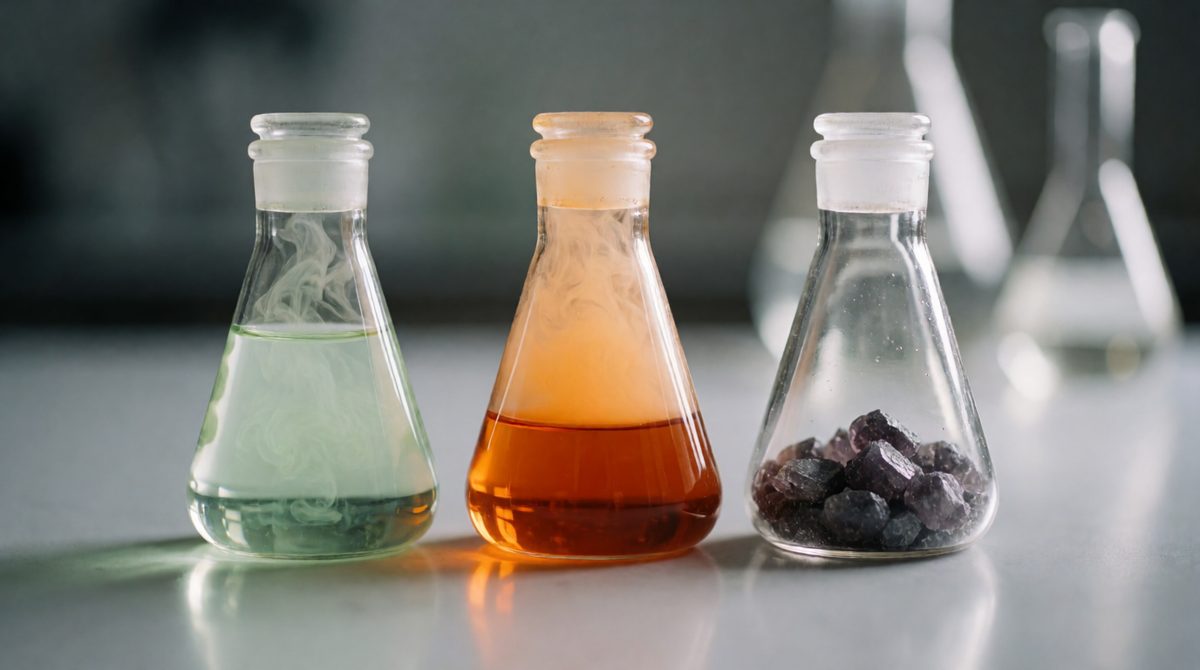
Chlorine, bromine and iodine look different but behave alike - patterns like this pushed early chemists to sort the elements
By the early 1800s, chemists knew dozens of elements. They could see that some elements behaved in similar ways. For example, chlorine, bromine and iodine are all reactive non-metals that behave alike. Scientists wanted a way to sort the elements so these patterns made sense.
There was a big problem. Nobody had discovered protons, neutrons or electrons yet. So scientists could not sort elements by atomic number, the way we do today. Instead, they used the one thing they could measure: how heavy the atoms of each element were compared with each other.
So the first attempts arranged the elements in order of their atomic weights, from lightest to heaviest.
Key terms:
Ordering by atomic weight worked quite well for the lighter elements. But the early periodic tables had two big problems.
Many elements had not been discovered yet. The early tables had no spaces for them. So the elements that were known got squashed together, and the patterns broke down further along the table.
If the strict order of atomic weights was followed, some elements ended up in groups with elements that were nothing like them. A metal could land in the same group as non-metals.
One example is the table made by John Newlands in the 1860s. He noticed that, in order of atomic weight, every eighth element seemed similar. This worked for the first few elements. But further on it put metals such as iron in the same group as non-metals such as oxygen and sulfur. Many scientists did not accept his table because the pattern did not hold.
In 1869, the Russian chemist Dmitri Mendeleev made his own periodic table. He also started with atomic weights. But he did not follow them blindly. He cared more about putting elements with similar properties in the same group. He overcame some of the problems in two ways.
Where the next known element did not fit the pattern, Mendeleev left a gap. He said the gap was for an element that had not been discovered yet. This kept the known elements in the right groups.
In some places he swapped the order based on atomic weights. He put a slightly heavier element before a lighter one, so that each one landed in the group it matched.
The best known swap is tellurium and iodine. Tellurium has a higher atomic weight than iodine, so strict weight order puts iodine first. But iodine behaves like chlorine and bromine, so it belongs in their group, as you saw at the start. Tellurium behaves like sulfur and selenium. Mendeleev put tellurium first and iodine second, so both sat with their families.
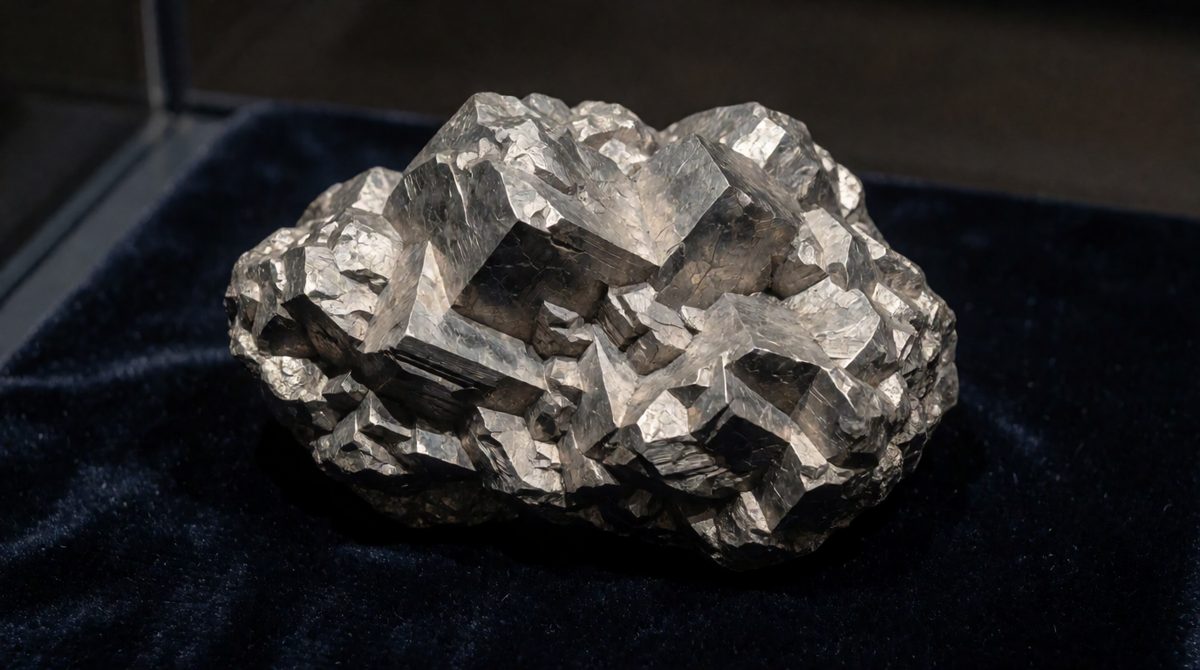
Mendeleev left a gap for germanium and predicted its properties - when this grey metalloid was found in 1886, he was spot on
Mendeleev did more than leave gaps. He used the patterns in his table to predict the properties of the missing elements. He looked at the elements above, below and on either side of each gap, and worked out what the missing element should be like.
This made his table a scientific idea that could be tested. If the missing elements were found, and they had the properties he predicted, his table would be supported. If they turned out very different, it would be refuted (shown to be wrong).
Over the following 20 years or so, elements with the properties he predicted were discovered and filled the gaps. The most famous is germanium, found in 1886. It fitted a gap below silicon.
The match was very close. Gallium, found in 1875, also filled one of his gaps. These discoveries convinced other scientists that Mendeleev's table was right.
One question was left. Why did Mendeleev's swaps work? If atomic weight was the right way to order elements, swapping them should not have been needed.
The answer came much later, once protons, neutrons and isotopes were discovered. Remember, isotopes are atoms of the same element with different numbers of neutrons. Neutrons add mass, but they do not change which element an atom is.
Elements are really ordered by their number of protons (see The Modern Periodic Table). An element's atomic weight depends on how many neutrons its atoms have, and how common each isotope is. Tellurium has fewer protons than iodine, but many of its atoms are heavy isotopes with lots of neutrons. That makes tellurium's atomic weight higher, even though it should come first.
So knowledge of isotopes made it possible to explain why the order based on atomic weights was not always correct. Mendeleev had placed the elements in the right order without knowing why.
Saying Mendeleev ordered elements by atomic number. He could not. Protons had not been discovered. He used atomic weight, then changed the order in a few places.
Saying the gaps were mistakes. The gaps were deliberate. They were spaces for elements he believed existed but had not been found.
Just saying "he predicted elements". For the marks, say he predicted their properties, and that elements with those properties were later discovered.
Mixing up the two explanations. The discovery of new elements supported the gaps. Isotopes explained the swapped order.
Mendeleev's periodic table was published in 1869. Describe how Mendeleev arranged the elements, and explain why his table was accepted by other scientists. [4 marks]
Mendeleev arranged the elements in order of atomic weight (1). He left gaps for elements he thought had not yet been discovered (1). In some places he changed the order based on atomic weight, so that elements with similar properties were in the same group (1). Elements were later discovered that filled the gaps and had the properties he had predicted, which supported his table (1).
"Describe the steps" questions want things in order. Start with atomic weights, then the problems, then Mendeleev's gaps and swaps, then the evidence: new elements, then isotopes.