🌊 About 2.7 billion years ago
Algae first produced oxygen. Soon after this, oxygen appeared in the atmosphere.
Sign up to access the complete lesson and track your progress!
Unlock This Course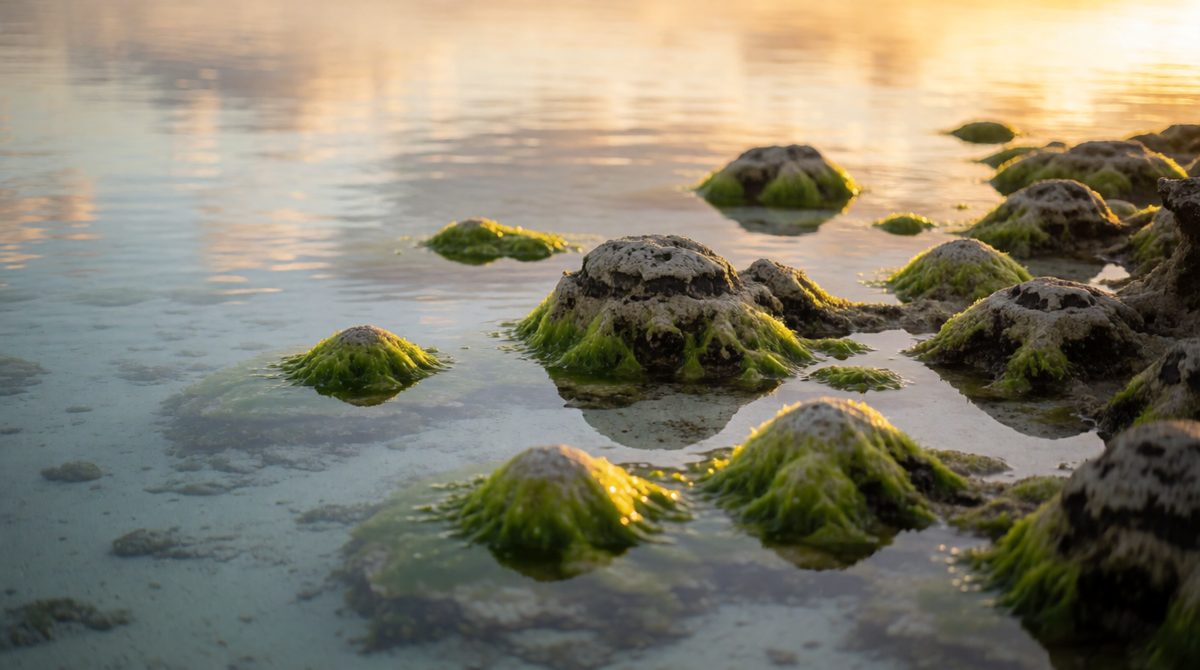
Those green mats are cyanobacteria-style microbes, and their ancestors pumped out the first oxygen about 2.7 billion years ago
The early atmosphere had very little oxygen. Today, about one-fifth of the air is oxygen. So where did it come from? The answer is living things. Algae and plants made it by photosynthesis.
Photosynthesis uses light energy to turn carbon dioxide and water into glucose. Oxygen is made as a waste product, and it is released into the air or the water.
Key terms:
You need to know photosynthesis as a word equation and as a balanced symbol equation.
carbon dioxide + water → glucose + oxygen
6CO2 + 6H2O → C6H12O6 + 6O2
Light is needed, so the arrow is written with "light" above it. Check the balance: each side has 6 carbon atoms, 12 hydrogen atoms and 18 oxygen atoms.
Algae first produced oxygen. Soon after this, oxygen appeared in the atmosphere.
Plants evolved. The percentage of oxygen in the air gradually increased.
Over a very long time the oxygen reached a level that let animals evolve. Animals need oxygen to release energy from their food, so they could not have lived in the early atmosphere.
You can show that aquatic plants make oxygen in daylight. Put some pondweed in a beaker of water in bright light. Bubbles of gas rise from the leaves. Collect the gas in a test tube. It relights a glowing splint, which is the test for oxygen. Keep the pondweed in the dark and the bubbles stop.
As the oxygen went up, the percentage of carbon dioxide went down. Several things took it out of the air.
1. Photosynthesis. Algae and plants take in carbon dioxide and use it to make glucose. The carbon ends up in their bodies.
2. Dissolving in the oceans. Carbon dioxide dissolves in water, so a lot of it dissolved in the oceans.
3. Sedimentary rocks and fossil fuels. Carbon dioxide was also decreased by the formation of sedimentary rocks and fossil fuels that contain carbon. The carbon was locked away in them for millions of years.
Key terms:
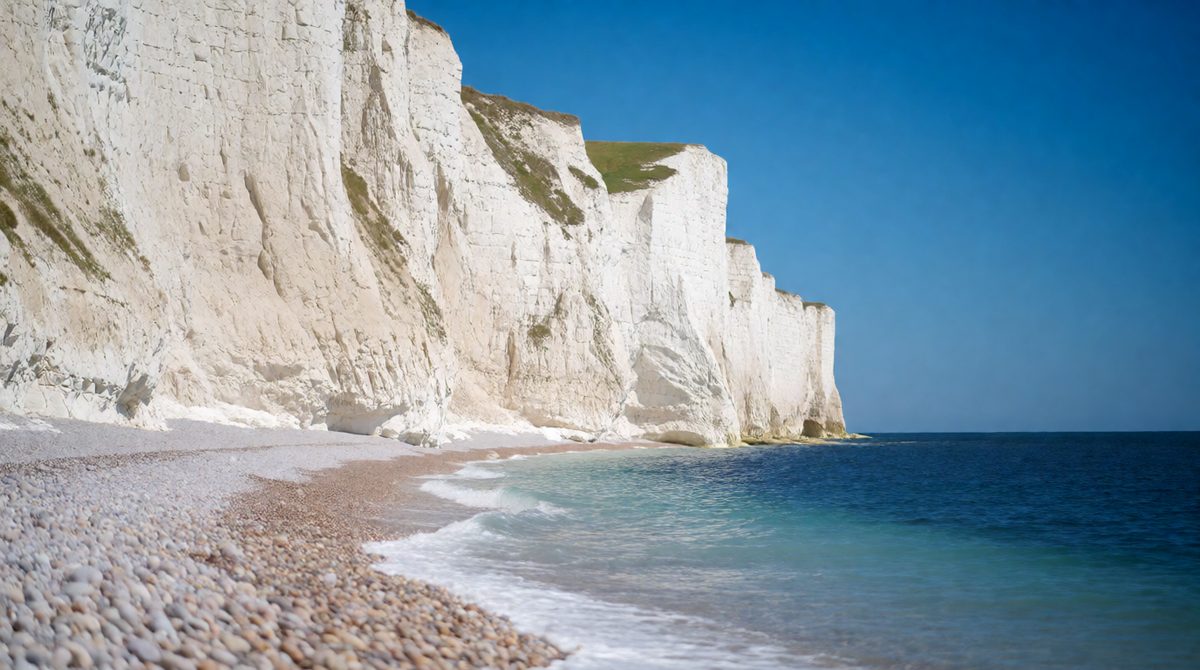
These white cliffs are made of old sea-creature shells, carbon locked away as limestone over millions of years
Sea creatures made shells and skeletons containing carbon. When they died, the shells sank and built up in layers. Over millions of years the layers were squashed into limestone, a sedimentary rock.
Dead plants were buried and squashed over millions of years. The plant remains slowly changed into coal.
Tiny sea creatures died and were buried in mud. Over millions of years heat and pressure changed their remains into crude oil and natural gas.
In every case, carbon that was once in carbon dioxide in the air became part of living things. When these died, their carbon was trapped in rock or fuel instead of going back into the air.
You should be able to describe the main changes in the atmosphere and their likely causes.
Remember, these are the likely causes. Scientists work them out from evidence, and nobody was there to see it.
Question: Explain how the formation of coal reduced the carbon dioxide in the air.
Step 1: Plants took in carbon dioxide for photosynthesis, so the carbon became part of the plants.
Step 2: When the plants died they were buried and squashed over millions of years.
Step 3: The carbon was locked in the coal, so it did not return to the air as carbon dioxide.
Saying that plants take in oxygen for photosynthesis. They take in carbon dioxide and give out oxygen. Another mistake is thinking oxygen was in the air from the start. It built up slowly, over billions of years, because of algae and plants. Also, do not say limestone formed from rocks alone. It formed from the shells and skeletons of sea creatures.
Describe how the percentages of oxygen and carbon dioxide in the atmosphere changed over time, and give two causes of the change in carbon dioxide. (4 marks)
The percentage of oxygen gradually increased. Algae first made oxygen by photosynthesis about 2.7 billion years ago, and plants evolved later and made more. The percentage of carbon dioxide decreased. Two causes are photosynthesis by algae and plants, and the formation of sedimentary rocks and fossil fuels that contain carbon.
For "explain" questions, finish with what happened to the carbon. Say it was locked away in rocks or fuels, so it was not released back into the air.