Why a warmer world matters
An increase in average global temperature is a major cause of climate change. A change of a degree or two in the average sounds small. But it affects the whole planet, because the weather, the oceans and living things are all linked.
Scientists use models to predict what might happen. Nobody can be completely certain, so we talk about potential effects. Here are four of them.
Four potential effects of global climate change
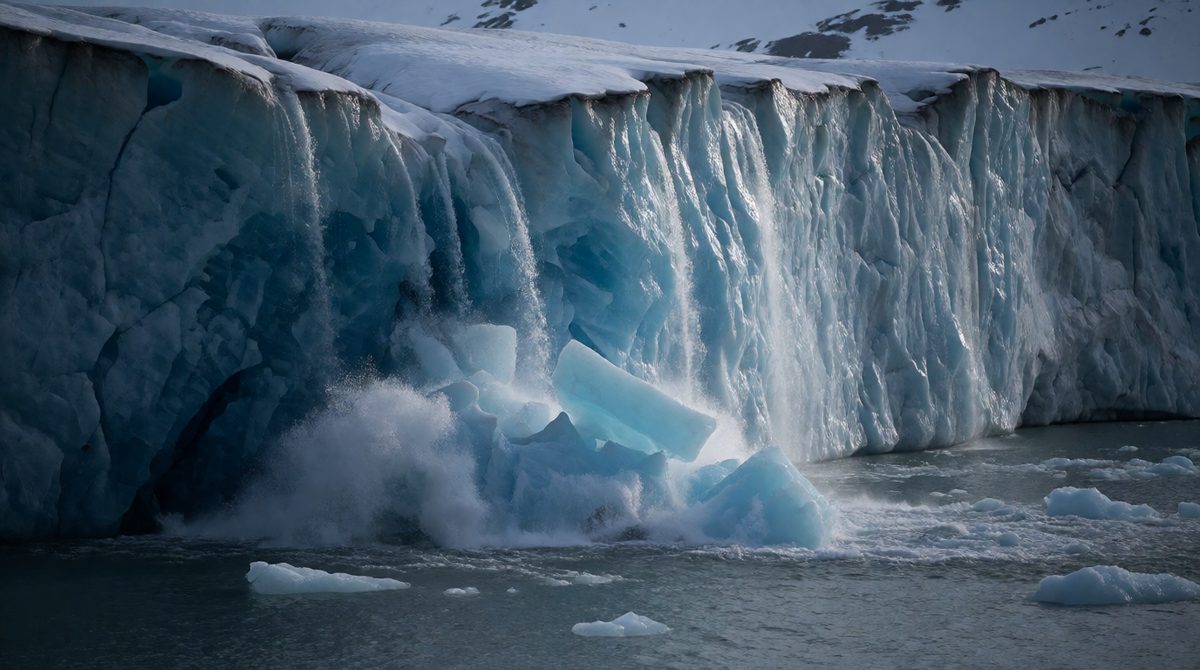
Melting glaciers add water to the sea, and warmer water expands too, so sea levels rise
🌊 1. Sea level rise
Warmer weather melts ice on land, such as glaciers. The extra water runs into the sea. Water also takes up more space as it warms. Higher seas can flood low-lying coasts and damage homes, farmland and fresh water supplies. Coasts can also be worn away faster (coastal erosion).
⛈ 2. More extreme weather
Some places could get more frequent or more severe storms, heatwaves, floods and droughts. These put lives, buildings and power supplies at risk.
☔ 3. Changes to rainfall
The amount and the pattern of rainfall may change. Some areas could get much more rain and others much less. This changes where there is enough water to drink and to grow crops.
🌿 4. Changes to wildlife and food production
Many species are suited to a small range of temperatures. They may have to move to new places, or may die out if they cannot. Changes in temperature and rain also change which crops can be grown and how much food farms can make.
Scale, risk and environmental implications
The spec asks you to discuss these effects. That means weighing up three things:
- Scale: how big is the effect, and how many places and people does it reach? Sea level rise and rainfall change could affect many countries at once.
- Risk: how likely is it, and how serious would the harm be? A flood that destroys a town is a high risk. A slightly warmer garden is a low risk.
- Environmental implications: what does it do to the natural world? For example, a species that cannot move to a cooler place may be lost, and that can upset the food chains around it.
The effects can also link together. Less rain can mean poorer harvests. Poorer harvests can mean less food. Floods can ruin farmland. A good answer shows these links and says that the exact size of each effect is uncertain.
Common mistakes
Do not say climate change is "the hole in the ozone layer". That is a different problem. Do not say that the whole world simply gets hotter everywhere: some places may get wetter, drier or stormier instead. Use the word potential, because these are predictions.
The carbon footprint
Key terms:
- Carbon footprint: the total amount of carbon dioxide and other greenhouse gases emitted over the full life cycle of a product, service or event.
- Life cycle: all the stages of something, from getting the raw materials, through making and using it, to throwing it away.
The words "full life cycle" matter. The footprint of a pair of trainers is not just the emissions from the factory. It includes getting or growing the raw materials, making the parts, moving them by lorry and ship, the energy used to sell them, and what happens when they are thrown away.
A footprint can also belong to a service (such as a bus journey) or an event (such as a music festival). Each one has its own total, found by adding up every stage.
How to reduce the carbon footprint
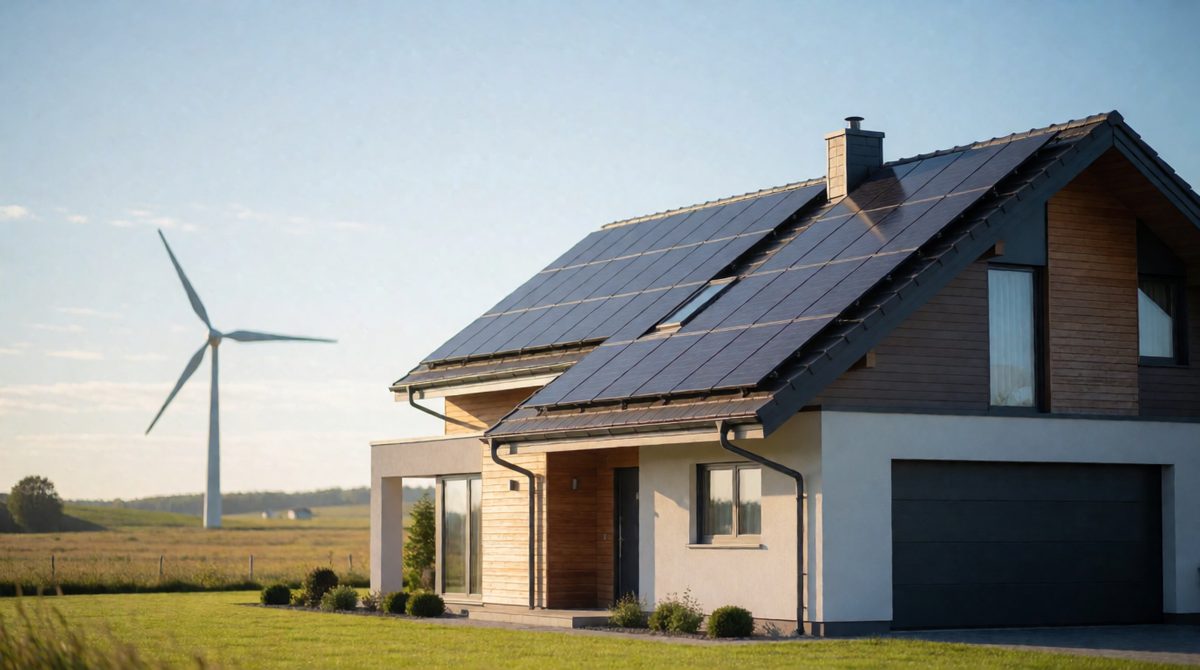
Solar panels on a roof cut the carbon footprint by swapping fossil-fuel power for renewable energy
The carbon footprint can be reduced by reducing emissions of carbon dioxide and methane. Here are some actions.
⚡ Cut carbon dioxide
- Use renewable energy, such as wind and solar power, instead of burning fossil fuels.
- Use less energy: insulate homes and turn things off.
- Use public transport, walk, cycle or use electric vehicles.
- Plant trees and stop deforestation, so more carbon dioxide is taken in.
- Capture carbon dioxide from chimneys and store it.
🍃 Cut methane
- Reduce the number of cattle farmed, for example by eating less beef and dairy.
- Change how rice is grown so less methane is made in the paddy fields.
- Send less rubbish to landfill by reusing and recycling more.
- Collect methane from landfill sites and use it as a fuel.
Why actions may be limited
If these actions are so good, why have emissions not stopped? The spec asks you to give reasons why actions may be limited.
- Cost: renewable power stations, electric cars and carbon capture can be expensive to build.
- Technology: some ideas are not yet developed enough to be used everywhere.
- Lifestyle: many people do not want to change how they travel, eat or heat their homes.
- Agreement: countries must work together. Some have different needs and may not agree to cut emissions at the same time.
- Jobs and supply: wind and sun are not always available, and some people work in industries that would shrink.
Worked example
A festival has a carbon footprint. Stages that add to it: the fuel in the lorries carrying equipment, the electricity from diesel generators, and the travel of the visitors. To reduce it, the organisers could power the stages with solar panels and offer a coach from the nearest town. Their action may be limited if the solar panels cost too much, or if visitors still choose to drive.
Exam-style question
Describe two actions that could reduce the emissions of methane. Give one reason why these actions may be limited. (3 marks)
Model answer
Farm fewer cattle (or change how rice is grown) so less methane is released. Collect methane from landfill sites and use it as a fuel instead of letting it escape. These actions may be limited because people may not want to change their diets, or because the changes cost a lot of money.
Exam tip
When a question says "give reasons why actions may be limited", write about cost, technology, lifestyle or countries failing to agree, and tie it to the action in the question.