🔥 Plenty of oxygen
The carbon in the fuel turns into carbon dioxide and the hydrogen turns into water (as water vapour when hot). You met this in the lesson Properties of Hydrocarbons.
Sign up to access the complete lesson and track your progress!
Unlock This Course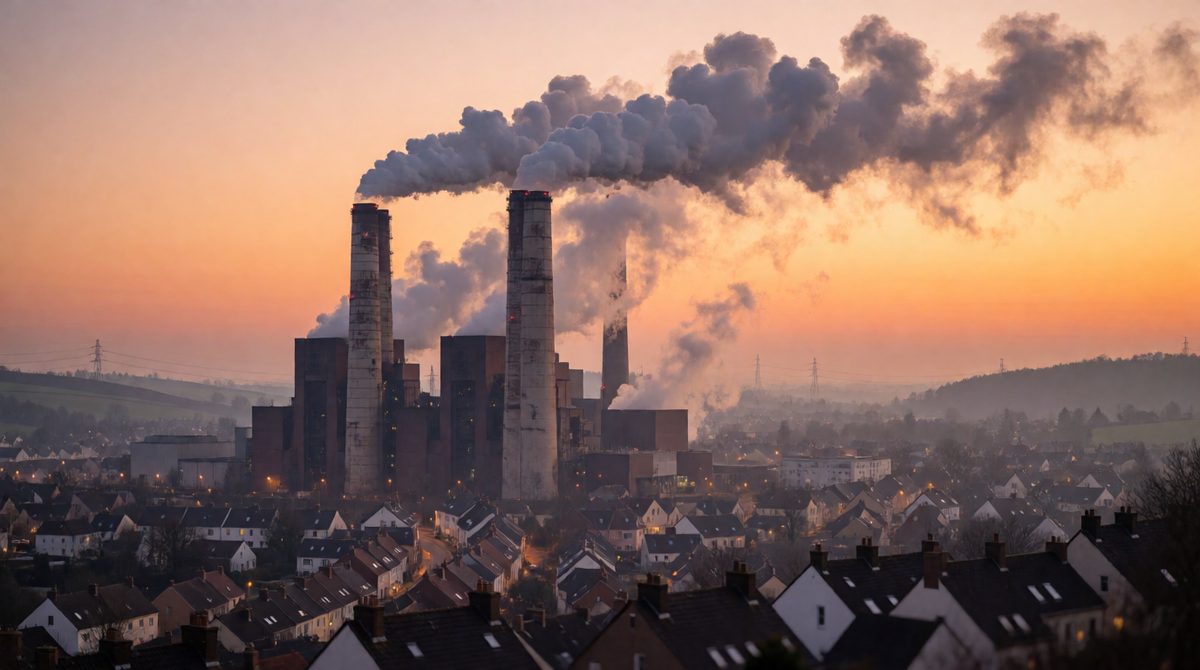
Smoke from a burning fuel can carry carbon monoxide, soot, sulfur dioxide and nitrogen oxides into the air
The combustion of fuels is a major source of atmospheric pollutants. Most fuels, including coal, contain carbon and/or hydrogen. Some also contain a little sulfur. When a fuel burns, a mixture of gases and solid particles can be released into the air.
The gases released may include carbon dioxide, water vapour, carbon monoxide, sulfur dioxide and oxides of nitrogen. Solid particles and unburned hydrocarbons may also be released, and these form particulates in the atmosphere.
Key terms:
The carbon in the fuel turns into carbon dioxide and the hydrogen turns into water (as water vapour when hot). You met this in the lesson Properties of Hydrocarbons.
This is incomplete combustion. Some carbon ends up as carbon monoxide, and some stays as solid carbon (soot). Unburned fuel can also escape as hydrocarbons.
With limited oxygen, a fuel containing carbon does not turn all of its carbon into carbon dioxide. We can show two possible outcomes for natural gas (mostly methane, CH4):
The less oxygen there is, the more carbon monoxide and soot are made. A gas fire or boiler with a blocked air supply can burn this way.
Some fuels, such as coal, contain sulfur. When the fuel burns, the sulfur reacts with oxygen from the air to make sulfur dioxide:
S + O2 → SO2
The sulfur dioxide escapes in the waste gases. Fuels with no sulfur do not make it.
Air is mostly nitrogen with some oxygen. At the very high temperatures inside a car engine, nitrogen and oxygen from the air react together to form oxides of nitrogen:
N2 + O2 → 2NO
The nitrogen comes from the air, not from the fuel, so even a fuel with no nitrogen in it can make these gases.
Question: predict the products when coal containing carbon and sulfur burns in a limited supply of air.
Step 1: carbon in plenty of oxygen would give carbon dioxide, but the oxygen is limited, so expect carbon monoxide and soot too.
Step 2: the fuel contains sulfur, so expect sulfur dioxide.
Step 3: the fuel has no hydrogen listed, so no water.
Answer: carbon monoxide, soot (and some carbon dioxide) and sulfur dioxide. If the air is very hot, oxides of nitrogen may form too.
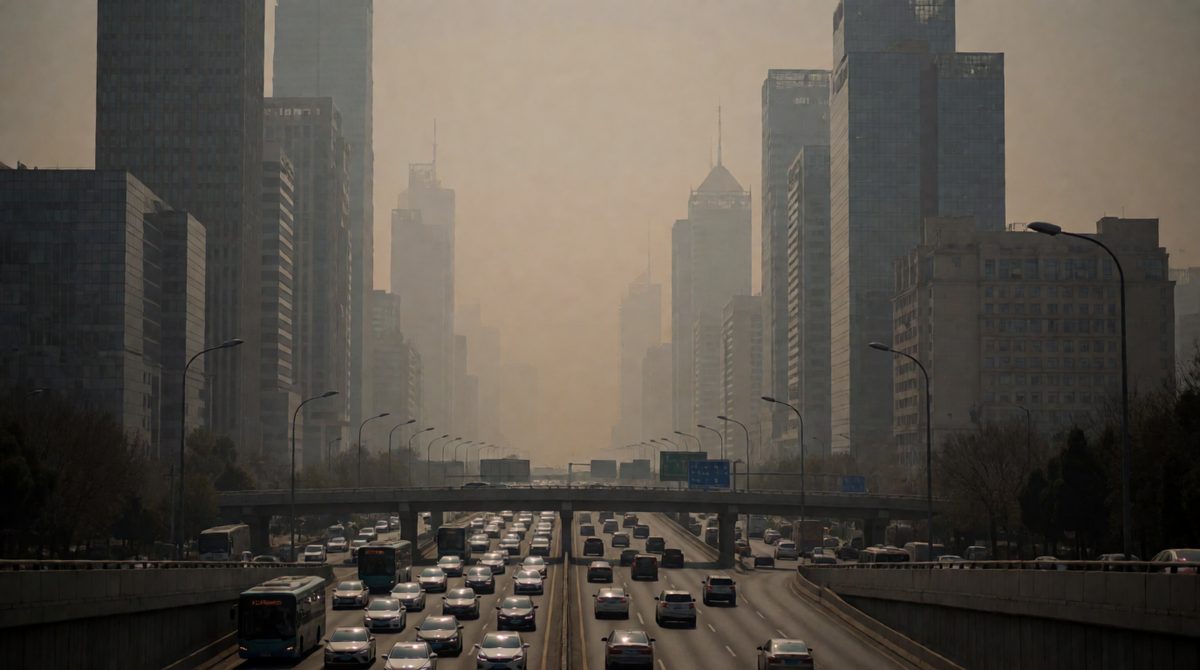
A hazy city skyline: nitrogen oxides and particulates in smog can cause breathing problems and global dimming
It is a toxic gas. It is colourless and odourless, so it is not easily detected. It stops your blood carrying oxygen properly.
They cause respiratory problems in humans, such as coughing and breathing difficulty, and they cause acid rain.
They cause global dimming and health problems for humans, such as damage to the lungs.
Carbon monoxide. Because you cannot see or smell it, you may not know it is there. It stops the blood carrying oxygen round the body. This is why homes should have a carbon monoxide alarm near gas appliances.
Acid rain. Sulfur dioxide and oxides of nitrogen dissolve in rain water in the clouds and make it acidic. Acid rain can damage trees, harm fish and other life in lakes, and wear away stone buildings and statues.
Respiratory problems. Breathing in sulfur dioxide and oxides of nitrogen irritates the airways and lungs. This is worse for people with asthma.
Particulates. Tiny particles in the air reflect and block some sunlight, so less reaches the ground. This is global dimming. When people breathe the particles in, they can cause health problems.
1. Saying carbon monoxide is a smelly gas. It has no smell, which is what makes it so dangerous.
2. Writing "carbon dioxide causes acid rain". The gases that cause acid rain are sulfur dioxide and oxides of nitrogen.
3. Saying oxides of nitrogen come from the fuel. They are made from nitrogen and oxygen in the air.
4. Mixing up soot and carbon monoxide. Soot is solid carbon. Carbon monoxide is a gas.
A car engine burns petrol. (a) Name two pollutants that are made if there is not enough oxygen. (b) Explain why carbon monoxide is dangerous. (c) Explain how burning a fuel containing sulfur can cause acid rain. [6 marks]
(a) Carbon monoxide and soot (carbon particles). [2]
(b) Carbon monoxide is toxic. It is colourless and odourless, so it is not easily detected. [2]
(c) The sulfur in the fuel burns to make sulfur dioxide. The sulfur dioxide dissolves in rain water, which makes the rain acidic. [2]
When a question asks you to predict products, check two things: how much oxygen there is, and whether the fuel contains sulfur.