What we use the Earth's resources for

Warm fire, solid walls, good food: the Earth's resources give us warmth, shelter, food and transport
Everything we have comes from somewhere. Humans use the Earth's resources to provide four basic things: warmth, shelter, food and transport.
Look around you. The heating in your home needs fuel. The walls need bricks, cement or timber. Your lunch came from plants and animals. The bus or car that took you to school runs on fuel and is built from metals, plastics and glass. All of these start as resources from the Earth, the oceans or the atmosphere.
Some resources are used almost as they are. Many are processed first. Processing means using chemical and physical methods to turn a raw material into something more useful, such as crude oil into fuels, or an ore into a metal.
Key terms:
- Natural resource: a material that is found in nature and that people can use.
- Renewable resource: a resource that is replaced as fast as we use it, so it will not run out.
- Sustainable development: development that meets the needs of current generations without compromising the ability of future generations to meet their own needs.
Natural products, farming and synthetic products
Nature gives us food, timber, clothing and fuels. But nature alone cannot supply enough for billions of people. So natural resources are supplemented by agriculture. This means farmers grow extra crops and raise extra animals to make up the amount we need.
Some natural products are also replaced by synthetic products. Synthetic means made by people, using chemistry, in a factory or laboratory.
🌾 Supplemented by farming
Food: wild plants and animals could never feed everyone, so we farm crops and livestock.
Timber: wood from wild forests is supplemented by trees grown in managed plantations.
Clothing: cotton and wool come from crops and farm animals.
🧪 Replaced by synthetic products
Clothing: polyester and nylon replace some wool and cotton.
Fertilisers: factory-made fertilisers replace natural manure.
Rubber: synthetic rubber replaces natural rubber from trees in many uses, such as tyres.
Chemistry plays an important role here. Chemists improve agricultural and industrial processes so that we can make new products. For example, fertilisers help crops to grow bigger, and new materials can be made to do jobs that natural ones cannot.
Finite and renewable resources
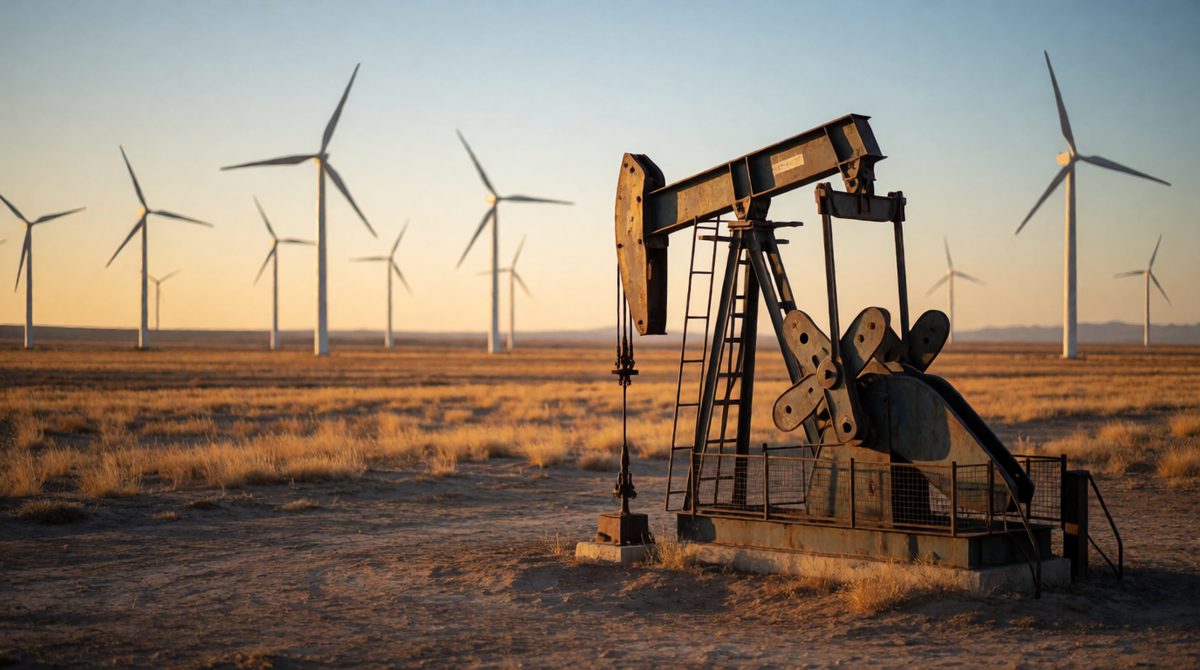
Wind is a renewable resource, while the oil pumped here is finite - once it's gone, it's gone
Resources come from the Earth, the oceans and the atmosphere. We can sort them into two groups.
⛽ Finite resources
Finite resources are used up faster than they form. Once they are gone, they are gone. Remember, crude oil is a finite resource. Coal and natural gas are finite too, and so are metal ores.
🍃 Renewable resources
Renewable resources are replaced as fast as we use them, so they will not run out. Crops, animals and timber from well-managed forests are renewable. So are wind and sunlight.
Finite resources are processed to provide energy and materials. For example, we burn fuels for energy, and we extract metals from ores to make materials.
To decide which group a resource belongs to, ask one question: is it replaced as fast as we use it? If yes, it is renewable. If no, it is finite.
Worked example
Is each resource finite or renewable? (a) Iron ore. (b) Cotton. (c) Natural gas.
(a) Iron ore is finite. It took millions of years to form and is used up faster than it forms.
(b) Cotton is renewable. Farmers can grow a new crop every year.
(c) Natural gas is finite. It formed over millions of years and is used faster than it forms.
Sustainable development
If we use up resources and damage the environment, there will be less for people in the future. Sustainable development tries to avoid this. It is development that meets the needs of current generations without compromising the ability of future generations to meet their own needs.
In practice, this might mean using renewable resources instead of finite ones, wasting less, and making products in ways that cause less damage. Chemistry helps with all of these because chemists design the processes that make our fuels, materials and food.
Reading charts, graphs and tables about resources
In the exam, you may be given a table or graph about resources. Follow these steps.
- Read the title and the labels on both axes, including units.
- Look for the trend: is the amount going up, down or staying the same?
- Quote numbers from the data to back up what you say.
- Use the information given to decide if a resource is finite or renewable.
You may also need to switch between a table and a graph. Plot the numbers from a table as points, or read values off a graph and write them in a table.
Remember, an order of magnitude is a factor of 10. Orders of magnitude help you judge how big one number is compared with another. If one amount is 1000 times bigger than another, it is 3 orders of magnitude bigger, because 1000 = 103.
Worked example
A table shows that a country uses 5 000 000 tonnes of one metal ore each year, but only 5000 tonnes of a rarer ore.
5 000 000 ÷ 5000 = 1000, which is 103. So the first ore is used 3 orders of magnitude more than the second.
Common mistakes
1. Saying renewable means "can never be a problem". It means replaced as fast as we use it. Overuse can still cause trouble.
2. Thinking synthetic means bad or natural means good. Both can be useful, and the question is how they are made and used.
3. Mixing up finite and renewable. Remember: finite has a finish.
4. Forgetting the units when reading a graph or table.
Exam-style question
A shop sells four items: a wool jumper (wool from sheep), a coal fire (coal from the ground), a polyester coat (made in a factory) and a wooden table (timber from managed forests).
(a) Which one of these natural resources is finite? (1 mark)
(b) Give one example of a natural product that has been replaced by a synthetic product. (1 mark)
(c) What is meant by sustainable development? (2 marks)
Model answer
(a) Coal. It is used up faster than it forms.
(b) Wool (or cotton) replaced by polyester or nylon. Natural rubber replaced by synthetic rubber is also correct.
(c) Development that meets the needs of current generations without compromising the ability of future generations to meet their own needs.
Exam tip
For finite or renewable questions, always give your reason: "replaced as fast as it is used" or "used faster than it forms".