🔥 Distillation
The salty water is heated until it boils. The water turns to steam and leaves the salt behind. The steam is then cooled and condenses back into liquid water, which is now free of salt.
Sign up to access the complete lesson and track your progress!
Unlock This CourseAll living things need water of the right quality. For humans, drinking water must have low levels of dissolved salts and low levels of microbes. Microbes are tiny living things, such as bacteria, and some of them make you very ill.
Water that is safe to drink is called potable water. Many people think drinking water must be pure. It is not. Tap water contains some dissolved substances, such as small amounts of dissolved salts. That is fine, because the amounts are low and they do no harm.
In chemistry, pure water means one substance only: water, H2O, with nothing else mixed in. Pure water is a different idea from potable water.
Key terms:
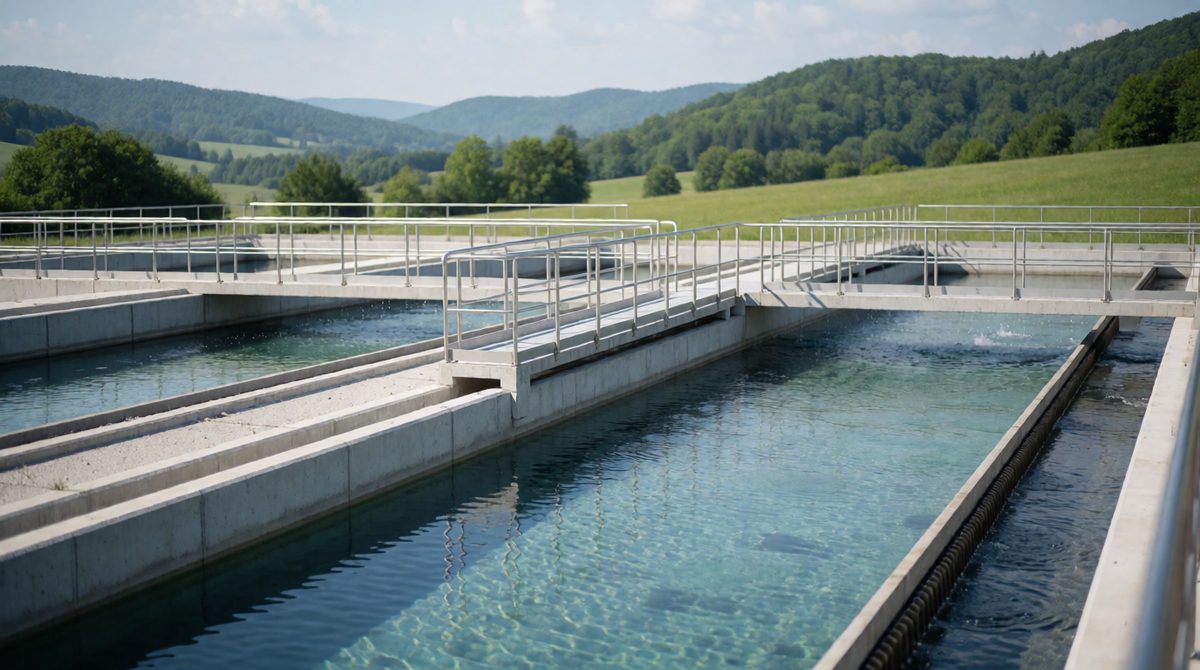
Filter beds at a water works strip out solids before the water is sterilised with chlorine, ozone or UV
The method used depends on the water supplies available and on local conditions. In the United Kingdom (UK), rain provides fresh water. It soaks into the ground and collects in lakes and rivers. Most UK potable water is made in three steps.
Pick an appropriate source of fresh water, such as a river, a lake or water held in the ground. Fresh water already has low levels of dissolved substances, so it needs the least treatment.
Pass the water through filter beds. These hold back solid bits that are not dissolved, so the water becomes much clearer.
Add a sterilising agent to kill microbes. This stops the water from making people ill.
The exam often asks you to give reasons for the steps, so learn what each one does.
The sterilising agents you need to know are chlorine, ozone and ultraviolet light. Chlorine and ozone are chemicals added to the water. Ultraviolet light is shone through the water instead.
Ground water is fresh water that has collected in the ground. To make it potable you choose a suitable source, pass it through filter beds, then sterilise it. No desalination is needed, because it has low levels of dissolved salts.
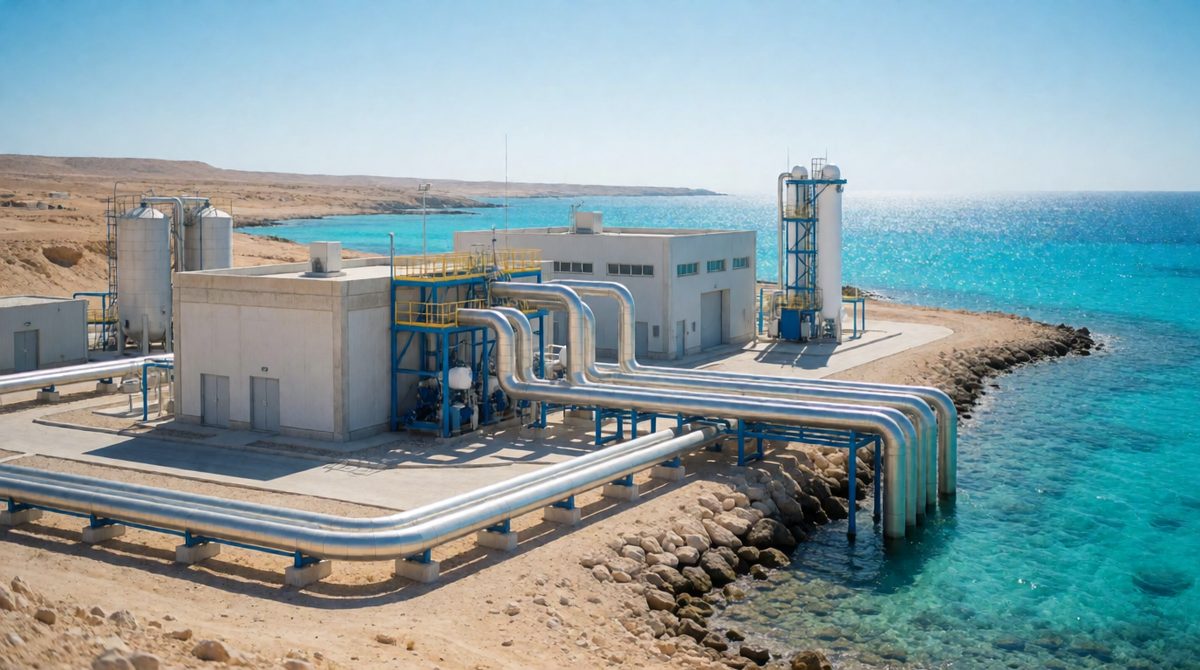
Where fresh water runs short, a desalination plant takes the salt out of sea water - but it needs lots of energy
Some places do not have enough fresh water. If supplies are limited, desalination of salty water or sea water may be needed. This takes out the dissolved salt so the water is safe to drink.
There are two ways to desalinate you need to know.
The salty water is heated until it boils. The water turns to steam and leaves the salt behind. The steam is then cooled and condenses back into liquid water, which is now free of salt.
This process uses membranes. The salty water is pushed through a membrane. Water passes through it, but the dissolved salt is held back. The result is water with very little salt in it.
Both processes need large amounts of energy. Distillation needs a lot of heat to boil the water. Reverse osmosis needs energy to push the water through the membranes. This makes them much more expensive than treating fresh water, so they are used only when fresh water is limited.
Choose a source, filter, sterilise. It has a low salt level already, so little energy is needed.
Desalinate by distillation or reverse osmosis. It has a high salt level, so large amounts of energy are needed.
A country has very little rain and almost no rivers, but it has a long coastline. Which method could it use to get drinking water, and what is the drawback?
It could use sea water and desalinate it by distillation or reverse osmosis. The drawback is that both need large amounts of energy, so the water is costly to produce.
Writing that potable water is pure water. It is not, because it contains dissolved substances.
Saying that filtering removes salt. Filter beds only remove solids that are not dissolved.
Forgetting to sterilise. Filtering does not kill microbes, so a sterilising agent is needed.
Writing that reverse osmosis uses heat. It uses membranes and the energy goes into pushing the water through.
Explain how fresh water from a river is treated to make it potable. Give a reason for each step. (4 marks)
The water is passed through filter beds to remove solid bits that are not dissolved. It is then sterilised using chlorine, ozone or ultraviolet light to kill microbes, so that the water is safe to drink.
If a question asks why a step is used, say what it removes or kills. For example: filtering removes solids, sterilising kills microbes. Do not just name the step.