Earth's Resources and Water » Waste Water Treatment
What you'll learn this session
Study time: 30 minutes
AQA spec: 4.10.1.3
- Why waste water must be treated before it goes back into the environment
- The four stages of sewage treatment
- How industrial and agricultural waste water differ from sewage
- How easy it is to get potable water from waste, ground and salt water
🔒 Unlock Full Course Content
Sign up to access the complete lesson and track your progress!
Unlock This CourseWhy waste water needs treating
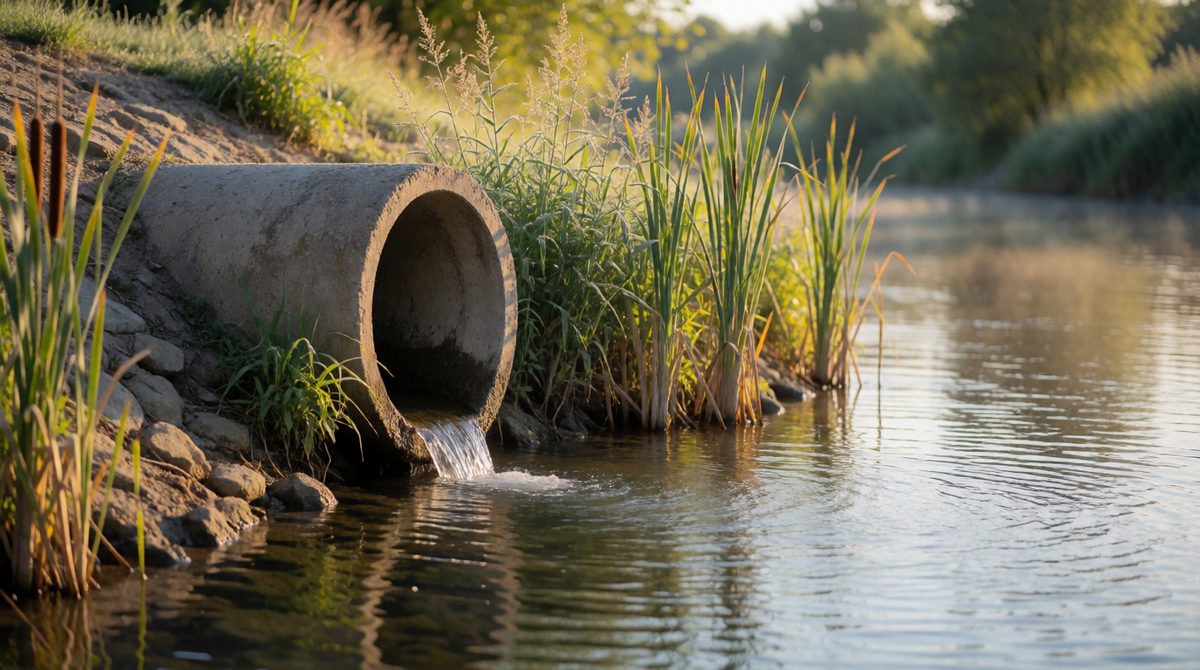
Every flush and shower makes waste water that must be treated before it goes back into rivers
Every time you flush a toilet, take a shower or wash up, you make waste water. Factories and farms make huge amounts too. If this water went straight into rivers and seas, it would harm wildlife and spread disease. So it has to be treated first.
The spec says that urban lifestyles and industrial processes produce large amounts of waste water that need treatment before being released into the environment. What has to be removed depends on where the water came from:
🛀 Sewage
Water from homes and businesses. Treatment must remove organic matter and harmful microbes.
🌾 Agricultural waste water
Water from farms. It also needs organic matter and harmful microbes removed.
🏭 Industrial waste water
Water from factories. It may need organic matter and harmful chemicals removed.
Key terms:
- Waste water: water that has been used and is no longer clean enough to release into the environment.
- Organic matter: material that comes from living things, such as food waste and human waste.
- Microbes: tiny living things, such as bacteria. Some microbes are harmful and cause disease.
The four stages of sewage treatment
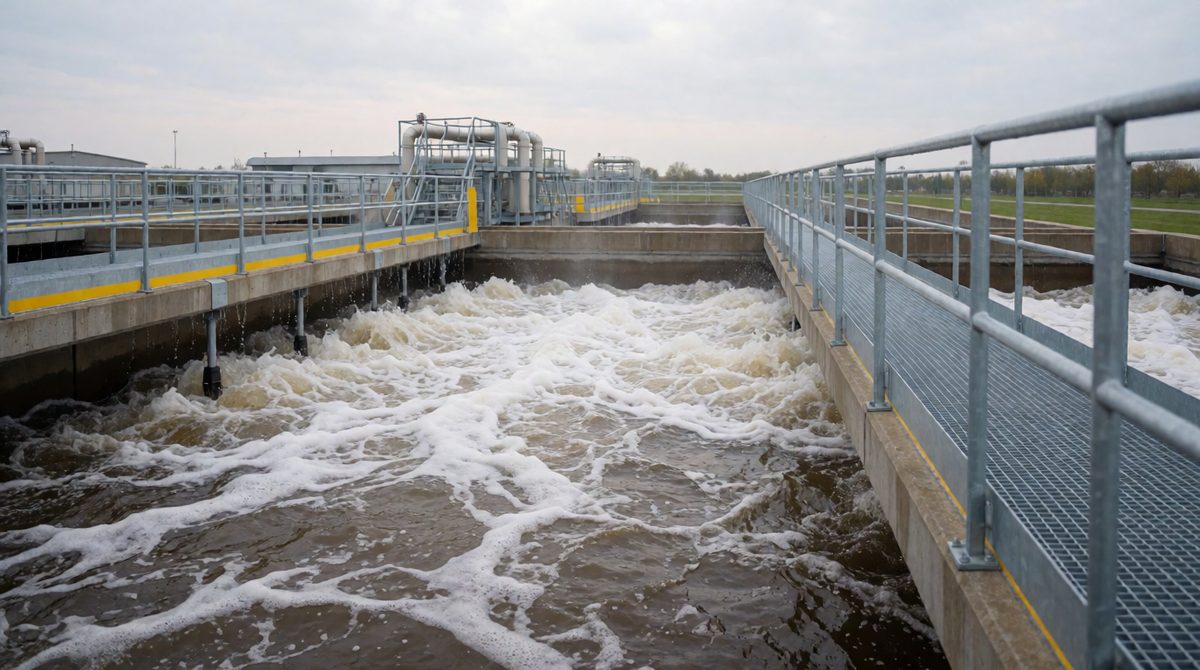
In these aeration tanks, bacteria break down the organic matter in effluent using oxygen bubbled through
Sewage treatment is done in a sewage works. The spec lists four stages. Follow them in order.
Stage 1: Screening and grit removal
The sewage first passes through screens. These are grids that catch large objects, such as sticks, cloths and plastic. Next, the water flows slowly through a channel so that grit and sand sink to the bottom and can be removed. This protects the pumps and pipes in the rest of the works.
Stage 2: Sedimentation
The water is left in large tanks. Solid material slowly sinks to the bottom. This settled material is called sewage sludge. The liquid left on top is called effluent. From here, the sludge and the effluent are treated separately.
Stage 3: Anaerobic digestion of the sludge
The sludge is moved to large sealed tanks. Bacteria break down the organic matter in the sludge. Anaerobic means that this happens without oxygen. The process makes a gas called biogas, which contains methane. Biogas can be burned as a fuel, so some sewage works use it to make their own energy.
Stage 4: Aerobic biological treatment of the effluent
Air is pumped through the effluent. Aerobic means that this happens with oxygen. The oxygen helps bacteria to break down the organic matter still in the water. Together with the earlier stages, this leaves the water clean enough to be released into rivers or the sea.
Key terms:
- Sewage: waste water and waste matter from homes and businesses.
- Sewage sludge: the solid material that settles at the bottom of the tanks.
- Effluent: the liquid left after the sludge has settled out.
- Anaerobic: without oxygen.
- Aerobic: with oxygen.
Remember the order
Screen, settle, digest, aerate. Screening and grit removal comes first, then sedimentation. After that the two paths split: the sludge goes to anaerobic digestion and the effluent goes to aerobic treatment.
Agricultural and industrial waste water
Farm waste water, such as runoff from animal waste, has the same problem as sewage. It contains organic matter and harmful microbes, so it needs those removed before release.
Industrial waste water is different. As well as organic matter, it may contain harmful chemicals from the factory. These chemicals may not be removed by the same steps as sewage treatment. So extra treatment is needed to take them out. Which extra treatment depends on which chemicals are present.
Common mistakes
1. Mixing up anaerobic and aerobic. Anaerobic has no oxygen, aerobic has oxygen. Think of aerobics class: you breathe in air.
2. Saying that the sludge and effluent are the same thing. Sludge is the solid that settles. Effluent is the liquid on top.
3. Forgetting that industrial waste water may need harmful chemicals removed, not just microbes.
Waste, ground and salt water: how easy is it to get potable water?
The spec says you should be able to comment on the relative ease of obtaining potable water from waste water, ground water and salt water. Remember that potable water is water that is safe to drink. Ground water is water found underground in rocks.
⛰ Ground water
Often the easiest. It has been filtered naturally as it passes through rock, so it usually needs less treatment than other sources.
🛀 Waste water
Harder. It needs several treatment stages to remove organic matter and microbes, and industrial waste may also need chemicals removed.
🌊 Salt water
Hardest of the three. The salt has to be removed, and this needs a lot of energy. Desalination is expensive.
In a good answer, give a comparison and a reason. For example: "Obtaining potable water from ground water is easier than from salt water, because salt water needs a lot of energy to remove the dissolved salt."
Exam tip
"Comment on" means give a balanced view. Compare at least two sources and say why one needs more treatment or energy than the other.
Exam-style question
Describe how sewage is treated at a sewage works. (4 marks)
Model answer
Screens and grit removal take out large objects and grit. The water is left to settle (sedimentation), which produces sewage sludge and effluent. The sludge is broken down by bacteria in anaerobic digestion, without oxygen. The effluent is treated by aerobic biological treatment, using air, so bacteria break down remaining organic matter.
Exam tip
For a "describe" question, use the key words from the spec: screening, grit removal, sedimentation, sludge, effluent, anaerobic and aerobic.