🌿 Phytomining
1. Plants are grown on land that contains copper compounds.
2. The plants absorb the metal compounds.
3. The plants are harvested (cut down and collected).
4. The plants are burned. This produces ash that contains the metal compounds.
This whole lesson is Higher tier content. Foundation tier students do not need it.
Sign up to access the complete lesson and track your progress!
Unlock This Course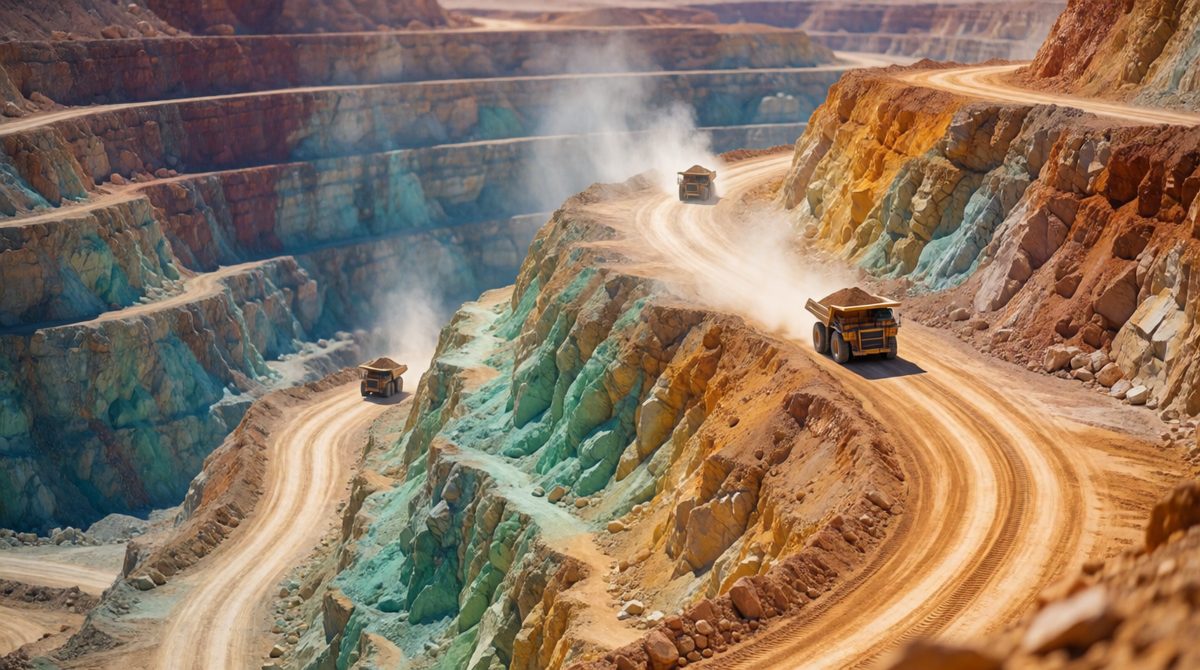
Copper ores are running low, so new methods are needed to get copper from low-grade ores like the rock in this mine
The Earth's resources of metal ores are limited. Once we have mined the best ores, there are fewer left. Copper ores are becoming scarce. Much of the copper that is left is in low-grade ores. These are rocks that contain only a small amount of copper compared with the amount of rock.
Traditional mining means digging up huge amounts of rock, moving it and then disposing of it. With a low-grade ore, almost all of that rock is waste. So scientists have developed new ways to get copper from low-grade ores. Two of them are phytomining and bioleaching. Both avoid the digging, moving and disposing of large amounts of rock.
Key terms:
1. Plants are grown on land that contains copper compounds.
2. The plants absorb the metal compounds.
3. The plants are harvested (cut down and collected).
4. The plants are burned. This produces ash that contains the metal compounds.
1. Bacteria are used on the low-grade ore.
2. The bacteria produce a leachate solution.
3. The leachate contains the metal compounds.
4. The solution is collected and the metal is obtained from it.
In both methods the copper is still in the form of a compound. It has not yet been turned into the metal. That is the next step.
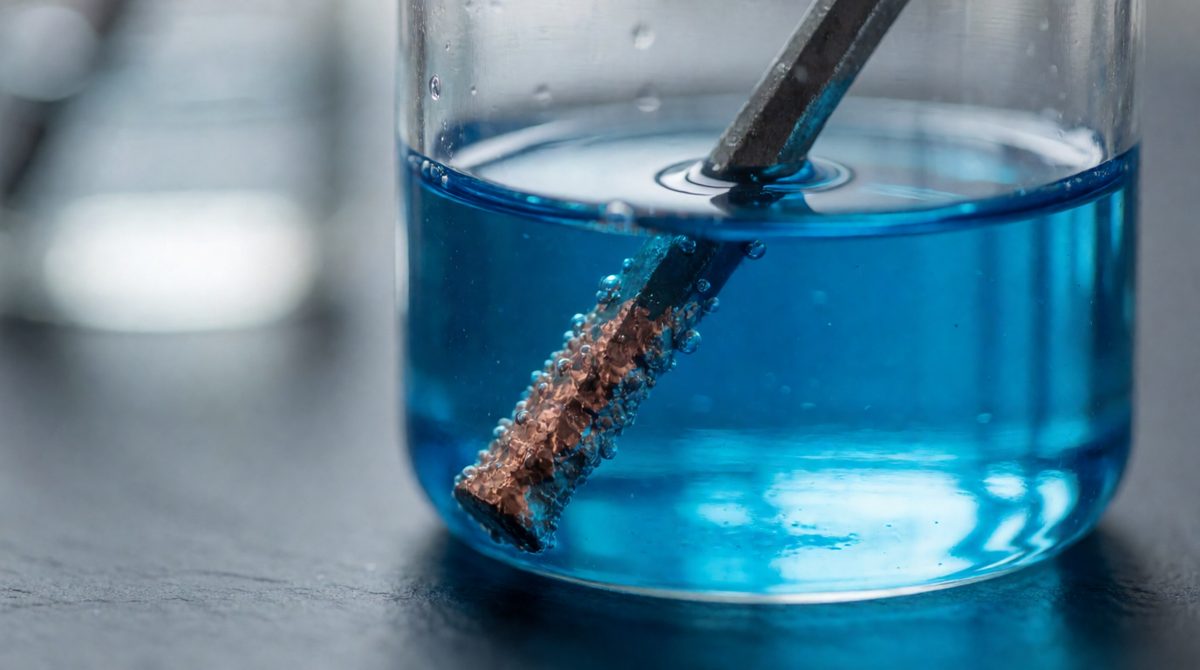
Scrap iron is more reactive than copper, so it pushes copper out of solution in a displacement reaction
The metal compounds can be processed to obtain the metal. For copper, it can be obtained from solutions of copper compounds in two ways.
Iron is more reactive than copper. So when scrap iron is added to a solution of a copper compound, iron takes the place of copper. The copper is displaced and is left as solid metal. The iron is used up as it dissolves.
An electric current is passed through the copper solution. Copper forms at the negative electrode (the cathode). It needs electricity, which costs money.
You met both ideas earlier. Look back at the lessons on the reactivity series and on electrolysis of solutions if you need a reminder.
Traditional mining is the method where rock is dug out of the ground, moved and then processed. Phytomining and bioleaching avoid this. Here is how to judge them.
They can get copper from low-grade ores that are not worth mining in the usual way.
There is no digging, moving and disposing of large amounts of rock.
They help to make our limited supply of copper ores last longer.
They can be slow. Plants must grow before they can be harvested, and bacteria take time to work.
Phytomining needs land to grow the plants on.
Burning the plants and making the metal from the solutions still needs energy.
Imagine a company with a low-grade copper ore, where digging would mean moving 1,000 tonnes of rock to get 5 tonnes of copper (made-up figures for practice). Bioleaching would produce a solution from the ore without the digging. Evaluation: bioleaching is better because it avoids moving rock that is almost all waste. The company must accept that it will be slower, and it would still need energy to get the copper from the solution. If the company needs copper quickly, it may choose another method.
The exam will give you information, such as a table or a short passage, and ask you to evaluate. Follow these steps.
Saying that bacteria or plants are the copper. They are only used to collect copper compounds. Another mistake is forgetting that phytomining and bioleaching make a compound, not the metal, so a second step is needed. Do not say that burning plants makes pure copper: it makes ash that contains copper compounds.
Copper ores are becoming scarce. A company plans to use phytomining to get copper from land with a low-grade ore. Describe how phytomining works, and explain one advantage and one disadvantage of using it instead of traditional mining. (4 marks)
Plants absorb copper compounds. The plants are harvested and burned to make ash that contains the copper compounds. Copper can then be obtained from the compounds, for example by displacement using scrap iron or by electrolysis. Advantage: it avoids digging, moving and disposing of large amounts of rock, and it can use low-grade ore. Disadvantage: it is slow because the plants have to grow before they can be harvested.
When asked to evaluate, always use the information in the question and end with a clear decision.