🏭 Finite resources
Resources are the things used to make goods and services, such as land, workers, factories and machines. There is only a limited supply of them. They are finite.

So many things to want, only $20 to spend: that's scarcity in your own pocket
Imagine you have $20 of pocket money left this month. A new game costs $20. Your friends are going to the cinema, which costs $12. You also want new trainers, a phone case and a snack on the way home. You cannot have everything. Something has to be left out.
That small problem is the starting point of the whole subject. Economics is the study of how people, firms and governments make choices when they cannot have everything they want.
In this course you will learn how prices are set, why some jobs pay more than others, why prices rise, and how governments try to help their countries. It all begins with one idea: there is never enough to go round.
Every person and every country has two things working against each other.
Resources are the things used to make goods and services, such as land, workers, factories and machines. There is only a limited supply of them. They are finite.
Wants are the things people would like to have. As soon as one want is met, another one appears. Wants never run out, so they are unlimited (also called infinite).
Key terms:
Because of this problem, nobody can have everything. Choices have to be made about what to have and what to go without.
The basic economic problem leads to scarcity. Scarcity is the shortage of resources compared with the wants that people have. In other words, there are not enough resources to satisfy all of people's wants.
Key terms:
Be careful with the everyday meaning of the word. In economics, scarce does not mean rare or hard to find. A bottle of water in a city is easy to find, but it is still scarce, because making and delivering it uses up resources that could have been used for something else.
It also does not mean poor. A billionaire has more money than most people but still has a limited amount of time and money, and can still want more. Scarcity affects everyone.
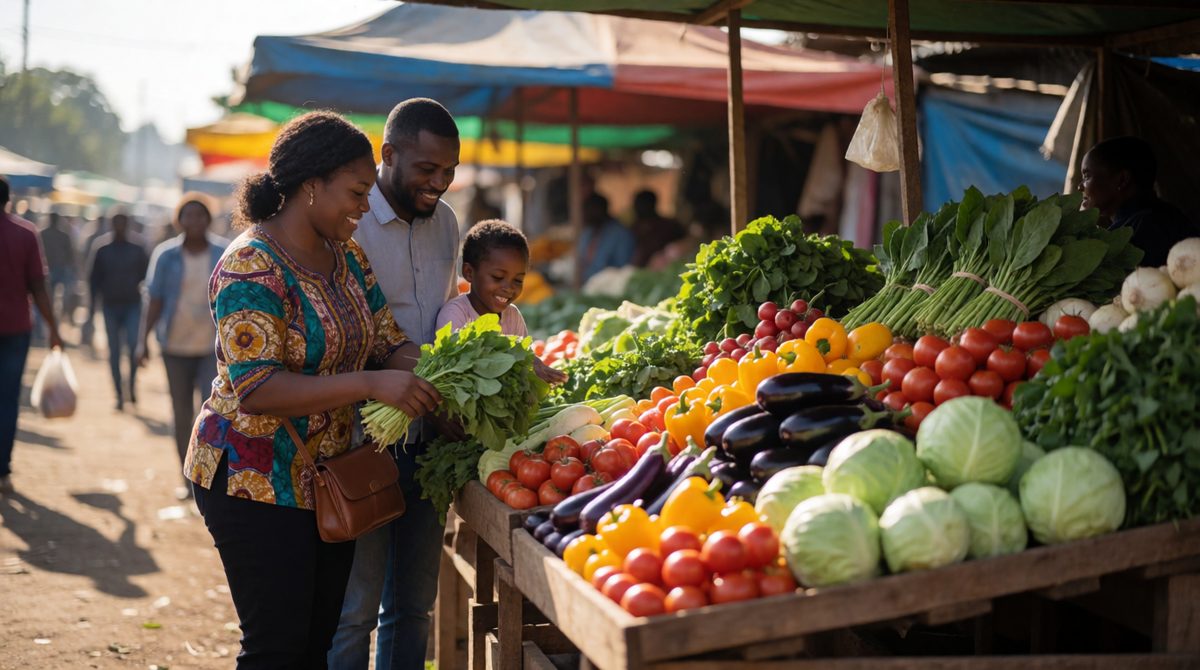
Even a busy family shop runs into the basic economic problem: limited income, unlimited wants
The basic economic problem shows up in the lives of every group in the economy. Here is one clear example for each of the four groups you need to know.
Consumers buy goods and services. A family in Nairobi earns a limited income. It wants a new fridge, better school shoes and a holiday, but it can only afford some of them.
Workers have a limited amount of time. A nurse in Manila has 24 hours in a day. Every extra hour at work is an hour less with family or resting, and the nurse would like more of both.
Firms use resources to make goods and services. A made-up bakery, Sunrise Breads, has one oven and eight staff. It would like to bake bread, cakes and pizza, but its oven and workers cannot make all three at once.
Governments collect taxes to pay for public services. A government has a limited budget. It would like to build more hospitals, schools and roads, but it cannot afford all of them in the same year.
Notice the pattern. In every case there is a limited amount of something (money, time, equipment or tax revenue) and more wants than can be satisfied.
Question: A town council in a made-up country has $5 million to spend. It wants to build a new library ($3 million), repair the main bridge ($4 million) and plant trees in the park ($1 million). Explain why this is an example of the basic economic problem.
Answer: The council wants projects costing $8 million in total, but it only has $5 million. Its resources are finite and its wants are greater than its resources. It cannot do everything, so it faces scarcity and must choose.
1. Thinking scarcity only affects poor people or poor countries. It affects everyone, because wants are always greater than resources.
2. Thinking scarce means rare. Scarce means limited compared with wants.
3. Saying the problem is that people have no money. The problem is that resources are finite and wants are unlimited. Money is only one example of a limited resource.
Zara runs a small farm in a made-up country called Valdoria. She has 10 hectares of land and two workers. She would like to grow wheat, keep chickens and open a farm shop, but she does not have enough land, workers or money for all three.
(a) Define the term 'scarcity'. [2 marks]
(b) Explain why Zara faces the basic economic problem. [4 marks]
(a) Scarcity is a shortage of resources (1) compared with the wants that people have, so not all wants can be met (1).
(b) The basic economic problem is finite resources but unlimited wants (1). Zara has only 10 hectares of land, two workers and a limited amount of money, so her resources are finite (1). She has many wants, as she would like to grow wheat, keep chickens and open a shop (1). She cannot afford all of them, so she must choose which to do (1).
In a 'Define' question, give a short, exact definition and do not add examples. In an 'Explain' question, always link the situation in the question (here, Zara's land and workers) to the idea, and use the words 'finite' and 'wants'.
Access the full course and all the resources like custom timetables and progress tracking.
Join Today