🚫 Over-consumption of demerit goods
Consumers use too much of a harmful good. They may suffer poor health and a shorter life, and the whole community pays for the extra health care.
Sign up to access the complete lesson and track your progress!
Unlock This CourseIn earlier lessons you met the causes of market failure. This lesson looks at the consequences. What actually goes wrong for people when the price mechanism fails?
The answer is that resources end up in the wrong place. Too many are used to make some goods, and too few are used to make others. Society could be better off if resources were moved.
Key terms:
There are four main cases. We will take each in turn and ask: who loses?
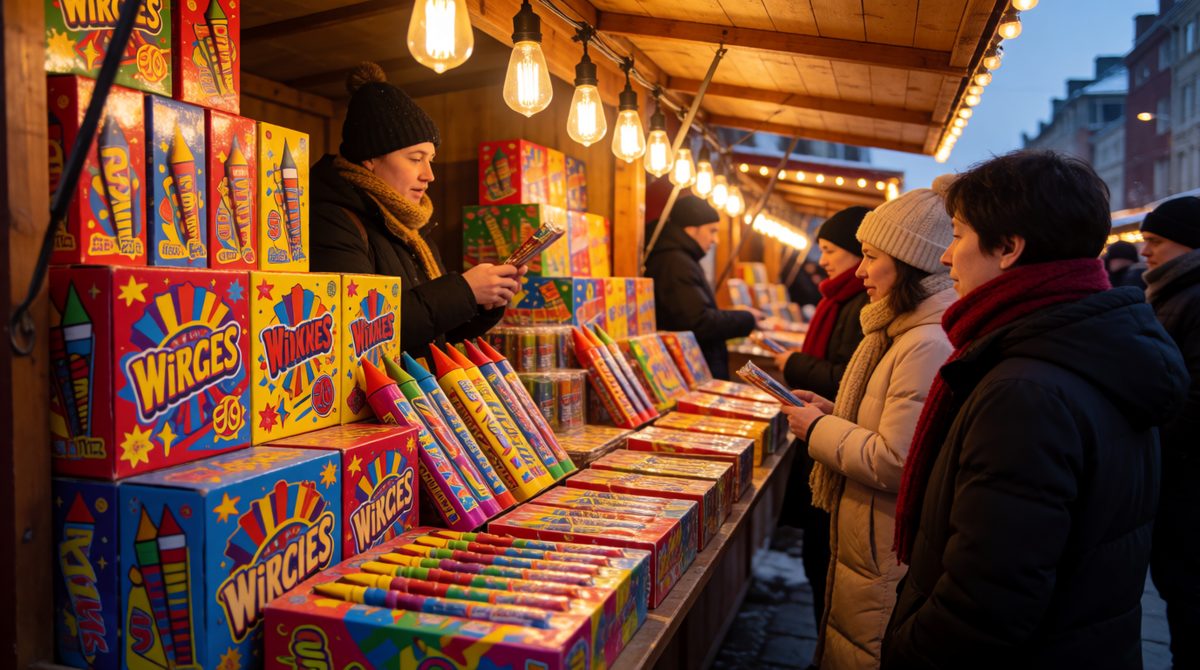
Everyone enjoys the show, but the smoke drifting over nearby homes is an external cost the buyers never pay for - so too many fireworks get bought
A buyer of a demerit good thinks only about their own private costs and benefits. They do not count the harm done to their own long-term health, or to other people. So they buy more than is good for society.
The same is true of goods with external costs. In the country of Halvoria, a factory makes cheap plastic toys. The price of the toys covers the firm's own costs, but not the cost of the smoke that makes nearby families ill. Because the toys look cheap, people buy lots of them. Too many resources go into making them.
Consumers use too much of a harmful good. They may suffer poor health and a shorter life, and the whole community pays for the extra health care.
Too much is produced and used, so too much pollution or noise or congestion is created. Third parties, such as nearby families, bear the cost.
Who loses: third parties, the users themselves, and society as a whole.
Now the opposite problem. People often do not see the full benefit of a merit good, or they cannot afford it. So they buy too little.
In the city of Rennova, an evening class teaches adults to read and write. It charges a fee. Some adults decide not to pay because they feel they manage without it. They do not count the benefit to their employers, children and neighbours, who gain when more adults can read and write. That benefit is external, so the market ignores it.
People do not take up enough education, health care or training. They miss out on better skills and better health in the long run.
Too little is produced and used, so society misses out on benefits that could have been enjoyed by third parties.
Who loses: the individuals who go without, third parties who would have benefited, and society as a whole.
You know that private firms struggle to sell public goods because of the free rider problem. The consequence is non-provision. The good is simply not made.
Imagine the island of Tarsa has no lighthouse because no private firm can make a profit from one. Boats strike the rocks in fog. Fishers, ferry passengers and the whole island economy suffer. Nobody can be left out of the benefit of a lighthouse, but nobody will pay for one either.
Who loses: everyone who would have used the good. No resources at all are used for this good, even though society badly needs it.
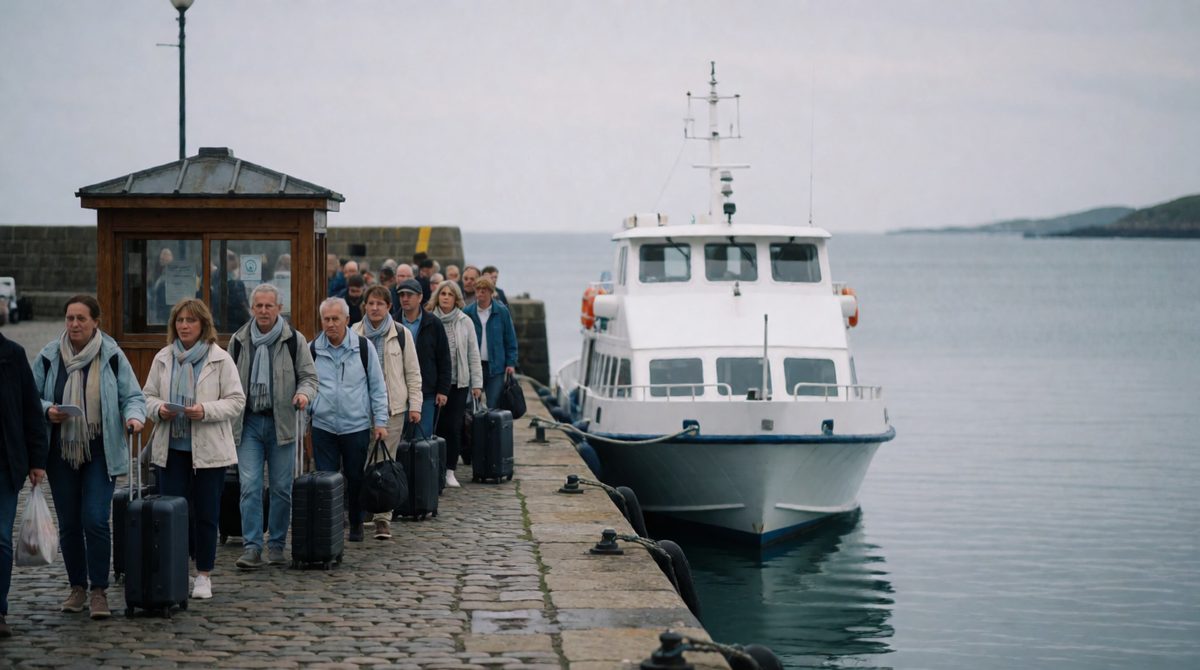
With no rival ferry to choose, a monopoly can run fewer sailings and push fares up - and passengers have to pay or stay home
A monopoly has no close competitors. It can choose to supply a smaller quantity, and so the price is pushed up. The firm may do this because a high price gives it higher profit.
Take Brennor Ferries, the only ferry operator linking the island of Ostrel to the mainland. It could run plenty of sailings at a fair fare. Instead it runs fewer and charges more, because passengers have nowhere else to go.
They pay higher prices and have less choice. Poorer households may not be able to afford the good at all.
It earns high profit. It gains while others lose, and it has little reason to improve its service.
Who loses: consumers, and any firms that buy the good as a cost of production. These firms may pass the higher costs on in their own prices.
| Case | What goes wrong | Who loses |
|---|---|---|
| Demerit goods and external costs | Over-consumption | Users, third parties, society |
| Merit goods and external benefits | Under-consumption | Individuals, third parties, society |
| Public goods | Non-provision | Everyone who would use them |
| Monopoly | Restricted supply, higher price | Consumers and buying firms |
Do not say that demerit goods are "under-provided". The problem is that too much is consumed. Do not say that public goods are "over-consumed". The problem is that they are not provided. Always name who loses, not just what goes wrong.
In the country of Karolia, the only bus company, Karo Buses, runs fewer buses and raises fares. Many families cannot afford to travel to the local clinic. Meanwhile, cheap fireworks are sold in large numbers and the smoke makes nearby residents cough.
(a) Define misallocation of resources. [2 marks]
(b) Explain one consequence of the monopoly's actions for consumers. [4 marks]
(c) Analyse why the sale of fireworks may lead to over-consumption and who loses. [6 marks]
(a) Misallocation of resources is when resources are not used in the way that gives society the most benefit (1), so some goods are over-produced and others under-produced (1).
(b) The monopoly restricts supply by running fewer buses (1). This pushes up the fare (1). Consumers pay more for the same journey (1), and poorer families may not afford to travel to the clinic at all (1).
(c) Fireworks are a good with external costs, as the smoke harms third parties (1). Buyers think only about their own private cost and enjoyment (1), so more fireworks are bought than is best for society (1). This is over-consumption (1). Residents who breathe the smoke lose, because their health suffers (1). Society also loses because resources are used on a good whose full cost is not paid by the buyer (1).
In an "analyse" answer, build a chain: the cause, then what buyers or firms do, then the result, then who loses. Each link earns a mark.