👷 More resources
More workers (for example from a growing population or more people joining the workforce), new natural resources found, or more machines and factories built through investment.
Sign up to access the complete lesson and track your progress!
Unlock This CourseIn the last lesson the PPC stayed still. But the amount an economy can produce does not stay the same for ever. When the resources of a country change, its whole PPC moves. A shift of the PPC is a change in what the economy is able to produce, not a change in what it chooses to produce.
Key terms:
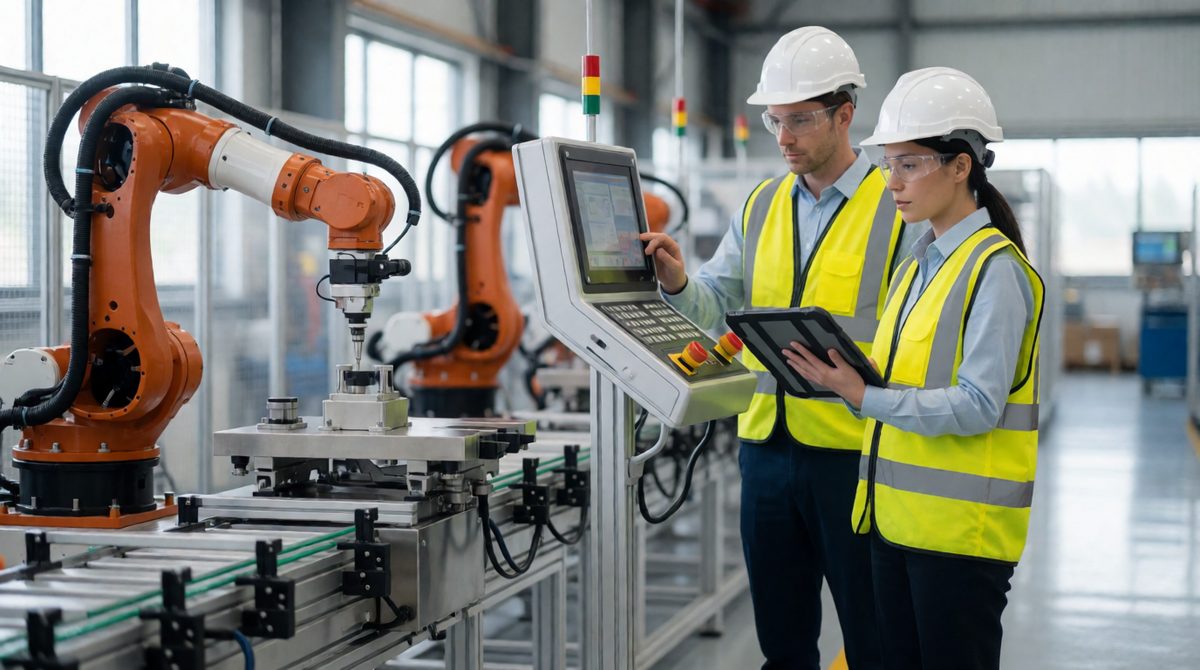
Better technology pushes a country's PPC outwards: more can be made of both goods
You have already seen how the quantity and quality of resources can change. Each of those changes can push the PPC outwards.
More workers (for example from a growing population or more people joining the workforce), new natural resources found, or more machines and factories built through investment.
New technology, better education and training for workers, and more productive machines. The same number of workers can now make more.
In the exam, draw it like this. Draw the axes and the first curve and label it PPC1. Draw a second curve of the same shape, further from the origin, and label it PPC2. Add an arrow between them to show the shift.
The new curve gives the economy points that were unattainable before. The made-up country of Lumeria opens new technical colleges and builds new factories. Its workforce is more skilled and has more capital, so Lumeria can make more clothes and more computers than it could before.
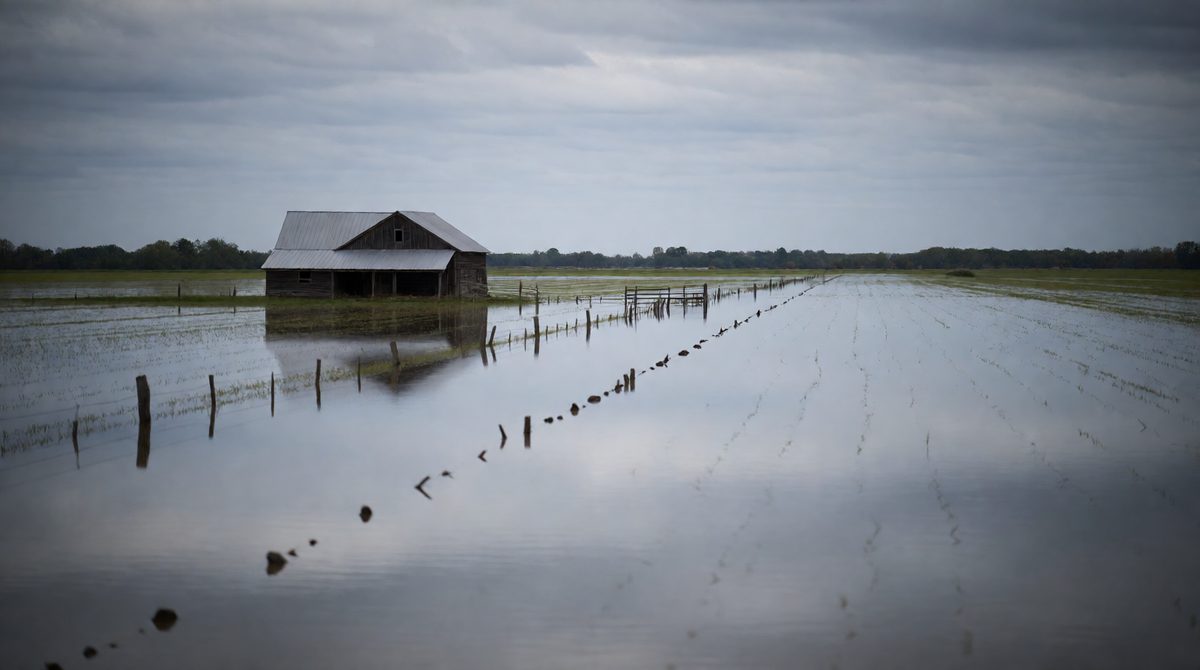
A flood destroys farmland and factories, shifting the PPC inwards
A PPC shifts inwards when an economy loses resources or they become less able to produce. The curve moves towards the origin.
| Cause | What is lost |
|---|---|
| Natural disaster, such as a flood or earthquake | Factories, farmland and roads (land and capital) |
| War | Workers, capital and land |
| Emigration of workers | Labour, often skilled labour |
| Depletion, such as a mine or fish stock running out | Natural resources |
Draw it the same way, but this time PPC2 sits closer to the origin than PPC1. The economy can now make fewer goods whatever it chooses to do.
Sometimes a change helps the production of one good but not the other. A new machine that only helps clothes factories cannot help computer makers. Then the PPC does not move out everywhere. It pivots.
Here are Lumeria's figures before and after a new cloth-making machine that is used only in clothes production. Computers are on the horizontal axis and clothes on the vertical axis.
| Point | Computers (thousands) | Clothes before (millions) | Clothes after (millions) |
|---|---|---|---|
| A | 0 | 100 | 140 |
| B | 10 | 90 | 126 |
| C | 20 | 70 | 98 |
| D | 30 | 40 | 56 |
| E | 40 | 0 | 0 |
The new curve meets the clothes axis higher up, at 140 million. It still meets the computers axis at 40 thousand, because the machine cannot help computer makers. The curve has pivoted on point E.
Before the machine, Lumeria could make 100 million clothes if it made no computers. After it, the figure is 140 million, so the extra is 140 − 100 = 40 million clothes. If the economy makes 20 thousand computers, clothes rise from 70 million to 98 million, an increase of 28 million. The country could instead keep clothes at 70 million and use the freed resources to make more computers. Either way, it has more choices than before.
Students often mix these up. They are different things.
The economy starts at a point under the PPC, perhaps because workers are unemployed or factories are idle. Using those resources fully moves it up to the curve. The curve itself does not move. The economy was just not using what it had.
The economy's resources, or their quality, change. The whole curve moves, so points that were unattainable become possible. This is growth in what the economy is able to produce.
A good test: could the economy already have reached the new point with its old resources? If yes, it is a movement. If no, the curve has shifted.
An outward shift does not guarantee that everyone is better off. It only shows that the economy is able to produce more. The extra output may reach some people more than others, and the economy must still choose what to make. Every choice still has an opportunity cost.
1. Saying that moving up to the curve is a shift. A shift is a movement of the whole curve. 2. Drawing a shift outward on both axes when only one good has improved. 3. Saying a fall in the price of a good shifts the PPC. Changes in the quantity or quality of resources do. 4. Writing "more resources" without naming which one, such as skilled workers or machines.
The made-up country of Lumeria makes clothes and computers. A new university trains thousands of engineers. At the same time, a severe flood destroys many farms and factories in the north.
(a) State two causes of an outward shift of a PPC. [2 marks]
(b) Explain why a new machine used only to make clothes would make a PPC pivot rather than shift outwards on both axes. [4 marks]
(c) Analyse how the flood might affect Lumeria's living standards and its choices. [6 marks]
(a) More workers (1). New technology (1). [Investment in capital or better education are also accepted.]
(b) The machine can only be used in clothes production (1), so the amount of clothes the economy can make rises (1). It does not help computer makers (1), so the maximum number of computers stays the same and the curve pivots on that axis (1).
(c) The flood destroys land and capital (1), so the PPC shifts inwards (1). Lumeria can now produce fewer goods and services (1), so living standards may fall (1). It has fewer choices (1), so there are fewer combinations of goods to choose from and every choice still has an opportunity cost (1). The engineers may partly offset the loss, but the loss of farms and factories still reduces what can be made (1).
For an "Analyse" part, build a chain: cause, shift of the PPC, effect on output, then effect on living standards and choices. Each link can earn a mark.