🌎 Introduction to Plastic Pollution
Plastic is everywhere. Your water bottle, your crisp packet, the packaging on your lunch it's all plastic. Since the 1950s, humans have produced over 9 billion tonnes of plastic. That's enough to cover every single country on Earth in cling film. The problem? Most of it doesn't go away. It sits in landfill, floats in the ocean, or breaks into tiny pieces that end up inside animals and inside us.
For your iGCSE Environmental Management exam, you need to understand what plastic pollution is, where it comes from, what damage it causes and what we can do about it including whether bioplastics are a real solution.
Key Definitions:
- Plastic: A synthetic (human-made) material made from polymers, usually derived from fossil fuels like oil and natural gas.
- Conventional plastic: Standard plastic made from petrochemicals (oil-based chemicals). It is not biodegradable and can persist in the environment for hundreds of years.
- Bioplastic: A plastic made partly or fully from biological (plant-based) materials such as corn starch, sugarcane or algae.
- Biodegradable: Able to be broken down naturally by bacteria or other living organisms.
- Microplastics: Tiny plastic fragments less than 5mm in size, formed when larger plastics break down.
- Polymer: A long chain of repeated molecules the basic building block of all plastics.
- Photodegradation: The process by which sunlight breaks plastic into smaller and smaller pieces (but doesn't actually destroy it).
💧 How Much Plastic Do We Use?
Around 400 million tonnes of plastic is produced every year worldwide. Of that, roughly 40% is single-use plastic used once and thrown away. Only about 9% of all plastic ever made has been recycled. Around 12% has been incinerated. The remaining 79% has accumulated in landfills or the natural environment.
⏳ How Long Does Plastic Last?
Plastic doesn't biodegrade it just breaks into smaller pieces. A plastic bag takes around 20 years to break apart. A plastic bottle takes 450 years. Fishing line can last 600 years. A disposable nappy? Up to 500 years. This means almost every piece of plastic ever made still exists in some form today.
🔥 Conventional Plastics The Problem in Detail
Conventional plastics are made from petrochemicals chemicals extracted from crude oil and natural gas. The process involves cracking (breaking apart) these chemicals and rearranging them into long polymer chains. Different types of plastic are made depending on which polymers are used.
Common Types of Conventional Plastic
There are seven main types of conventional plastic, each with a recycling number (1–7). Some are easier to recycle than others and many are rarely recycled at all.
⑲ PET (Type 1)
Used for drinks bottles and food packaging. One of the most commonly recycled plastics. Can be turned into fleece clothing or carpet fibres.
⑳ HDPE (Type 2)
Used for milk jugs, shampoo bottles and plastic bags. Fairly easy to recycle. Often turned into pipes or outdoor furniture.
⑴ PVC (Type 3)
Used in pipes, window frames and some food wrap. Difficult to recycle and releases toxic chlorine gas when burned. One of the most environmentally damaging plastics.
🌎 Case Study: The Great Pacific Garbage Patch
The Great Pacific Garbage Patch (GPGP) is the world's largest accumulation of ocean plastic. It sits between Hawaii and California in the North Pacific Ocean and covers an area of approximately 1.6 million km² about three times the size of France. It contains an estimated 80,000 tonnes of plastic, with over 1.8 trillion plastic pieces floating in it. Around 46% of the patch is made up of fishing nets. The patch forms because ocean currents (called gyres) swirl in a circular pattern, trapping floating debris in the centre. Marine animals like sea turtles, seabirds and fish mistake plastic for food, leading to starvation, internal injuries and death. The GPGP was discovered in 1997 by sailor Charles Moore and has been growing ever since.
🐛 Environmental Impacts of Plastic Pollution
Plastic pollution causes damage in several different environments in the ocean, on land and even in the air. Here's a breakdown of the key impacts you need to know for your exam.
Impacts on Marine Ecosystems
The ocean is the biggest victim of plastic pollution. Around 8 million tonnes of plastic enters the ocean every year. This causes serious harm to marine life and ecosystems.
- 🐢 Entanglement: Sea turtles, dolphins, seals and whales get tangled in plastic bags and fishing nets, causing injury and drowning.
- 🐠 Ingestion: Seabirds like albatrosses feed plastic pieces to their chicks, who die from starvation because their stomachs are full of plastic.
- 🍑 Coral reef damage: Plastic smothers coral reefs, blocking sunlight and introducing disease. Studies show plastic increases the chance of coral disease from 4% to 89%.
- 🐟 Ghost fishing: Lost or abandoned fishing nets continue to trap and kill fish and marine mammals this is called ghost fishing.
👑 Microplastics The Hidden Danger
When plastic is exposed to sunlight and waves, it breaks into smaller and smaller pieces called microplastics. These are less than 5mm in size some are invisible to the naked eye. Microplastics are now found literally everywhere: in the deepest ocean trenches, on the highest mountain peaks, in Arctic ice, in rainwater, in the food we eat and in human blood.
- Primary microplastics are manufactured small like microbeads in face scrubs or plastic pellets (nurdles) used to make larger plastic products.
- Secondary microplastics form when larger plastics break apart in the environment.
- Microplastics enter the food chain when small fish and plankton eat them. They then pass up the food chain to larger fish, seabirds, marine mammals and eventually to humans.
- A 2022 study found microplastics in human blood for the first time. The long-term health effects are still being studied, but early research suggests links to inflammation and cell damage.
🏭 Case Study: Microbeads Ban in the UK
Microbeads are tiny plastic beads (less than 5mm) added to cosmetic products like face scrubs, toothpaste and shower gel to act as an exfoliant. When washed down the drain, they pass through water treatment plants and enter rivers and oceans. The UK banned the manufacture of rinse-off cosmetics containing microbeads in January 2018 and the sale of such products in July 2018. This was one of the first national bans of its kind. However, microbeads from products sold before the ban still exist in the environment and microplastics from other sources (like synthetic clothing) continue to be a major problem.
🌿 Bioplastics A Better Alternative?
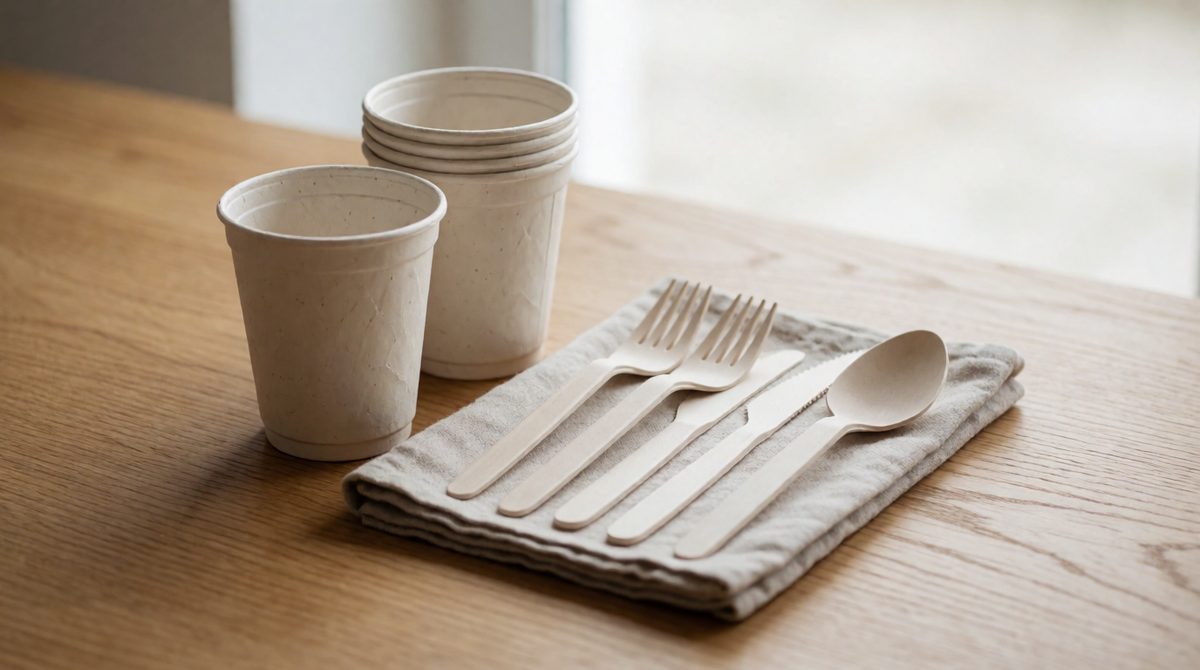
Bioplastics are made from plants like corn
Bioplastics are plastics made from biological (plant-based) raw materials instead of fossil fuels. They're often promoted as a more sustainable alternative to conventional plastic. But are they really as green as they sound? The answer is: it's complicated.
Common sources of bioplastics include:
- 🌽 Corn starch (maize)
- 🍌 Sugarcane
- 🌿 Cassava
- 🍄 Potato starch
- 🌊 Algae
- 🌿 Hemp
✅ Advantages of Bioplastics
- Made from renewable resources plants can be regrown, unlike oil.
- Some bioplastics are biodegradable they can break down naturally.
- Producing some bioplastics releases fewer greenhouse gases than conventional plastic production.
- Reduces dependence on fossil fuels.
- Some types can be composted in industrial composting facilities.
- Can be used in the same applications as conventional plastic (bottles, packaging, bags).
❌ Disadvantages of Bioplastics
- Many bioplastics only biodegrade in specific industrial conditions not in the ocean or landfill.
- Growing crops for bioplastics requires large areas of land, which could compete with food production.
- Farming these crops uses fertilisers, pesticides and water, causing their own environmental problems.
- Bioplastics can contaminate conventional plastic recycling streams if mixed together.
- Currently more expensive to produce than conventional plastic.
- Not all bioplastics are biodegradable some are bio-based but behave just like conventional plastic.
🔬 Types of Bioplastic Not All Are the Same!
This is a really important point that often confuses students. There are two key distinctions to understand:
🌿 Bio-based
Made from plant materials rather than oil. But not necessarily biodegradable. For example, bio-based PET (used in some drinks bottles) behaves exactly like conventional PET in the environment.
♻ Biodegradable
Can be broken down by microorganisms. But not necessarily bio-based some conventional oil-based plastics have additives that make them degrade faster (though this just creates more microplastics).
🌿 Compostable
A specific type of biodegradable plastic that breaks down in composting conditions. Industrial compostable plastics need high temperatures in a composting facility. Home compostable plastics break down in a garden compost bin.
🌿 Case Study: PLA Polylactic Acid
PLA (Polylactic Acid) is one of the most widely used bioplastics. It's made from fermented plant sugars usually from corn starch. You'll find it in disposable coffee cups, food containers, 3D printing filament and medical sutures. PLA is compostable but only in industrial composting facilities at temperatures above 58°C. In a landfill or the ocean, it behaves much like conventional plastic and can take hundreds of years to break down. In 2019, the UK coffee chain Pret a Manger switched to PLA-lined cups, marketing them as compostable. However, critics pointed out that most customers simply threw them in general waste bins, meaning they ended up in landfill where they couldn't compost properly.
⚖ Managing Plastic Pollution What Can Be Done?
Managing plastic pollution requires action at every level from individuals to governments to international agreements. Your exam may ask you to evaluate different strategies, so make sure you understand the pros and cons of each.
The 6 Rs Framework
A useful way to organise management strategies is the 6 Rs: Refuse, Reduce, Reuse, Recycle, Recover, Repair. For plastic pollution, the most effective strategies are at the top of the list.
- 🚫 Refuse: Don't buy single-use plastic in the first place. Bring your own bag, bottle and coffee cup.
- 📈 Reduce: Use less plastic overall. Buy products with minimal packaging.
- ♻ Reuse: Use items multiple times before disposing of them. Refillable water bottles, reusable shopping bags.
- ♿ Recycle: Process used plastic into new materials. Currently only about 9% of plastic is recycled globally.
- 🔥 Recover: Burn plastic to generate energy (incineration). Reduces landfill but releases CO₂ and pollutants.
🏛 Government and International Strategies
- Plastic bag charges: The UK introduced a 5p charge on plastic bags in 2015 (now 10p). Usage dropped by over 95% in major supermarkets.
- Single-use plastic bans: The EU banned many single-use plastics (straws, cutlery, plates) from July 2021. England followed with similar bans in 2023.
- Extended Producer Responsibility (EPR): Makes manufacturers financially responsible for the end-of-life disposal of their plastic packaging.
- UN Global Plastics Treaty: Negotiations are ongoing (as of 2024) for a legally binding international agreement to end plastic pollution similar to the Paris Agreement for climate change.
- Deposit Return Schemes (DRS): Customers pay a small deposit when buying a drink in a plastic bottle, which they get back when they return the empty bottle for recycling. Scotland planned to introduce this in 2023.
🇮🇳 Case Study: Indonesia's Plastic Problem
Indonesia is the world's second largest contributor to ocean plastic pollution, after China. With over 17,000 islands and a rapidly growing population of 270 million, managing waste is a huge challenge. Rivers like the Citarum River in West Java are so heavily polluted with plastic that the surface is barely visible. In 2018, Indonesia pledged to reduce marine plastic debris by 70% by 2025, investing $1 billion in waste management. Strategies include building more waste processing facilities, community clean-up programmes and working with local governments to improve rubbish collection. However, progress has been slow due to the scale of the problem and lack of infrastructure in rural areas.
📊 Comparing Conventional Plastics and Bioplastics Exam Summary
For your exam, you might be asked to compare conventional plastics and bioplastics. Here's a clear summary to help you structure your answer.
Key Comparison Points
- 💧 Raw material: Conventional plastic = fossil fuels (oil/gas). Bioplastic = plant materials (corn, sugarcane, algae).
- ⏳ Persistence: Conventional plastic lasts hundreds of years. Some bioplastics biodegrade but only in the right conditions.
- 🌿 Carbon footprint: Bioplastics generally have a lower carbon footprint in production, but land use for crops can offset this.
- ♿ Recyclability: Conventional plastics have established recycling streams. Bioplastics can contaminate these streams.
- 💰 Cost: Conventional plastic is cheaper to produce. Bioplastics are currently more expensive.
- 🌿 Land use: Bioplastics require agricultural land, which could compete with food crops a major concern in food-insecure regions.
💡 Exam Tip: Evaluation Questions
If an exam question asks you to evaluate bioplastics as a solution to plastic pollution, make sure you give both sides. Yes, bioplastics use renewable resources and some are biodegradable but many only degrade in industrial composting facilities, they require land that could grow food and they can contaminate recycling. A balanced answer will always score higher than a one-sided one. Conclude with a justified judgement for example: "Bioplastics are a useful part of the solution but are not sufficient on their own. Reducing overall plastic consumption is more important."