♻ Introduction to Plastic Pollution
Plastic is everywhere. It wraps your food, holds your drinks, makes up your phone case and lines the inside of your trainers. Since the 1950s, humans have produced over 9 billion tonnes of plastic. The problem? Most of it never truly disappears. It breaks into smaller and smaller pieces, polluting oceans, soils, rivers and even the air we breathe. Plastic pollution is now one of the most serious environmental problems on the planet.
Key Definitions:
- Plastic: A synthetic (human-made) material made from long chains of molecules called polymers, usually derived from fossil fuels like oil and gas.
- Pollution: The introduction of harmful substances into the environment that cause damage to living things or ecosystems.
- Biodegradable: A material that can be broken down naturally by bacteria, fungi or other living organisms into harmless substances like water, carbon dioxide and compost.
- Non-biodegradable: A material that cannot be broken down naturally by living organisms and persists in the environment for a very long time.
- Microplastics: Tiny plastic particles less than 5mm in size, formed when larger plastics break apart over time.
- Polymer: A large molecule made of repeating units the building blocks of plastic.
✅ Biodegradable Plastics
These plastics are designed to break down naturally. They are made from plant-based materials like corn starch, sugarcane or potato starch. Bacteria and fungi can digest them over weeks or months. Examples include PLA (polylactic acid) used in some coffee cups and food packaging. However, many biodegradable plastics only break down properly in industrial composting conditions not in your garden or the ocean!
❌ Non-biodegradable Plastics
These are the most common plastics and the biggest problem. Made from petrochemicals (oil and gas), they can last hundreds to thousands of years in the environment. Examples include PET (drinks bottles), HDPE (milk jugs), PVC (pipes and packaging) and polystyrene (foam cups). They don't disappear they just break into smaller and smaller pieces called microplastics.
📌 Types of Plastic and How Long They Last
Not all plastics are the same. Scientists use a numbering system (1–7) to identify different types. Some are easier to recycle than others and some are far more dangerous to the environment. Here's what you need to know:
Common Plastic Types and Their Environmental Impact
🛴 PET (Type 1)
Used in drinks bottles and food trays. Takes around 450 years to decompose. Widely recycled but huge amounts still end up in landfill and oceans.
💧 HDPE (Type 2)
Used in milk bottles, shampoo bottles and plastic bags. Takes hundreds of years to break down. One of the more recyclable plastics.
⚠ Polystyrene (Type 6)
Used in foam cups, takeaway boxes and packaging. Takes over 500 years to decompose. Breaks into tiny beads easily, which wildlife often mistakes for food.
Single-use plastics items designed to be used once and thrown away are the fastest-growing source of plastic pollution. Think plastic straws, cutlery, bags and coffee cup lids. The UK used around 2.5 billion disposable coffee cups per year before restrictions were introduced.
🔎 Did You Know?
A plastic bottle thrown into the ocean today will still be there in the year 2475. A plastic fishing line could last until 3024. Meanwhile, a banana skin biodegrades in just 2–5 weeks. The difference is enormous.
🌍 How Plastic Pollution Spreads Through the Environment
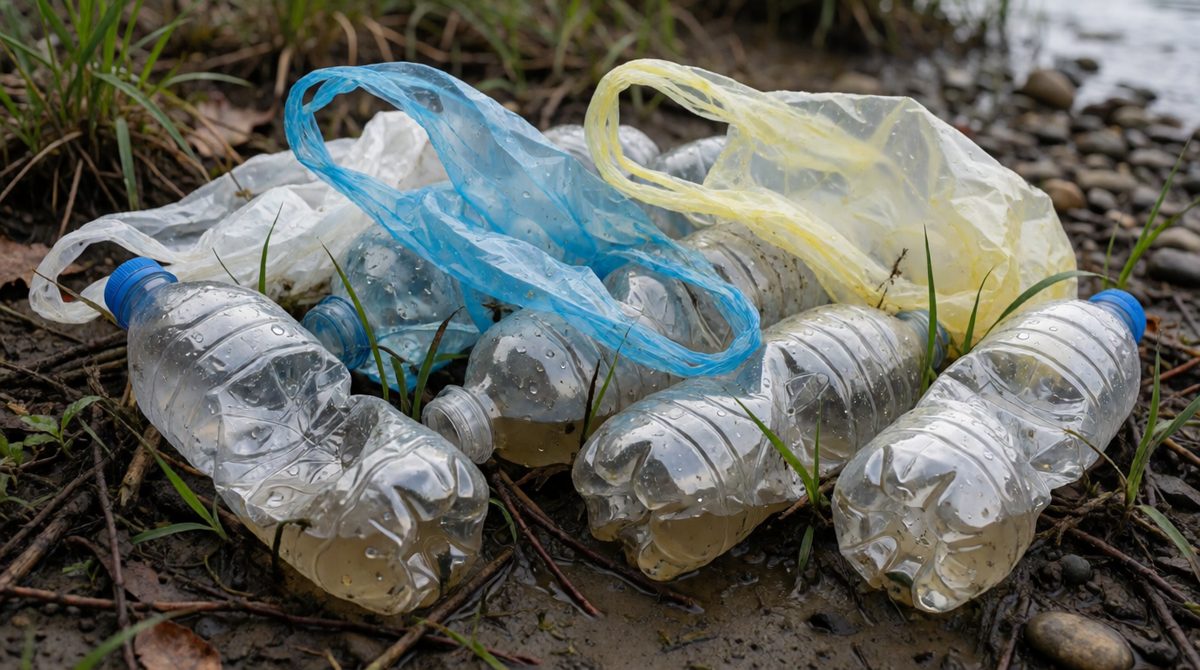
Plastic waste travels through rivers to the sea
Plastic doesn't stay where it's dropped. Wind, rain and rivers carry it into the ocean. Ocean currents then move it thousands of kilometres from where it started. This is why plastic pollution is truly a global problem plastic dropped in a city in Asia can end up on a beach in Scotland.
Pathways of Plastic Pollution
Plastic enters the environment through several routes:
- Littering: Plastic dropped on streets is washed into drains and rivers by rain.
- Landfill leakage: Plastic from landfill sites can blow away or leach into groundwater.
- Industrial spills: Plastic pellets (called nurdles) used in manufacturing often spill into waterways.
- Wastewater: Synthetic clothing fibres (like polyester) shed microplastics every time they're washed these pass through sewage treatment and into rivers and seas.
- Fishing industry: Lost or abandoned fishing nets and lines (called ghost gear) are a major source of ocean plastic.
🌎 Case Study: The Great Pacific Garbage Patch
The Great Pacific Garbage Patch is the world's largest accumulation of ocean plastic. It sits between Hawaii and California and covers an area roughly twice the size of Texas (about 1.6 million km²). It contains an estimated 80,000 tonnes of plastic, with 94% of it being microplastics. Ocean currents (called gyres) trap floating plastic in this zone. It's not a solid island of rubbish it's more like a thick plastic soup. Marine animals, seabirds and fish in this area regularly ingest plastic, often with fatal results.
🐦 Impact on Wildlife and Ecosystems
Plastic pollution causes serious harm to animals, plants and entire ecosystems. The damage happens in several ways:
🐟 Marine Animals
Sea turtles mistake plastic bags for jellyfish and eat them, causing blockages and death. Seabirds like albatrosses feed plastic to their chicks, who then starve with full stomachs. Whales have been found dead with hundreds of plastic items in their stomachs. Dolphins and seals get tangled in plastic netting and drown.
🌿 Ecosystems and Food Chains
Microplastics are eaten by tiny zooplankton at the bottom of the food chain. These are eaten by small fish, which are eaten by larger fish, which are eaten by humans. This process is called bioaccumulation. Toxic chemicals attached to microplastics build up in concentration as they move up the food chain a process called biomagnification.
Impact on Human Health
Microplastics have now been found in human blood, lungs, placentas and even breast milk. Scientists are still studying the full health effects, but early research suggests links to hormone disruption, inflammation and potentially cancer. The chemicals used to make plastics flexible or fire-resistant like BPA (bisphenol A) and phthalates are known to interfere with the human hormonal system.
🇮🇩 Case Study: Indonesia's Plastic Crisis
Indonesia is the world's second largest contributor to ocean plastic pollution, after China. With over 17,000 islands and a rapidly growing population, waste management infrastructure has struggled to keep up. Rivers like the Citarum River in Java became so polluted with plastic and industrial waste that the water turned black and fish populations collapsed. The Indonesian government launched a major clean-up programme in 2018, deploying the military to help clear the river. However, without tackling the root causes poor waste collection and cheap single-use plastics the problem keeps returning.
♻ Biodegradable Plastics: Are They Really the Answer?
Biodegradable plastics sound like the perfect solution plastic that disappears! But the reality is more complicated. There are two main types:
Types of Biodegradable Plastic
- Bio-based plastics: Made from plant materials (e.g. corn, sugarcane). They may or may not be biodegradable some bio-based plastics are just as persistent as conventional ones.
- Compostable plastics: These break down under specific industrial composting conditions (high heat, humidity and microbial activity). They do NOT break down in home compost bins or in the ocean.
- Oxo-degradable plastics: Conventional plastics with additives that cause them to fragment faster. However, they just break into microplastics more quickly they don't truly biodegrade. Many countries have banned them.
The key problem is that even genuinely biodegradable plastics require the right conditions to break down. If they end up in landfill (where there's little oxygen) or in the ocean (where it's cold), they can persist for decades.
💡 Exam Tip
In your iGCSE exam, make sure you can explain the difference between biodegradable and non-biodegradable plastics, give examples of each and discuss why biodegradable plastics are not a complete solution to plastic pollution. Examiners love it when you show you understand the limitations of solutions, not just the benefits!
🏭 Managing Plastic Pollution: Solutions
Solving plastic pollution requires action at every level from individuals to governments to international agreements. Here are the main strategies:
The 6 Rs Framework
🚫 Refuse & Reduce
The most effective strategy. Say no to single-use plastics. Buy less. Use reusable bags, bottles and containers. Reducing plastic use at the source means less pollution overall.
🔄 Reuse & Repair
Use items multiple times before disposing of them. Refillable water bottles, reusable coffee cups and cloth shopping bags all help reduce plastic waste significantly.
♻ Recycle & Recover
Recycling keeps plastic out of landfill and the environment. However, only about 9% of all plastic ever produced has been recycled. Many plastics are too contaminated or too complex to recycle economically.
Government and International Action
- Plastic bag charges: The UK introduced a 5p charge on plastic bags in 2015, later raised to 10p. Usage dropped by over 95% in major supermarkets.
- Single-use plastic bans: The EU banned many single-use plastic items (straws, cutlery, plates) from 2021. The UK followed with similar bans.
- Extended Producer Responsibility (EPR): Laws that make manufacturers responsible for the end-of-life disposal of their plastic products, encouraging them to design products that are easier to recycle.
- UN Global Plastics Treaty: Nations are currently negotiating a legally binding international treaty to end plastic pollution similar to the Paris Agreement for climate change.
🇺🇬 Case Study: Rwanda's Plastic Bag Ban
Rwanda became one of the first countries in the world to implement a total ban on plastic bags in 2008. The ban is strictly enforced tourists arriving at Kigali airport have plastic bags confiscated. The result? Rwanda is now considered one of the cleanest countries in Africa, with visibly cleaner streets, rivers and ecosystems. The ban shows that strong government action can make a real difference, though it works best when combined with affordable alternatives for people to use.
📚 Summary: Key Points to Remember
- Biodegradable plastics break down naturally; non-biodegradable plastics persist for hundreds of years.
- Most common plastics (PET, HDPE, PVC, polystyrene) are non-biodegradable and made from fossil fuels.
- Plastic pollution spreads through littering, landfill, wastewater and the fishing industry.
- The Great Pacific Garbage Patch covers 1.6 million km² and contains 80,000 tonnes of plastic.
- Microplastics enter food chains through bioaccumulation and biomagnification.
- Biodegradable plastics are not a perfect solution they need specific conditions to break down.
- Solutions include the 6 Rs, government bans, EPR laws and international treaties.
- Rwanda's plastic bag ban is a successful case study of strong government action.