🌎 What Are Microplastics?
You've probably heard about plastic bags choking sea turtles or straws stuck in dolphins' noses. But there's a sneakier type of plastic pollution that you can't even see microplastics. These tiny plastic particles are now found literally everywhere: in the deepest ocean trenches, on the highest mountain peaks, in the air we breathe and even in human blood. This is one of the biggest environmental challenges of our time.
Key Definitions:
- Microplastics: Tiny plastic particles less than 5mm in size. Some are so small you need a microscope to see them.
- Primary microplastics: Plastics that are manufactured to be small from the start (e.g. microbeads in face wash).
- Secondary microplastics: Plastics that start out large but break down into smaller pieces over time due to sunlight, waves and weathering.
- Nanoplastics: Even tinier particles, less than 1 micrometre, that can penetrate cells in living organisms.
- Bioaccumulation: The build-up of a substance (like microplastics) in an organism's body over time.
- Biomagnification: When a substance becomes more concentrated as it moves up the food chain.
🔍 Primary Microplastics
These are made small on purpose. Think of the tiny beads in face scrubs, toothpaste and shower gels. Also includes plastic pellets (called nurdles) used in manufacturing and synthetic fibres shed from clothing like polyester and nylon when you wash them. Around 35% of all microplastics in the ocean come from washing synthetic clothes.
🗑 Secondary Microplastics
These start as bigger plastic items bottles, bags, fishing nets that slowly break apart. UV light from the sun makes plastic brittle and wave action and wind break it into smaller and smaller pieces. This process never truly destroys the plastic it just makes it smaller and harder to clean up. A plastic bottle could take 450 years to fully break down this way.
🚧 Where Do Microplastics Come From?
Microplastics have many different sources and they reach the environment through a variety of pathways. Understanding where they come from helps us figure out how to stop them.
🚗 Major Sources of Microplastics
Some sources are obvious, others are surprisingly everyday. Here are the main culprits:
👕 Clothing & Textiles
Every time you wash a synthetic jumper or leggings, thousands of tiny plastic fibres are released. These pass straight through washing machine filters and wastewater treatment plants into rivers and seas. A single wash can release up to 700,000 fibres.
🚘 Tyre Wear
As car tyres rub against roads, tiny rubber and plastic particles are released. These get washed into drains and rivers by rain. Tyre wear particles are one of the largest sources of microplastics in urban areas and are very difficult to control.
🌞 Microbeads
These are tiny plastic balls added to cosmetics and personal care products as exfoliants. They go straight down the drain and are too small to be filtered out. The UK banned microbeads in rinse-off cosmetics in 2018, but they're still used in many countries.
🌎 Fishing Industry
Lost or abandoned fishing nets, lines and gear (called ghost gear) break down into microplastics over time. The fishing industry contributes around 10% of ocean plastic by weight and much of it is hard to recover once lost at sea.
🏭 Industrial Pellets (Nurdles)
Nurdles are the raw material used to make almost all plastic products. They're about the size of a lentil. Billions are accidentally spilled during transport and manufacturing every year. They look like fish eggs, so marine animals eat them. Operation Clean Sweep aims to reduce nurdle spills.
🌿 Agricultural Plastic
Plastic films used to cover crops, plastic mulches and plastic-coated fertilisers all break down in soil. Sewage sludge used as fertiliser also contains microplastics from wastewater. Farmland soils may actually contain more microplastics than the ocean.
📌 Did You Know?
Scientists have found microplastics at the bottom of the Mariana Trench the deepest point on Earth at nearly 11km below sea level. They've also been found in Arctic sea ice, on top of the Pyrenees mountains in France and in remote areas of Antarctica. There is no place on Earth that is free from microplastic contamination.
🌊 How Microplastics Move Through Ecosystems
Once microplastics enter the environment, they don't stay in one place. They travel through water, air and soil and they enter food chains at every level.
🌻 The Journey of a Microplastic
Imagine a polyester fleece jacket being washed. Thousands of fibres are released, pass through the washing machine, travel through pipes to a water treatment plant and most pass straight through because they're too small to filter. They enter a river, travel downstream and eventually reach the sea. There, they float, absorb toxic chemicals from the water and are eaten by zooplankton. The zooplankton are eaten by small fish, which are eaten by larger fish, which might end up on your plate.
This process biomagnification means that animals at the top of the food chain (including humans) end up with the highest concentrations of microplastics in their bodies.
🐟 Impact on Marine Life
Marine animals mistake microplastics for food. Seabirds feed plastic to their chicks. Fish absorb fibres through their gills. Mussels and oysters filter microplastics from the water. Studies show microplastics can cause internal injuries, blocked digestive systems, reduced feeding and hormonal disruption in marine animals. Coral reefs can also absorb microplastics, which affects their growth and health.
🧠 Impact on Humans
Microplastics have been found in human blood, lungs, placentas and breast milk. We eat, drink and breathe them daily. The average person may consume around 5 grams of microplastic per week roughly the weight of a credit card. Long-term health effects are still being studied, but concerns include inflammation, hormone disruption and carrying toxic chemicals into the body.
📊 Case Study: The Great Pacific Garbage Patch
The Great Pacific Garbage Patch is a massive area of ocean between Hawaii and California where ocean currents concentrate floating plastic debris. It covers an area roughly twice the size of Texas about 1.6 million km². Contrary to popular belief, it's not a solid island of rubbish. Most of it is made up of microplastics suspended in the water, making it look like a cloudy soup rather than a solid mass. It contains an estimated 80,000 metric tonnes of plastic. The Ocean Cleanup Project has been working since 2013 to try to remove plastic from this area, but critics argue that cleaning up microplastics from the open ocean is practically impossible with current technology.
🔬 Case Study: Microplastics in UK Rivers
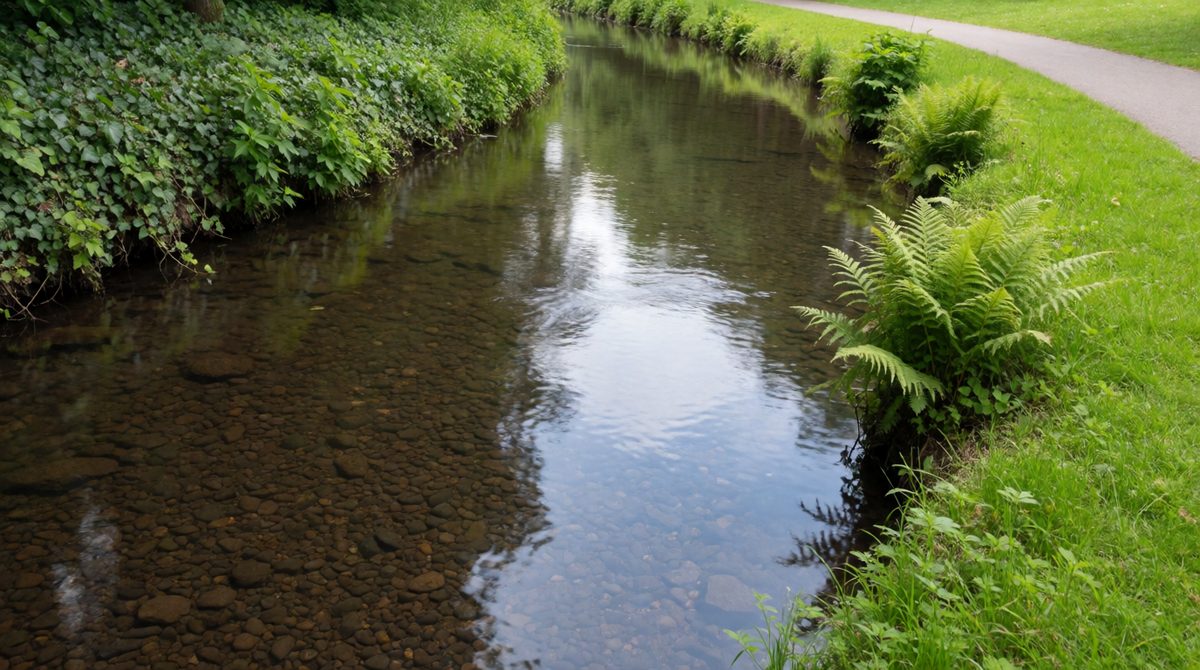
The River Tame had some of the highest microplastic levels measured
The UK has some of the most microplastic-polluted rivers in the world. Research by the University of Manchester found that UK rivers can transport hundreds of tonnes of microplastics to the sea every year and that floodplains store even more.
🏭 The River Tame, Greater Manchester
A 2019 study found that the River Tame had some of the highest concentrations of microplastics ever recorded in a river up to 517,000 particles per square metre of riverbed sediment. Sources included urban runoff, wastewater treatment plant discharges and industrial activity. After a flood event, microplastic concentrations actually decreased in the riverbed because the flood flushed them downstream into the sea. This shows how floods can rapidly move microplastics from land to ocean.
This case study highlights how microplastics don't just stay where they land they are constantly being transported by water systems, making them a truly global problem.
⚖️ Managing Microplastic Pollution
There's no simple fix for microplastic pollution. Because it comes from so many different sources, management requires action at many different levels from individual choices to international agreements.
📄 Legislation and Bans
Governments have started to act, but progress is slow and uneven around the world.
- 🇬🇧 The UK banned microbeads in rinse-off cosmetics and personal care products in 2018.
- 🇪🇺 The EU Single-Use Plastics Directive (2021) banned many single-use plastic items to reduce the source of secondary microplastics.
- 🇺🇸 Several US states have passed microbead bans and a federal ban on microbeads in cosmetics was introduced in 2015.
- 🌎 In 2023, the UN Global Plastics Treaty negotiations began aiming for a legally binding international agreement to end plastic pollution by 2040.
🔧 Technological Solutions
- Washing machine filters: Devices like the Cora Ball and Guppyfriend bag can catch synthetic fibres during washing. France became the first country to require new washing machines to have microfibre filters by 2025.
- Improved wastewater treatment: Advanced filtration systems can remove up to 99% of microplastics from wastewater but they're expensive and not widely used.
- Road runoff filters: Specially designed drains can catch tyre wear particles before they reach waterways.
- Biodegradable alternatives: Replacing synthetic plastics with plant-based or biodegradable materials reduces the long-term build-up of microplastics.
👤 Individual Actions
- Wash synthetic clothes less frequently and at lower temperatures
- Use a microfibre filter bag when washing
- Choose natural fibre clothing (cotton, wool, linen)
- Avoid single-use plastics
- Choose cosmetics without microbeads
- Pick up litter to prevent secondary microplastics forming
🏠 Evaluation: How Effective Are These Strategies?
Strengths: Bans on microbeads have been effective where enforced. Wastewater filtration technology exists and works well.
Weaknesses: Tyre wear and synthetic fibres are very hard to regulate. International cooperation is slow. Microplastics already in the environment cannot realistically be removed. LEDCs may lack resources to implement solutions.
⚡ Exam Tip: Evaluation Questions
In iGCSE Environmental Management, you'll often be asked to evaluate a management strategy. Remember to give both sides what works and what doesn't. Consider: Is it affordable? Is it enforceable? Does it address the root cause? Is it fair to all countries? A strong answer will mention specific examples and reach a clear conclusion about overall effectiveness.
📋 Summary: The Big Picture
Microplastics are a serious and growing form of pollution that affects every ecosystem on Earth. They come from many sources from the clothes we wear to the tyres on our cars and they enter food chains, accumulate in living organisms and may pose significant risks to both wildlife and human health. Managing microplastic pollution requires action at every level: individual behaviour, national legislation, international agreements and technological innovation. No single solution is enough on its own.
- ✅ Microplastics are particles smaller than 5mm, either manufactured small (primary) or broken down from larger plastics (secondary)
- ✅ Key sources include synthetic clothing, tyre wear, microbeads, fishing gear and industrial pellets
- ✅ They travel through water systems, enter food chains and biomagnify up to top predators including humans
- ✅ Case studies: Great Pacific Garbage Patch, River Tame (UK)
- ✅ Management includes bans, filtration technology and international agreements but all have limitations