🌍 Introduction to Plastic Pollution in the Ocean
Every year, around 8 million tonnes of plastic enters our oceans. That's like dumping a rubbish truck full of plastic into the sea every single minute. Plastic is cheap, light and incredibly useful but it's also a massive problem because it doesn't break down easily. Instead, it breaks into smaller and smaller pieces, causing serious harm to marine ecosystems for hundreds of years.
For your iGCSE Environmental Management exam, you need to understand where plastic comes from, how it harms marine life and what can be done about it. Let's dive in.
Key Definitions:
- Plastic pollution: The build-up of plastic materials in the environment that harms wildlife, habitats and humans.
- Marine ecosystem: A community of living things (plants, animals, microbes) that interact with each other and their ocean environment.
- Microplastics: Tiny pieces of plastic smaller than 5mm, either manufactured at that size or formed when larger plastics break apart.
- Macroplastics: Large pieces of plastic waste such as bottles, bags, fishing nets and packaging.
- Bioaccumulation: The build-up of harmful substances (like plastic chemicals) in the body of a living organism over time.
- Biomagnification: The increasing concentration of a toxic substance as it moves up the food chain.
- Photodegradation: The process by which plastic is broken down into smaller pieces by sunlight but NOT fully decomposed.
🚢 Sources of Marine Plastic
About 80% of ocean plastic comes from land. This includes litter washed into rivers, plastic blown by wind and waste from poorly managed landfill sites. The remaining 20% comes from the sea itself mainly from fishing boats, cargo ships and offshore platforms. Common items include plastic bags, bottles, straws, fishing nets and food packaging.
⏪ Why Plastic Doesn't Just Disappear
Unlike natural materials like wood or paper, plastic is made from synthetic polymers that microbes can't easily digest. A plastic bottle can take up to 450 years to break down. Sunlight and wave action break plastic into smaller pieces through photodegradation, but the plastic is still there just in a more dangerous, invisible form.
🔍 Microplastics: The Hidden Danger
Microplastics are one of the most worrying aspects of plastic pollution. They are so small that they are almost invisible to the naked eye, yet they are found everywhere from the deepest ocean trenches to Arctic sea ice. Scientists have even found microplastics in fish, seabirds and in human blood.
⚖ Types of Microplastics
💊 Primary Microplastics
These are manufactured to be tiny. Examples include microbeads found in face scrubs and toothpaste and nurdles small plastic pellets used as raw material in plastic manufacturing. They wash straight down drains and into rivers and seas.
🗑 Secondary Microplastics
These form when larger plastics break apart due to sunlight, waves and temperature changes. A single plastic bag can eventually break into millions of microplastic fragments. Synthetic clothing fibres (like polyester) also shed microplastics when washed.
🐛 Why They're So Dangerous
Microplastics absorb toxic chemicals from the water around them. When eaten by marine animals, these chemicals can damage organs, reduce reproduction and disrupt hormones. Because they are so small, they enter food chains at the very bottom with plankton and work their way up to fish, seabirds, dolphins and humans.
📌 Did You Know?
A study published in 2020 found microplastics in the deepest part of the ocean the Mariana Trench, nearly 11km below the surface. Researchers also found microplastic fibres in the stomachs of deep-sea creatures that have never come near the surface. Plastic has reached absolutely everywhere.
🐋 Impacts on Marine Animals
Plastic pollution harms marine animals in several direct and indirect ways. From sea turtles to seabirds, from whales to tiny zooplankton, no creature in the ocean is safe from plastic's reach.
🐦 Entanglement
Large plastic items especially ghost gear (abandoned fishing nets, lines and traps) trap and entangle marine animals. Animals caught in ghost gear cannot swim properly, cannot feed and often drown or starve. It is estimated that ghost fishing gear affects over 700 marine species.
- Sea turtles become tangled in plastic bags and fishing lines, causing injury or death.
- Seals and sea lions get plastic rings or netting caught around their necks, cutting into their skin as they grow.
- Whales and dolphins become entangled in nets, preventing them from surfacing to breathe.
🍔 Ingestion (Eating Plastic)
Many marine animals mistake plastic for food. Sea turtles confuse plastic bags with jellyfish. Seabirds feed plastic fragments to their chicks, thinking they are fish. Whales swallow enormous amounts of plastic debris. Once eaten, plastic can block the digestive system, cause internal injuries and give the animal a false sense of being full so they stop eating real food and starve.
🐳 Case Study: Sperm Whales and Plastic
In 2019, a sperm whale was found dead on a beach in the Philippines. When scientists examined its stomach, they found 40kg of plastic inside including shopping bags, nylon ropes and rice sacks. The whale had died from starvation and a ruptured stomach. This tragic case made global headlines and highlighted the devastating scale of plastic pollution in the Pacific Ocean.
🧬 Impacts on the Food Chain
The ocean food chain is a finely balanced system. When plastic enters at the bottom, it causes problems all the way to the top including for humans.
Plankton are the foundation of the marine food chain. They are eaten by small fish and shrimp, which are eaten by larger fish, which are eaten by sharks, dolphins and humans. When plankton eat microplastics, those plastics and the toxic chemicals attached to them enter the food chain. Through biomagnification, the concentration of these toxins increases at each level of the food chain.
📈 Biomagnification in Action
Imagine 1,000 plankton each containing a tiny amount of a toxic chemical from plastic. A small fish eats all 1,000 plankton it now has 1,000 times the concentration. A tuna eats 100 small fish it now has 100,000 times the concentration. A human eats the tuna and gets a very high dose of toxins. This is biomagnification and it's a serious health concern.
🍕 Plastic in Our Seafood
Studies have found microplastics in shellfish, fish and sea salt sold for human consumption. A 2019 study estimated that people who regularly eat seafood may consume up to 11,000 microplastic particles per year. The long-term health effects on humans are still being studied, but early research suggests links to inflammation and hormonal disruption.
🌌 Impacts on Coral Reefs
Coral reefs are some of the most biodiverse ecosystems on Earth, home to around 25% of all marine species. They are also extremely sensitive to change and plastic pollution is making their situation much worse.
- Smothering: Plastic debris settles on coral, blocking sunlight and preventing photosynthesis in the algae (zooxanthellae) that corals depend on for food.
- Disease: Research published in the journal Science (2018) found that coral in contact with plastic had an 89% chance of disease, compared to just 4% for coral not in contact with plastic. Plastic carries bacteria that cause deadly coral diseases.
- Physical damage: Plastic debris dragged by currents scratches and breaks coral structures, which take decades to regrow.
- Bleaching: Plastic pollution adds to the stress on coral reefs already suffering from rising sea temperatures and ocean acidification.
🏖 Case Study: The Great Pacific Garbage Patch
The Great Pacific Garbage Patch (GPGP) is the world's largest accumulation of ocean plastic. It sits between Hawaii and California and covers an area of approximately 1.6 million km² about three times the size of France. It contains an estimated 80,000 tonnes of plastic. The patch forms because ocean currents (gyres) trap floating plastic in a swirling mass. It's not a solid island of rubbish most of it is a soupy mix of microplastics just below the surface. Marine animals living in and around the patch are constantly exposed to plastic, with devastating effects on local food chains and wildlife.
🌎 Wider Environmental Impacts
Beyond individual animals and food chains, plastic pollution affects entire marine ecosystems and the services they provide to humans.
- Loss of biodiversity: As species die out or decline due to plastic pollution, the balance of the ecosystem is disrupted. Predator-prey relationships break down and entire habitats can collapse.
- Impact on tourism: Plastic-polluted beaches and reefs put tourists off visiting, harming the economies of coastal communities that depend on tourism.
- Damage to fisheries: Declining fish populations due to plastic ingestion and habitat destruction threaten the livelihoods of millions of people who depend on fishing.
- Carbon cycle disruption: Healthy oceans absorb CO₂. When plastic kills phytoplankton (which absorb huge amounts of CO₂), it reduces the ocean's ability to act as a carbon sink, worsening climate change.
✅ What Is Being Done?
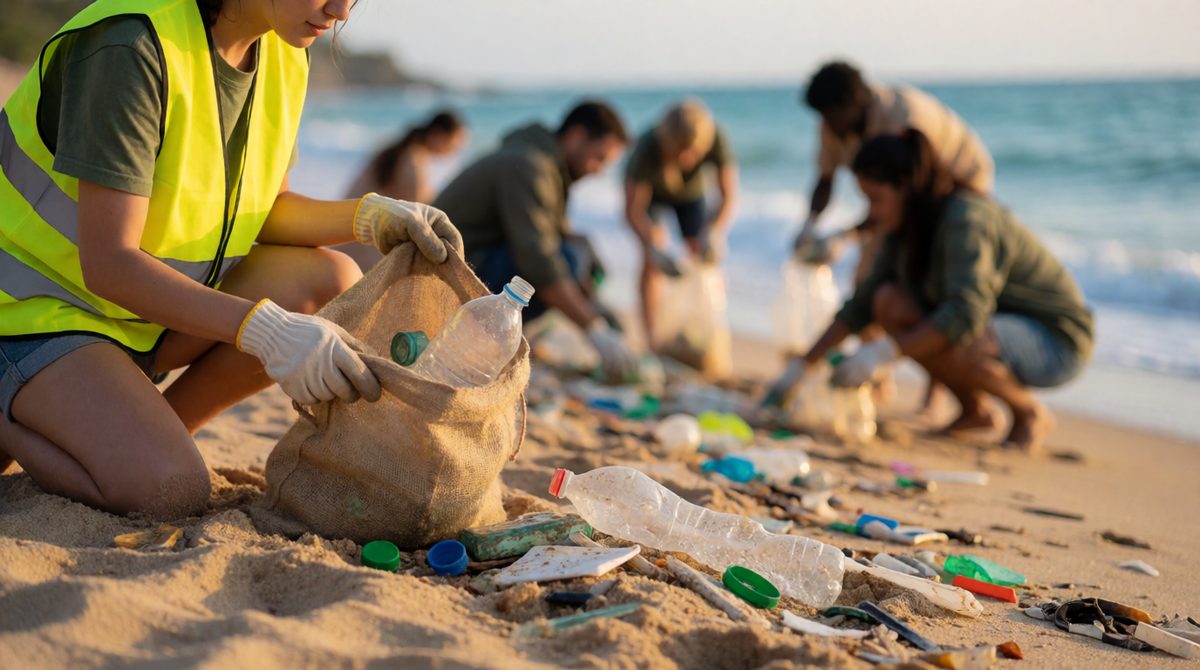
Beach cleans remove plastic before it harms wildlife
Tackling plastic pollution in the ocean requires action at local, national and international levels. Here are some key responses:
🌍 International and National Responses
📄 Legislation
Many countries have banned single-use plastics such as straws, bags and cutlery. The EU banned many single-use plastics in 2021. The UK introduced a plastic bag charge in 2015, reducing bag use by over 95% in major supermarkets.
🚀 Technology
The Ocean Cleanup project uses large floating barriers to collect plastic from the Great Pacific Garbage Patch. Scientists are also developing plastic-eating enzymes (like PETase) that could help break down plastic waste more quickly.
🏠 Community Action
Beach clean-ups, river clean-ups and education campaigns help reduce plastic entering the sea. Organisations like Surfers Against Sewage in the UK organise thousands of volunteers to clean coastlines every year.
💡 Exam Tip
In your iGCSE exam, you may be asked to evaluate responses to plastic pollution. Remember to consider effectiveness, cost, scale and sustainability. For example, beach clean-ups are great for local areas but don't stop plastic from entering the ocean in the first place. Legislation that prevents plastic production is more sustainable in the long term.
📚 Summary: Key Points to Remember
- 80% of ocean plastic comes from land-based sources.
- Microplastics are tiny plastic fragments under 5mm that enter food chains and are found everywhere in the ocean.
- Marine animals are harmed through entanglement and ingestion of plastic.
- Biomagnification means toxins from plastic become more concentrated higher up the food chain including in humans.
- Coral reefs suffer from smothering, disease and physical damage caused by plastic.
- The Great Pacific Garbage Patch covers 1.6 million km² and contains 80,000 tonnes of plastic.
- Responses include legislation, technology and community action each with different levels of effectiveness.