♻ Introduction to Plastic Pollution
Plastic is everywhere. It keeps our food fresh, makes our phones light and holds our shampoo. But here is the problem plastic does not go away. Once it is made, it sticks around for hundreds of years. Every year, around 400 million tonnes of plastic is produced worldwide and a huge chunk of it ends up in the wrong place in rivers, oceans, soils and even inside animals and people.
Plastic pollution is now one of the most serious environmental problems on Earth. The iGCSE Environmental Management course wants you to understand not just why it is a problem, but what we can actually do about it.
Key Definitions:
- Plastic pollution: The build-up of plastic materials in the environment that harms wildlife, habitats and humans.
- Microplastics: Tiny pieces of plastic smaller than 5mm, either manufactured at that size or broken down from larger plastic items.
- Macroplastics: Large plastic items such as bottles, bags, fishing nets and packaging.
- Persistent pollutant: A substance that does not break down easily and stays in the environment for a very long time.
- Leachate: Liquid that has passed through a substance (like a landfill) and picked up harmful chemicals along the way.
- Bioaccumulation: The build-up of a substance (like plastic chemicals) in an organism over time.
- Biomagnification: The process where the concentration of a harmful substance increases as it moves up the food chain.
📅 How Long Does Plastic Last?
A plastic bag takes around 20 years to break down. A plastic bottle takes up to 450 years. Fishing line can last 600 years. This means almost every piece of plastic ever made still exists in some form today. That is a terrifying thought.
🌍 The Scale of the Problem
Around 8 million tonnes of plastic enter the oceans every year. That is like dumping a rubbish lorry full of plastic into the sea every single minute. The Great Pacific Garbage Patch a swirling mass of plastic in the Pacific Ocean is now estimated to be twice the size of Texas.
🔎 Types and Sources of Plastic Pollution
Not all plastic pollution looks the same. It comes in different sizes and from many different sources. Understanding where it comes from helps us figure out how to stop it.
Where Does Plastic Come From?
Plastic pollution comes from both land-based and ocean-based sources. Land-based sources account for around 80% of all ocean plastic pollution.
🏠 Land-Based Sources
Littering, poor waste management, overflowing landfill sites, plastic blown from bins and industrial discharge. Rivers carry plastic from inland areas straight to the sea.
⚓ Ocean-Based Sources
Fishing gear (nets, lines, traps), cargo shipping losses and offshore oil platforms. Abandoned fishing nets called ghost nets are one of the deadliest forms of ocean plastic.
💧 Microplastic Sources
Synthetic clothing fibres washed in laundry, tyre dust from roads, microbeads in cosmetics and the breakdown of larger plastics by sunlight and waves.
💡 Did You Know? Microbeads
Microbeads are tiny plastic balls added to face scrubs, toothpastes and shower gels to make them feel gritty. They are so small they pass straight through water treatment plants and end up in rivers and oceans. The UK banned microbeads in rinse-off cosmetics in 2018 one of the first countries in the world to do so. A single shower using a microbead product could release 100,000 microplastic particles into the water system.
🐞 Environmental Impacts of Plastic Pollution
Plastic pollution does not just look ugly it causes serious damage to ecosystems, wildlife and human health. Here is how.
Impacts on Marine Ecosystems
The ocean is the biggest victim of plastic pollution. Sea creatures at every level of the food chain are affected, from tiny plankton to massive whales.
- 🐠 Seabirds mistake plastic for food and feed it to their chicks. Albatrosses have been found with stomachs full of bottle caps and lighters.
- 🐢 Sea turtles eat plastic bags thinking they are jellyfish. This blocks their digestive systems and can be fatal.
- 🐋 Whales and dolphins become entangled in ghost nets or ingest large amounts of plastic, causing starvation and death.
- 🍌 Coral reefs smothered by plastic are 89% more likely to get disease than clean reefs.
- 🐟 Fish ingest microplastics, which then enter the human food chain when we eat them.
Impacts on Land and Freshwater
It is not just the ocean that suffers. Plastic pollution on land and in rivers causes its own set of problems.
- Plastic in soil can block water and air movement, harming plant roots and soil organisms like earthworms.
- Chemicals from plastic (such as BPA and phthalates) can leach into soil and groundwater, potentially affecting drinking water supplies.
- Rivers act as conveyor belts, carrying plastic from cities and farmland into the sea. The River Ganges in India is one of the most plastic-polluted rivers on Earth.
⚠️ Impacts on Human Health
Microplastics have been found in human blood, lungs, placentas and even breast milk. Scientists are still studying the full health effects, but early research suggests links to hormone disruption, inflammation and potential cancer risks. On average, people are estimated to consume around 5 grams of microplastic per week roughly the weight of a credit card through food, water and air.
♻ Managing Plastic Pollution The Strategies
Now for the really important bit what can we actually do about it? Managing plastic pollution requires action at every level: from individuals changing habits, to governments passing laws, to businesses redesigning products. The iGCSE syllabus groups these into prevention, reduction, reuse, recycling and disposal strategies.
🚫 Prevention
The best solution is to stop plastic pollution before it starts. This includes banning single-use plastics (like straws, cutlery and cotton bud sticks), introducing plastic taxes to discourage use and extended producer responsibility (EPR) laws that make manufacturers responsible for the end-of-life of their products.
♻ The 3Rs Reduce, Reuse, Recycle
Reduce means using less plastic in the first place. Reuse means choosing products that can be used again (like reusable bags and bottles). Recycle means processing used plastic into new materials. Recycling is important but it is not a perfect solution only around 9% of all plastic ever produced has been recycled.
🏛️ Government and Policy Approaches
Governments are the most powerful actors in managing plastic pollution. They can pass laws, set targets and fund clean-up operations.
- Plastic bag charges: The UK introduced a 5p charge on plastic bags in 2015 (now 10p). Plastic bag use in major supermarkets dropped by over 95% as a result.
- Bans on single-use plastics: The EU banned many single-use plastic items from July 2021, including plates, cutlery, straws and cotton buds.
- Deposit Return Schemes (DRS): Customers pay a small deposit when buying a drink in a plastic bottle and get it back when they return the empty bottle. Norway has a DRS with a 97% return rate for plastic bottles.
- International agreements: In 2022, the United Nations agreed to develop a Global Plastics Treaty a legally binding international agreement to end plastic pollution.
🌎 Case Study Rwanda: A Plastic Bag-Free Nation
Rwanda banned plastic bags in 2008 and is now considered one of the cleanest countries in Africa. Visitors arriving at Kigali airport have plastic bags confiscated. The ban is strictly enforced with fines and even prison sentences for repeat offenders. Rwanda's success shows that a strong government commitment, combined with public education and enforcement, can dramatically reduce plastic pollution. The country has since expanded its environmental laws and is often held up as a global model for plastic management.
🏭 Business and Industry Approaches
Businesses produce and sell most of the plastic in the world, so they have a huge role to play in solving the problem.
- Redesigning packaging: Using less plastic, switching to biodegradable or compostable materials, or eliminating packaging altogether.
- Using recycled content: Companies like Adidas have made trainers from ocean plastic. Coca-Cola has pledged to use 50% recycled material in its packaging by 2030.
- Refill schemes: Some supermarkets and shops now offer refill stations where customers bring their own containers.
- Plastic credits: Businesses pay for the collection and recycling of plastic to offset their plastic footprint similar to carbon offsetting.
👮 Community and Individual Action
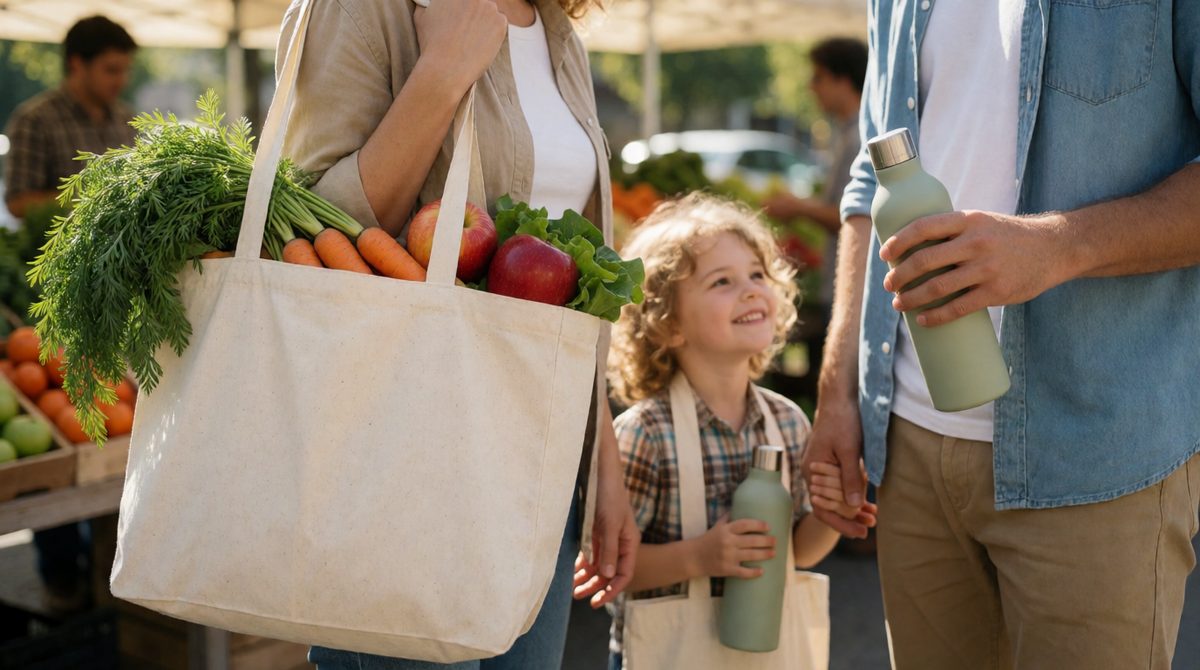
Reusable items cut plastic waste
Individuals and communities also play a vital role. Small actions, multiplied by millions of people, add up to a big difference.
👜 Refuse Single-Use
Say no to plastic straws, bags and cutlery. Carry a reusable bag, bottle and coffee cup. Every piece of plastic refused is one less piece that could end up in the environment.
👷 Beach and River Clean-Ups
Volunteer groups like Surfers Against Sewage organise thousands of beach clean-ups every year in the UK. In 2023, they removed over 150 tonnes of litter from UK beaches and rivers.
📚 Education and Awareness
Campaigns like Plastic Free July encourage millions of people worldwide to avoid single-use plastic for a whole month. Education in schools helps young people understand the issue and make better choices.
🌎 Case Study The Cleanup of the Citarum River, Indonesia
The Citarum River in West Java, Indonesia, was once called the world's most polluted river. It was choked with plastic waste, industrial chemicals and raw sewage. In 2018, the Indonesian government launched a major clean-up programme, deploying thousands of soldiers to remove waste and patrol the riverbanks. Factories were fined for illegal dumping. Community groups were paid to collect plastic. By 2022, water quality had measurably improved, though the river still faces serious challenges. The Citarum shows both what is possible with political will and how difficult it is to reverse decades of pollution damage.
⚖️ Evaluating the Strategies What Works Best?
No single strategy solves plastic pollution on its own. The most effective approach combines government regulation, business responsibility and individual action. Here is a quick summary of the strengths and weaknesses of the main approaches.
Comparing Management Strategies
- ✅ Bans and taxes are effective but need strong enforcement to work they can fail in countries with weak governance.
- ✅ Deposit Return Schemes have very high success rates (Norway's 97%) but require investment in infrastructure.
- ✅ Recycling is useful but currently only handles a small fraction of plastic waste and many plastics are not economically viable to recycle.
- ✅ Education campaigns raise awareness but behaviour change alone is not enough without structural changes.
- ✅ International agreements like the Global Plastics Treaty could be transformative, but require all countries to cooperate.
- ❌ Clean-up operations deal with existing pollution but do not address the root cause the production of too much plastic.
💡 Exam Tip Evaluation Questions
In your iGCSE exam, you may be asked to evaluate a strategy for managing plastic pollution. Always consider: Does it tackle the cause or just the symptom? Is it affordable? Is it enforceable? Does it work in both rich and poor countries? Who is responsible individuals, governments or businesses? A balanced answer that considers both sides will always score higher marks.
🌎 The Bigger Picture A Circular Economy
The long-term solution to plastic pollution is moving from a linear economy (make → use → throw away) to a circular economy (make → use → recover → remake). In a circular economy, plastic is designed to be reused, repaired or recycled and nothing is wasted. This requires a complete rethink of how we design, use and dispose of plastic but it is the most sustainable path forward.
- Linear economy: Raw materials are extracted, made into products, used once and thrown away.
- Circular economy: Products are designed to last, be repaired, reused and eventually recycled back into new products with minimal waste.
🎉 Summary Key Points to Remember
● Plastic pollution is a global crisis affecting oceans, land, wildlife and human health.
● Microplastics are found everywhere even inside human bodies.
● Managing plastic pollution requires prevention, reduction, reuse, recycling and better disposal.
● Governments, businesses and individuals all have a role to play.
● Case studies like Rwanda and Norway show what is possible with strong action.
● The circular economy offers the best long-term solution.