🌿 Introduction to Sustainable Forest Management
Forests cover about 31% of the Earth's land surface and are home to more than 80% of all land-based species. They clean our air, store carbon, regulate water cycles and provide food and shelter for billions of people. But here's the problem we're cutting them down faster than they can grow back. That's where Sustainable Forest Management (SFM) comes in.
SFM is all about using forests in a way that meets our needs today without wrecking things for future generations. It's not about locking forests away and never touching them it's about being smart, careful and fair about how we use them.
Key Definitions:
- Sustainable Forest Management (SFM): Managing forests so they continue to provide environmental, social and economic benefits now and in the future.
- Deforestation: The permanent removal of trees to make way for something else, such as farmland or cities.
- Biodiversity: The variety of living things in an area plants, animals, fungi, insects and more.
- Carbon sink: A natural system (like a forest) that absorbs more carbon dioxide than it releases, helping to slow climate change.
- Ecosystem services: The benefits that natural environments provide to people, such as clean water, clean air and pollination.
- Reforestation: Planting trees in areas where forests have been cut down.
- Afforestation: Planting trees in areas that were not previously forested.
📌 Why Forests Are Under Threat
Each year, approximately 10 million hectares of forest are lost globally that's roughly the size of South Korea disappearing every single year. The main causes include commercial logging, cattle ranching, palm oil farming, soya farming and urban expansion. Tropical rainforests in the Amazon, Congo Basin and Southeast Asia are the most at risk.
🌳 Strategy 1: Selective Logging
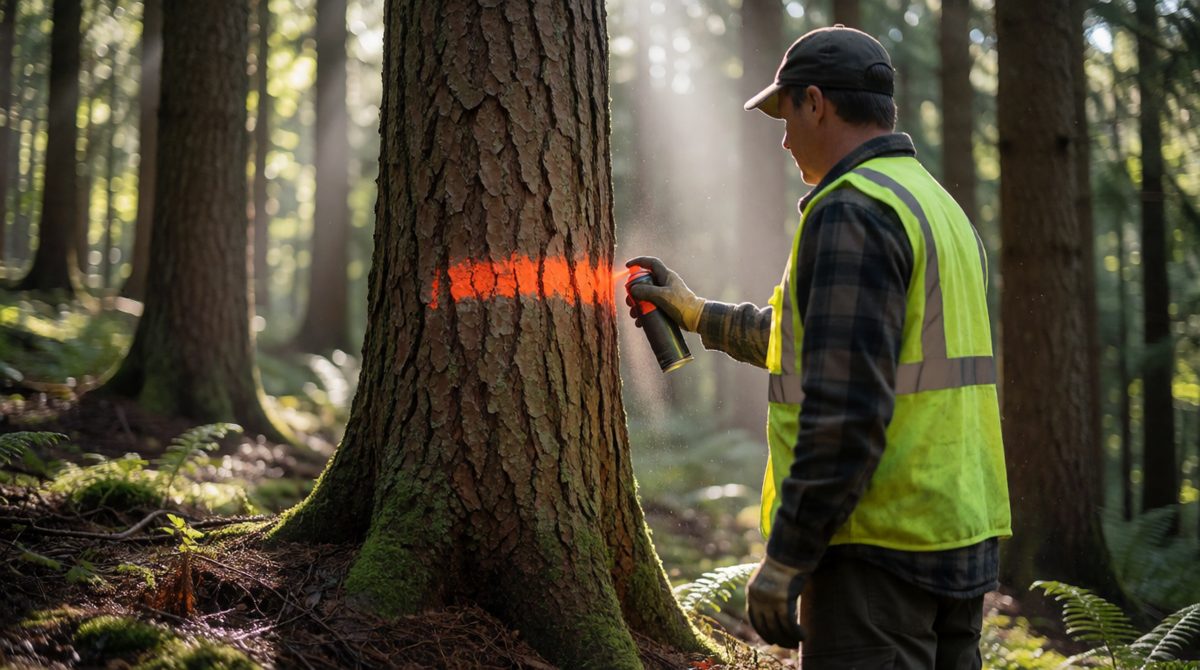
Selective logging removes only some of the trees
Instead of cutting down every single tree in an area (called clear-cutting), selective logging means only removing certain trees usually the oldest, largest or most commercially valuable ones while leaving the rest of the forest standing.
How Selective Logging Works
Foresters identify which trees can be harvested without seriously damaging the ecosystem. They use maps, surveys and sometimes satellite data to plan carefully. Roads are kept to a minimum to reduce soil erosion and habitat disruption.
✅ Advantages
Keeps most of the forest intact. Protects soil and water quality. Allows wildlife habitats to survive. Forest can recover more quickly.
❌ Disadvantages
Still causes some habitat damage. Roads built for logging can open up forests to further clearing. Can be expensive to manage properly.
🌎 Where It's Used
Used in parts of the Amazon, Central Africa and Southeast Asia. Also common in managed temperate forests in Europe and North America.
🌎 Case Study: Selective Logging in Malaysia
In Sabah, Malaysian Borneo, selective logging has been used in rainforests for decades. Studies have shown that when done carefully with long rotation periods (leaving 25–40 years between harvests), forests can recover much of their biodiversity. However, illegal logging and short rotation cycles have undermined efforts in some areas. The Malua Forest Reserve is one example where sustainable selective logging has been combined with biodiversity offsetting programmes.
🌿 Strategy 2: Replanting and Reforestation
When trees are cut down, replanting is essential to restore the forest. But replanting isn't as simple as just sticking some seeds in the ground it needs to be done thoughtfully to actually work.
🌿 Native Species Replanting
Planting the same species of trees that originally grew in the area. This supports local wildlife, maintains soil health and restores the ecosystem more effectively. It takes longer but produces much better environmental results.
🌳 Monoculture Plantations
Planting a single fast-growing species (like eucalyptus or pine) across a large area. These grow quickly and produce lots of timber, but they support very little wildlife and can deplete soil nutrients. They're more like a crop than a real forest.
🌎 Case Study: The Great Green Wall Africa
The Great Green Wall is an ambitious African-led initiative to grow an 8,000 km natural wonder across the full width of Africa from Senegal in the west to Djibouti in the east. The aim is to restore 100 million hectares of degraded land by 2030. So far, Ethiopia has restored over 15 million hectares of land. The project helps combat desertification, store carbon and support local farming communities. It's one of the most exciting reforestation projects on the planet.
🌿 Strategy 3: Agroforestry
Agroforestry is a brilliant strategy that combines growing trees with farming. Instead of clearing forest to create farmland, farmers grow crops or raise animals alongside trees. It's a win-win farmers get food and income and the forest ecosystem is partly preserved.
Types of Agroforestry
🌿 Silvopasture
Trees are grown alongside livestock grazing areas. The trees provide shade for animals, reduce soil erosion and can produce fruit or timber. Common in Latin America.
🌿 Alley Cropping
Crops are grown in rows between lines of trees. The trees improve soil fertility through leaf litter and nitrogen fixation. Used widely in West Africa.
🌿 Forest Gardens
Multi-layered growing systems that mimic natural forest structure. Different plants grow at different heights canopy trees, shrubs, ground crops. Used in tropical regions worldwide.
🌿 Strategy 4: Forest Certification Schemes
How do you know if the wood in your furniture or the paper in your notebook came from a sustainably managed forest? That's where certification schemes come in. They act like a quality stamp that tells consumers the product came from a responsible source.
🌿 The Forest Stewardship Council (FSC)
The FSC is the world's most recognised forest certification scheme. Founded in 1993, it sets standards for responsible forest management covering environmental, social and economic criteria. Products carrying the FSC logo have been independently checked to ensure the forest they came from is managed sustainably. Over 200 million hectares of forest in more than 80 countries are FSC-certified. Look for the FSC tick-tree logo on wood, paper and packaging products.
Other important certification schemes include:
- PEFC (Programme for the Endorsement of Forest Certification): The world's largest forest certification system by area, covering over 300 million hectares globally.
- Rainforest Alliance: Certifies farms and forests that meet sustainability standards, particularly in tropical regions.
🌿 Strategy 5: Community Forest Management
One of the most effective ways to protect forests is to put local communities in charge of managing them. When people who live in and around forests have legal rights over them, they have a strong reason to protect them their livelihoods depend on it.
🌎 Case Study: Community Forestry in Nepal
Nepal's community forestry programme is one of the great success stories of sustainable forest management. Since the 1970s, the government handed over management of forests to local user groups. By 2020, over 22,000 community forest user groups managed nearly 2 million hectares of forest. Forest cover in the hills increased from 26% in 1992 to 45% by 2016. Biodiversity improved, water sources were protected and local communities earned income from sustainable timber and non-timber forest products like honey and medicinal plants.
🌿 Strategy 6: Protected Areas and National Parks
Setting aside areas of forest where logging, farming and development are strictly controlled or banned is another key strategy. These protected areas act as refuges for wildlife and help maintain biodiversity.
- National Parks: Large protected areas managed by governments. Tourism is often allowed but logging and farming are restricted.
- Biosphere Reserves: UNESCO-designated areas with a protected core zone surrounded by buffer zones where limited sustainable use is allowed.
- Wildlife Corridors: Strips of protected habitat connecting separate forest areas, allowing animals to move between them safely.
🌎 Case Study: Amazon National Parks Brazil
Brazil has established a network of protected areas covering over 2.2 million km² of the Amazon rainforest roughly 44% of the Brazilian Amazon. Studies show that deforestation rates inside protected areas are significantly lower than in unprotected areas. However, illegal logging, mining and farming continue to threaten even protected zones, showing that laws alone are not enough without proper enforcement.
⚖ The Challenges of Sustainable Forest Management
SFM sounds great in theory, but it faces some serious real-world challenges. Understanding these is important for your exam.
💵 Economic Pressures
For many developing countries, forests represent a quick source of income. Governments and landowners may prioritise short-term economic gain over long-term sustainability. Poverty can drive local people to clear forests for farmland simply to survive.
🔒 Enforcement Problems
Even when laws protecting forests exist, enforcing them across vast, remote areas is extremely difficult. Illegal logging is a major global problem it's estimated that between 15% and 30% of all timber traded globally is illegally sourced.
- Corruption: In some countries, officials accept bribes to allow illegal logging to continue.
- Land rights conflicts: Indigenous communities often have no legal title to the forest land they have lived on for generations, making it easy for companies to take over.
- Global demand: High global demand for timber, paper, palm oil and beef drives deforestation even when local regulations are in place.
- Climate change: Changing rainfall patterns and increased fire risk make forests more vulnerable, even in protected areas.
🌿 Bringing It All Together: Integrated Approaches
The most successful examples of sustainable forest management combine several strategies at once. No single approach is enough on its own. The best results come from:
- Strong government policies and laws with proper enforcement
- Giving local communities legal rights and a stake in forest management
- Using certification schemes to connect responsible producers with conscious consumers
- International funding to help developing countries protect their forests (e.g. the REDD+ programme)
- Education and awareness campaigns to reduce demand for unsustainably sourced products
🌿 REDD+ Paying Countries to Keep Their Forests
REDD+ stands for Reducing Emissions from Deforestation and Forest Degradation. It's a United Nations programme that pays developing countries financial incentives to protect their forests rather than cut them down. The idea is simple: forests store carbon, so keeping them standing is worth money in the global effort to fight climate change. Norway has been one of the biggest funders, paying Brazil and Indonesia billions of dollars to reduce deforestation rates.
📚 Quick Revision Summary
- ✅ Sustainable Forest Management balances environmental, social and economic needs
- ✅ Selective logging is better than clear-cutting but still needs careful management
- ✅ Reforestation with native species is more effective than monoculture plantations
- ✅ Agroforestry combines farming and trees to reduce pressure on forests
- ✅ FSC certification helps consumers choose sustainably sourced products
- ✅ Community forest management (e.g. Nepal) can be highly effective
- ✅ Protected areas reduce deforestation but need strong enforcement
- ✅ REDD+ provides financial incentives for forest conservation in developing countries
- ✅ Challenges include poverty, corruption, illegal logging and global demand