🌿 What is Biodiversity and Why Does it Matter?
Biodiversity simply means the variety of life on Earth. That includes every plant, animal, fungus and microorganism and the habitats they live in. Think of it like nature's team: the more players on the team, the stronger and more resilient it is. When species disappear, the team gets weaker.
Scientists estimate there are around 8.7 million species on Earth, but we've only identified about 1.5 million of them. Many could go extinct before we even discover them!
Key Definitions:
- Biodiversity: The variety of all living organisms in an area, including the variety of species, genes and ecosystems.
- Species: A group of organisms that can breed together and produce fertile offspring.
- Ecosystem: A community of living things interacting with each other and their non-living environment.
- Conservation: The protection and careful management of the natural environment and wildlife.
- Extinction: When the last individual of a species dies and that species is gone forever.
- Endangered species: A species at serious risk of extinction if nothing is done to help it.
- Habitat: The natural environment where a species lives and finds everything it needs to survive.
🌿 Why Biodiversity is Valuable
Biodiversity gives us food, medicine, clean water and clean air. Over 25% of medicines come from rainforest plants. Bees pollinate crops worth billions of pounds. Healthy forests absorb carbon dioxide and slow climate change. Without biodiversity, ecosystems collapse and so does human life as we know it.
💥 The Biodiversity Crisis
We are currently living through what scientists call the sixth mass extinction. Species are disappearing up to 1,000 times faster than natural background rates. The WWF's Living Planet Report (2022) found that wildlife populations have declined by an average of 69% since 1970. The main culprits? Habitat destruction, pollution, climate change, invasive species and overexploitation.
🚫 Major Threats to Biodiversity
Before we can protect biodiversity, we need to understand what's threatening it. The main threats can be remembered using the acronym HIPCC:
🔥 HIPCC The Five Big Threats
🌳 H Habitat Loss
The biggest threat. Forests are cleared for farming, cities are built over wetlands and coral reefs are destroyed by coastal development. The Amazon rainforest has lost over 17% of its area in the last 50 years.
🐐 I Invasive Species
Non-native species introduced to new areas can outcompete or eat native species. The grey squirrel from North America has devastated red squirrel populations in the UK.
🛒 P Pollution
Pesticides, plastic, oil spills and fertiliser runoff poison habitats. Plastic in the ocean kills over 1 million seabirds and 100,000 marine mammals every year.
🌡 C Climate Change
Rising temperatures are shifting habitats, disrupting breeding seasons and bleaching coral reefs. The Great Barrier Reef has experienced five mass bleaching events since 1998, all linked to warming seas.
🏹 C Commercial Exploitation
Overfishing, illegal poaching and unsustainable logging wipe out species faster than they can recover. The African elephant population dropped from 1.3 million in 1979 to around 415,000 today, largely due to ivory poaching.
🌎 Conservation Strategies The Big Picture
Conservation strategies are the plans and actions we use to protect biodiversity. They fall into two main categories: in-situ (protecting species in their natural habitat) and ex-situ (protecting species outside their natural habitat). Both approaches are needed they work best together.
🌿 In-Situ Conservation Protecting Species Where They Live
In-situ conservation is generally considered the best approach because animals and plants stay in their natural environment, keeping ecological relationships intact. Here are the main methods:
🏭 Protected Areas
Governments set aside land as protected areas where human activity is restricted. These include national parks, nature reserves, marine protected areas (MPAs) and biosphere reserves. Currently, about 17% of land and 8% of oceans are protected globally though scientists say we need to protect at least 30% to halt biodiversity loss.
🏔 National Parks
Large areas protected for wildlife and enjoyed by visitors. In the UK, the Peak District was the first national park (1951). In Africa, the Serengeti National Park in Tanzania protects the famous wildebeest migration and over 70 large mammal species.
🌊 Marine Protected Areas
Sections of ocean where fishing, drilling and other activities are limited. The Great Barrier Reef Marine Park in Australia covers 344,400 km² and is one of the world's largest MPAs, protecting over 1,500 fish species and 4,000 types of mollusc.
🌎 Biosphere Reserves
UNESCO-designated areas that have a strictly protected core zone surrounded by buffer zones where sustainable human activity is allowed. There are over 700 biosphere reserves in 129 countries.
🔎 Case Study: The Giant Panda China
The Giant Panda is one of the world's most famous conservation success stories. By the 1980s, fewer than 1,000 pandas remained in the wild due to habitat loss and poaching. China responded with a major in-situ conservation programme:
- ✓ Created 67 panda nature reserves covering key bamboo forest habitats in Sichuan, Shaanxi and Gansu provinces
- ✓ Planted bamboo corridors to connect fragmented habitats so pandas could find mates
- ✓ Banned logging in panda habitats from 1998 onwards
- ✓ Launched anti-poaching patrols and community education programmes
The result? By 2021, the wild panda population had recovered to around 1,864 individuals and the species was downlisted from "Endangered" to "Vulnerable" on the IUCN Red List. A genuine win for conservation!
🌿 Habitat Management and Restoration
Sometimes protecting an area isn't enough damaged habitats need active restoration. This involves replanting native vegetation, removing invasive species, reintroducing water to drained wetlands and managing land to encourage wildlife.
In the UK, the rewilding movement is gaining momentum. At Knepp Estate in West Sussex, former farmland has been rewilded since 2001. Turtle doves, peregrine falcons and purple emperor butterflies all rare species have returned naturally. This shows that giving nature space to recover really works.
👥 Community-Based Conservation
Conservation works best when local communities are involved and benefit from it. If local people see wildlife as an economic asset (through tourism, for example) rather than a threat, they're more likely to protect it.
In Namibia, the communal conservancy programme gives local communities the right to manage and benefit from wildlife on their land. Since the 1990s, lion populations have increased by 150% and elephant numbers have tripled in conservancy areas. Local people earn income from wildlife tourism and trophy hunting fees, giving them a direct reason to protect animals.
🏭 Ex-Situ Conservation Protecting Species Away from Their Habitat
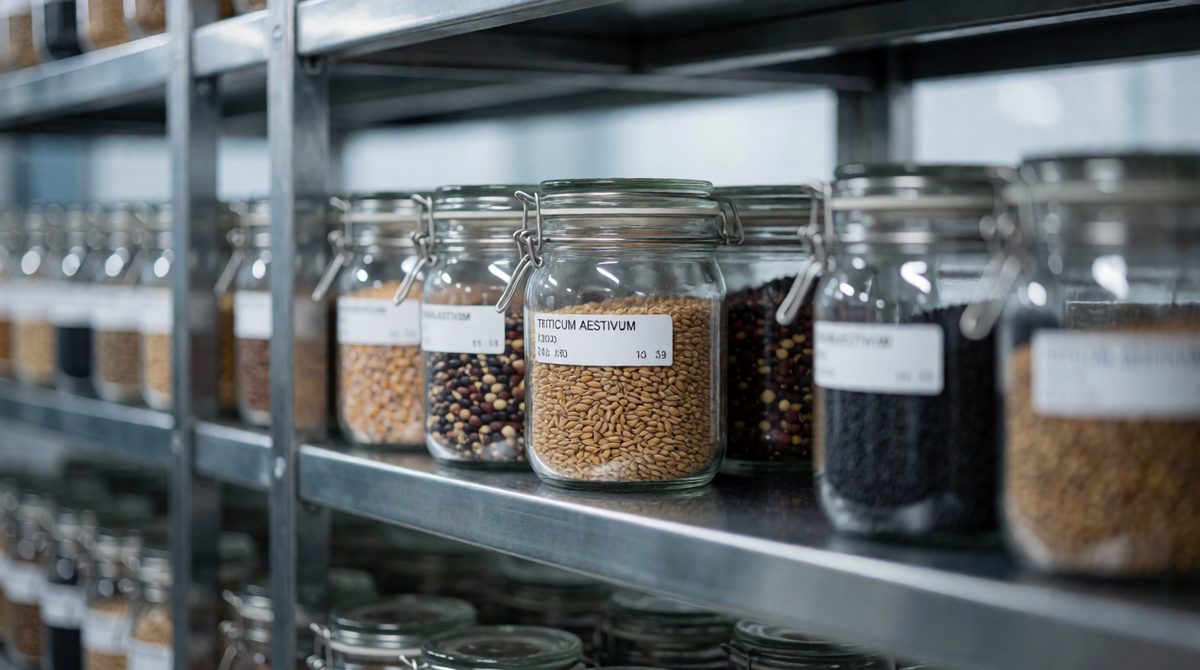
Seed banks protect plant species for the future
Sometimes a species is so endangered that it needs help outside its natural habitat. Ex-situ conservation acts as a safety net when in-situ methods alone aren't enough.
🏭 Zoos and Captive Breeding
Modern zoos do far more than display animals they run captive breeding programmes for endangered species. The Arabian Oryx went extinct in the wild in 1972 but was saved by zoo breeding programmes. By 1982, captive-bred oryx were reintroduced to Oman and today over 1,000 live in the wild. The Durrell Wildlife Conservation Trust in Jersey has saved over 20 species from extinction using captive breeding.
🌿 Seed Banks and Botanical Gardens
Plant diversity is protected in seed banks and botanical gardens. The Millennium Seed Bank at Kew Gardens in the UK holds over 2.4 billion seeds from more than 40,000 plant species the largest wild plant seed collection in the world. If a plant goes extinct in the wild, seeds can be used to restore populations. Botanical gardens like Kew also grow rare plants and research their ecology.
🔎 Case Study: Coral Reef Conservation The Great Barrier Reef
The Great Barrier Reef off the coast of Queensland, Australia, is the world's largest coral reef system, stretching over 2,300 km. It supports over 9,000 species. But it's in serious trouble:
- ⚠ Warming seas have caused five mass bleaching events since 1998
- ⚠ Agricultural runoff brings fertilisers that cause algal blooms, smothering coral
- ⚠ Crown-of-thorns starfish (boosted by nutrient pollution) eat coral at destructive rates
Conservation responses include:
- ✓ The Great Barrier Reef Marine Park restricts fishing, shipping and development
- ✓ Coral gardening scientists grow coral fragments in underwater nurseries and transplant them to damaged reefs (ex-situ technique applied in-situ)
- ✓ Reducing fertiliser runoff through better farming practices upstream
- ✓ Australia has committed AUD $1 billion to reef protection
Despite these efforts, scientists warn that without urgent action on climate change, the reef could lose 99% of its coral if global temperatures rise by 2°C.
🌐 International Agreements and Legislation
Biodiversity doesn't respect borders, so international cooperation is essential. Several key agreements help protect species globally:
📄 Key International Agreements
🐘 CITES (1973)
The Convention on International Trade in Endangered Species controls the trade of over 38,000 species of animals and plants. It bans or restricts trade in endangered species like elephants, rhinos and tigers. Over 183 countries have signed up. Without CITES, the illegal wildlife trade (worth $23 billion a year) would be even worse.
🌎 Convention on Biological Diversity (1992)
Signed at the Rio Earth Summit, this agreement commits countries to conserving biodiversity, using it sustainably and sharing benefits fairly. The Kunming-Montreal Global Biodiversity Framework (2022) set a target to protect 30% of land and oceans by 2030 known as the "30x30" target.
🐋 Ramsar Convention (1971)
An international treaty specifically protecting wetland habitats, which are among the most biodiverse and threatened ecosystems on Earth. Over 2,400 wetland sites covering 2.5 million km² are now designated as Ramsar sites, including the Norfolk Broads in the UK.
⚖ Conflicts and Challenges in Conservation
Conservation isn't always straightforward. There are often conflicts between protecting wildlife and meeting human needs. Understanding these conflicts is important for the iGCSE exam.
🚴 Conservation vs. Local Livelihoods
When national parks are created, local communities are sometimes displaced from their traditional lands. In some African countries, farmers lose crops and livestock to elephants and lions, creating resentment towards conservation. Solutions include compensation schemes, wildlife corridors that avoid farmland and community tourism projects that give locals a financial stake in wildlife survival.
💵 Funding and Political Will
Conservation is expensive. Many of the world's most biodiverse countries are also the poorest. Protecting the Amazon costs Brazil money it could earn from farming and mining. Debt-for-nature swaps are one solution wealthy countries cancel debts in exchange for conservation commitments. The USA has used this approach with several Latin American countries.
💡 Exam Tip: Evaluation Questions
In your iGCSE exam, you may be asked to evaluate conservation strategies. Remember to consider:
- ✓ Advantages what does the strategy achieve? Give specific examples and data.
- ✓ Disadvantages what are the costs, conflicts, or limitations?
- ✓ Sustainability does it work long-term without harming local people?
- ✓ Scale is it local, national, or international? Does it address the root causes?
Always try to use named examples examiners love specific case studies with facts and figures!
📋 Summary: Conservation Strategies at a Glance
🌿 In-Situ Strategies
- National parks and nature reserves
- Marine protected areas
- Biosphere reserves
- Habitat restoration and rewilding
- Community-based conservation
- Anti-poaching legislation
🏭 Ex-Situ Strategies
- Zoos and captive breeding programmes
- Seed banks (e.g. Millennium Seed Bank)
- Botanical gardens
- Reintroduction programmes (e.g. Arabian Oryx)
- Gene banks
- Aquaria for marine species