🌿 What is Ecotourism?
Tourism is one of the biggest industries on the planet. But most tourism causes damage think packed beaches, coral reefs trampled by snorkellers and forests cleared for hotels. Ecotourism tries to flip this around. Instead of destroying nature to attract visitors, it uses nature as the attraction and then uses the money to protect it.
The idea sounds simple, but getting it right is actually quite tricky. Done well, ecotourism can save species, support communities and fund conservation. Done badly, it's just regular tourism with a green label slapped on it.
Key Definitions:
- Ecotourism: Responsible travel to natural areas that conserves the environment, supports local people and involves education and interpretation.
- Biodiversity: The variety of all living things in an area including different species, genes and ecosystems.
- Sustainable tourism: Tourism that meets the needs of visitors today without damaging the environment for future generations.
- Conservation: The protection and careful management of natural environments and wildlife.
- Carrying capacity: The maximum number of visitors an area can handle without being damaged.
✅ What makes it REAL ecotourism?
True ecotourism must tick several boxes. It should be in a natural area. It must actively support conservation. Local communities must benefit not just big foreign companies. Visitor numbers must be kept low enough to avoid damage. And tourists should leave with a better understanding of the environment they visited.
❌ What is greenwashing?
Some companies call themselves "eco" just to attract customers, without actually doing anything to help nature. This is called greenwashing. For example, a large resort might plant a few trees but still use huge amounts of water, employ no local staff and send all profits abroad. Always look for certified ecotourism operators!
🌎 The Principles of Ecotourism
The International Ecotourism Society (TIES) sets out clear principles that genuine ecotourism should follow. These aren't just nice ideas they're the difference between tourism that helps and tourism that harms.
📚 The Six Core Principles
🌿 Minimise Impact
Keep visitor numbers low. Use footpaths. Don't feed wildlife. Take nothing but photos, leave nothing but footprints.
👨🏽 Benefit Local People
Hire local guides. Buy local food. Use locally owned accommodation. Money should stay in the community, not fly abroad.
📚 Educate Visitors
Tourists should learn about the ecosystem, the threats it faces and what they can do to help. Awareness leads to action.
💰 Fund Conservation
Entry fees, permits and donations should go directly into protecting the habitat and its species.
🦉 Respect Wildlife
No touching, no baiting, no disturbing nesting animals. Observe from a safe distance and follow guide rules at all times.
🏠 Support Local Culture
Respect the traditions and customs of local communities. Ecotourism should celebrate local culture, not replace it.
🔎 Did You Know?
The global ecotourism market was worth over $338 billion in 2022 and is growing fast. Countries like Costa Rica, Kenya and Bhutan have made ecotourism a central part of their economies and their conservation strategies.
🌎 Case Study: Ecotourism in Kenya The Maasai Mara
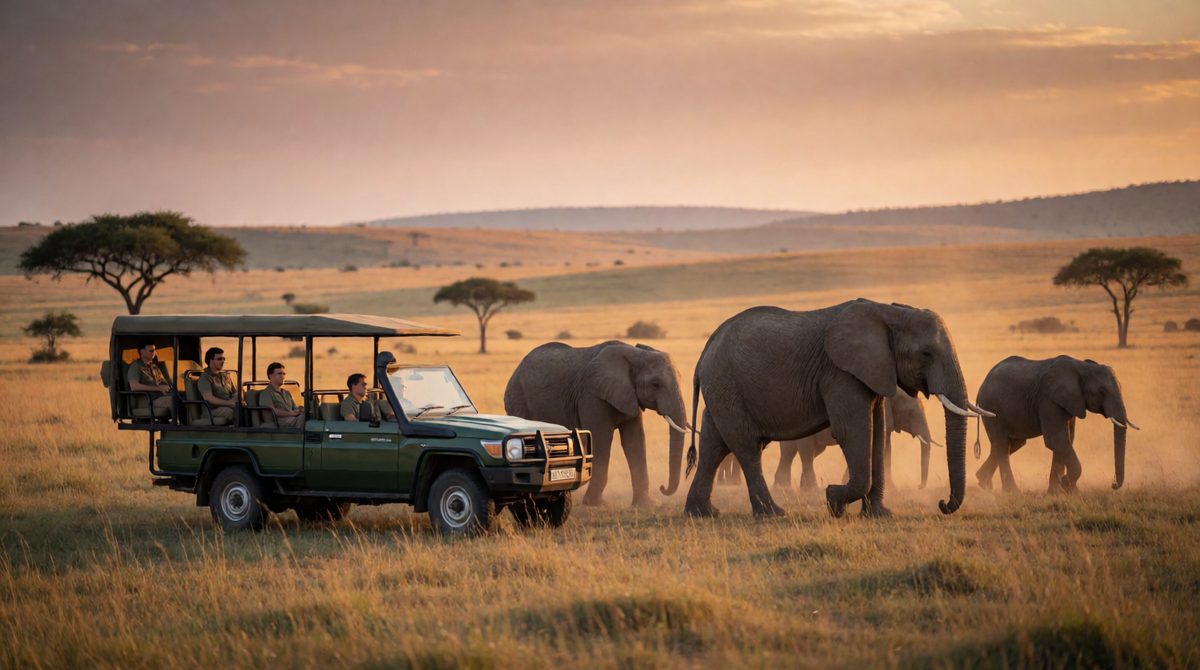
Ecotourism in the Maasai Mara supports wildlife and local people
Kenya's Maasai Mara is one of Africa's most famous wildlife areas. It's home to lions, elephants, cheetahs and the spectacular wildebeest migration over 1.5 million animals crossing the Mara River each year. Tourism here is big business, but it hasn't always been done well.
🦊 How Ecotourism Works Here
In recent years, community conservancies have been set up around the Mara. Local Maasai communities lease their land to conservation organisations instead of converting it to farmland. In return, they receive a share of tourism income, jobs as guides and rangers and schools and clinics funded by tourism revenue.
🟢 Benefits
- Wildlife corridors protected between national parks
- Maasai communities earn more from tourism than farming
- Poaching has reduced significantly in conservancy areas
- Tourists get a more authentic, less crowded experience
- Local guides employed money stays local
🔴 Challenges
- Some areas still overcrowded vehicles disturb cheetah hunts
- Benefits not always shared equally within communities
- Drought and climate change threaten wildlife numbers
- COVID-19 wiped out tourism income in 2020–21, causing hardship
🌎 Case Study: Costa Rica A Global Ecotourism Leader
Costa Rica covers just 0.03% of Earth's surface but contains 5% of the world's biodiversity. In the 1980s, deforestation was destroying its rainforests. The government responded by paying landowners to protect forests (a scheme called Payments for Ecosystem Services) and building a world-class ecotourism industry. Today, over 25% of Costa Rica is protected land. Tourism brings in over $4 billion a year. Forest cover has increased from 21% in 1987 to over 52% today. It's one of the greatest conservation success stories in the world.
🌐 International Conservation Working Together Across Borders
Many species don't care about national borders. Whales migrate across oceans. Birds fly between continents. Elephants roam across several countries. This means conservation can't just happen in one place countries have to work together. That's where international conservation agreements come in.
Key Definitions:
- International conservation agreement: A legally binding deal between countries to protect species, habitats, or ecosystems.
- Convention: A formal international agreement like a treaty that countries sign up to.
- Biosphere Reserve: An area recognised by UNESCO where conservation and sustainable development happen together.
- World Heritage Site: A place of outstanding natural or cultural value, protected under a UNESCO agreement.
📄 Key International Agreements You Need to Know
🐸 CITES (1973)
Convention on International Trade in Endangered Species. Controls or bans trade in endangered plants and animals. Over 180 countries have signed. It's why you can't legally buy ivory or tiger skins.
🌍 CBD (1992)
Convention on Biological Diversity. Signed at the Rio Earth Summit. Countries agree to protect biodiversity, use it sustainably and share benefits fairly. Nearly every country in the world has signed.
🐠 Ramsar Convention (1971)
Protects wetlands of international importance. Wetlands are vital for birds, fish and water quality. Over 2,400 Ramsar sites exist worldwide, covering 2.5 million km².
🏛 Key International Organisations
Several major organisations work to protect biodiversity at a global level. You should know who they are and what they do.
🌿 IUCN International Union for Conservation of Nature
The IUCN produces the famous Red List a global database of species and their conservation status. Categories include Least Concern, Vulnerable, Endangered, Critically Endangered and Extinct. The Red List helps governments and organisations decide where to focus conservation efforts. Over 150,000 species have been assessed.
🐼 WWF World Wide Fund for Nature
One of the world's largest conservation charities. WWF funds projects in over 100 countries, campaigns against illegal wildlife trade and works with governments on environmental policy. You'll recognise their giant panda logo. They also produce the Living Planet Report, which tracks wildlife population trends globally.
🏛 UNESCO World Heritage Sites and Biosphere Reserves
UNESCO (United Nations Educational, Scientific and Cultural Organisation) runs two important conservation programmes:
- World Heritage Sites: Places of outstanding universal value natural or cultural. Examples include the Great Barrier Reef (Australia), the Galápagos Islands (Ecuador) and the Serengeti (Tanzania). Being listed brings international attention and funding, but also tourist pressure.
- Biosphere Reserves: Areas where conservation and sustainable human use happen side by side. They have a protected core zone surrounded by buffer zones where limited activity is allowed. There are over 700 Biosphere Reserves in 129 countries.
🚨 The IUCN Red List Alarming Numbers
As of 2024, over 44,000 species are threatened with extinction that's more than 28% of all assessed species. This includes 41% of amphibians, 37% of sharks and rays, 26% of mammals and 12% of birds. The main causes are habitat loss, overexploitation, invasive species, pollution and climate change.
⚖ Challenges and Limitations
Ecotourism and international agreements are not perfect solutions. There are real problems that need to be understood.
🚫 Problems with Ecotourism
🚶 Overtourism
Even small numbers of visitors can damage fragile ecosystems if not managed well. Trails erode, noise disturbs animals and waste pollutes water sources.
💰 Profit Leakage
Money from tourism often leaks out of local communities to foreign-owned companies, airlines and hotels. Local people may see little benefit.
⛈ Climate Vulnerability
Ecotourism depends on healthy ecosystems. Climate change is bleaching coral reefs, melting glaciers and shifting wildlife ranges threatening the very attractions tourists come to see.
🚫 Problems with International Agreements
- Enforcement is weak: Countries sign agreements but may not have the resources or political will to enforce them. Illegal wildlife trade continues despite CITES.
- Not all countries sign: Some major polluters or wildlife-trade nations refuse to join key agreements.
- Slow progress: International negotiations move slowly. By the time agreements are reached, species may already be lost.
- Funding gaps: Developing countries often lack the money to implement conservation plans, even when they want to.
💡 Exam Tip Evaluation Questions
In your iGCSE exam, you may be asked to evaluate ecotourism or international conservation. Always give both sides the benefits AND the limitations. Use specific examples and case studies (Kenya, Costa Rica, CITES, IUCN Red List) to support your points. A top-mark answer will reach a clear, justified conclusion.
📚 Summary What Have We Learned?
- Ecotourism is responsible tourism in natural areas that funds conservation and benefits local communities.
- It must follow key principles: minimise impact, educate visitors, fund conservation and support local people.
- Kenya's Maasai Mara and Costa Rica are excellent case studies of ecotourism working well with some challenges.
- International conservation agreements like CITES, CBD and the Ramsar Convention help protect species and habitats across borders.
- Key organisations include the IUCN (Red List) and WWF (Living Planet Report).
- UNESCO protects biodiversity through World Heritage Sites and Biosphere Reserves.
- Both ecotourism and international conservation face real challenges enforcement, funding and climate change being the biggest.