Introduction to Ground and Air Source Heat Pumps
Heating our homes and buildings uses a huge amount of energy in the UK, heating accounts for around 40% of all energy use and a third of carbon emissions. Most of that heat currently comes from burning natural gas in boilers. But as the world tries to cut carbon emissions, we need smarter, cleaner ways to keep warm. That's where heat pumps come in.
Heat pumps don't burn fuel to create heat. Instead, they move heat from one place to another a bit like a fridge working in reverse. They pull heat from the ground or the air outside and transfer it into your home. Even on a cold winter's day, there's still usable heat energy in the ground and air around us.
Key Definitions:
- Heat Pump: A device that transfers thermal energy from a cooler place to a warmer place using a small amount of electricity.
- Ground Source Heat Pump (GSHP): A system that extracts heat stored in the ground through buried pipes filled with fluid.
- Air Source Heat Pump (ASHP): A system that absorbs heat from outdoor air, even at low temperatures and uses it to heat buildings.
- Coefficient of Performance (COP): A measure of efficiency how many units of heat are produced for every unit of electricity used. A COP of 3 means 3 units of heat for 1 unit of electricity.
- Refrigerant: A fluid used inside the heat pump that absorbs and releases heat as it changes between liquid and gas.
- Geothermal Energy: Heat stored naturally within the Earth, used by ground source heat pumps.
🌎 Why Heat Pumps Matter
The UK government has set a target of reaching net zero carbon emissions by 2050. Replacing gas boilers with heat pumps is one of the most important steps to get there. The government wants to install 600,000 heat pumps per year by 2028. Heat pumps run on electricity, which can come from renewable sources like wind and solar making them potentially carbon-free.
⚡ Heat Pumps vs Gas Boilers
A modern gas boiler converts about 90p of every £1 of energy into heat. A heat pump, by contrast, can produce £3 worth of heat for every £1 of electricity used. This is because it's moving heat rather than creating it. However, electricity currently costs more per unit than gas in the UK, so running costs can still be similar for now.
How Ground Source Heat Pumps Work
Ground source heat pumps (GSHPs) use the fact that below about 1–2 metres underground, the temperature stays relatively stable all year round around 8–12°C in the UK. This stored solar energy can be extracted and used for heating.
🌎 The GSHP Process Step by Step
Understanding how a GSHP works helps you appreciate both its cleverness and its limitations.
- Ground Loop: A long loop of pipe is buried in the ground either horizontally in trenches (needing a large garden) or vertically in boreholes (drilled 50–200 metres deep).
- Fluid Circulation: A mixture of water and antifreeze is pumped around this loop. It absorbs heat from the surrounding soil or rock.
- Heat Exchanger: The warmed fluid passes through a heat exchanger inside the pump unit.
- Compression: A refrigerant fluid absorbs the heat and is compressed by an electric compressor. Compression raises its temperature significantly.
- Heat Distribution: The hot refrigerant passes through another heat exchanger, releasing its heat into the building's heating system usually underfloor heating or large radiators.
- Cycle Repeats: The refrigerant cools, expands and the cycle starts again.
🔨 Horizontal Loop
Pipes buried 1–2 metres deep in wide trenches. Needs a large area of land roughly 2–3 times the floor area of the house. Cheaper to install than vertical systems.
📈 Vertical Borehole
Pipes drilled 50–200m straight down. Ideal for smaller plots or urban areas. More expensive to drill but takes up less surface space. More stable temperatures at depth.
💧 Open Loop System
Uses groundwater directly from an aquifer as the heat source. Water is extracted, heat is removed, then water is returned. Very efficient but requires suitable geology and permits.
🔍 Case Study: Kensa Heat Pumps Social Housing, Cornwall
Kensa Group, based in Cornwall, has installed ground source heat pumps in thousands of social housing properties across the UK. In one project in Islington, London, vertical borehole GSHPs were installed in blocks of flats replacing expensive electric storage heaters. Residents saw heating bills drop by up to 40% and the carbon footprint of each home fell significantly. The project showed that GSHPs can work in urban settings, not just rural ones, using shared ground arrays beneath communal spaces.
How Air Source Heat Pumps Work
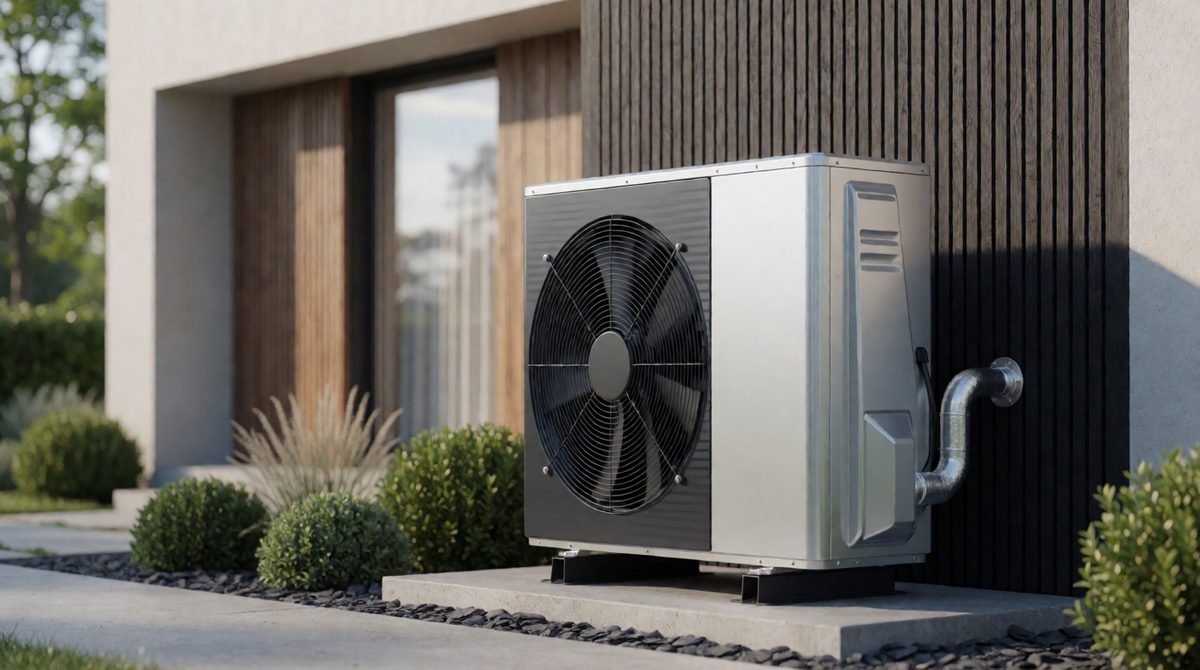
Heat pumps warm homes with less carbon
Air source heat pumps (ASHPs) are simpler and cheaper to install than ground source systems. They look a bit like an air conditioning unit on the outside of a building. They work by extracting heat from outdoor air which contains usable thermal energy even when temperatures drop as low as -15°C to -20°C.
🌿 The ASHP Process Step by Step
- Fan draws in outdoor air across a network of fins containing refrigerant fluid.
- Refrigerant absorbs heat from the air and evaporates into a gas, even at low temperatures.
- Compressor increases pressure of the gas, raising its temperature further.
- Heat exchanger transfers heat into the building's water-based heating system.
- Refrigerant condenses back to liquid, expands and the cycle repeats.
There are two main types of ASHP: air-to-water (the most common in the UK, connecting to radiators or underfloor heating) and air-to-air (which heats air directly, like a warm air system but cannot heat water).
👍 Advantages of ASHPs
- Much cheaper to install than GSHPs typically £7,000–£13,000
- No digging or drilling required
- Can be fitted to most homes with outdoor space
- Can also provide cooling in summer
- Eligible for the UK Boiler Upgrade Scheme grant (£7,500 off)
👎 Disadvantages of ASHPs
- Less efficient in very cold weather (COP drops)
- Can be noisy fans run continuously
- Need good insulation in the home to work well
- Lower flow temperatures than gas boilers may need bigger radiators
- Visual impact on the outside of buildings
🔍 Case Study: Electrification of Heat Orkney, Scotland
The Orkney Islands in Scotland have become a testing ground for heat pump technology. The islands generate so much electricity from wind turbines that they sometimes produce more power than they can use. To make use of this surplus, many homes have switched to air source heat pumps. The result: homes heated by clean, locally-generated wind energy with very low carbon emissions. The project has demonstrated how renewable electricity and heat pumps can work together perfectly a model for the rest of the UK.
Environmental Benefits of Heat Pumps
Heat pumps offer some impressive environmental advantages over traditional fossil fuel heating but the full picture depends on where your electricity comes from.
🌿 Carbon Emissions
When powered by renewable electricity, heat pumps produce zero direct carbon emissions. Even using the UK's current electricity grid (which still includes some gas and coal), heat pumps typically produce 2–3 times fewer carbon emissions than a gas boiler. As the grid gets greener over time, heat pumps automatically become cleaner without any changes to the system itself. This is a huge advantage over gas boilers, which will always burn fossil fuels.
🌿 No Local Air Pollution
Unlike gas boilers, heat pumps produce no nitrogen oxides (NOx) or particulate matter at the point of use. This improves local air quality, especially in cities where gas boiler emissions contribute to urban air pollution.
⚡ Energy Efficiency
With a COP of 3–4, heat pumps are 300–400% efficient far beyond any combustion system. For every unit of electricity in, you get 3–4 units of heat out. This reduces overall energy demand.
🌎 Reduced Fossil Fuel Use
Widespread adoption of heat pumps would dramatically reduce the UK's dependence on imported natural gas improving energy security and reducing the environmental damage of gas extraction and transport.
Limitations and Challenges
Heat pumps are not a perfect solution there are real barriers to their widespread use and it's important to understand these for your exam.
⚠️ Key Challenges
- High upfront cost: GSHPs can cost £15,000–£35,000 to install. Even with grants, this is out of reach for many households.
- Home insulation requirements: Heat pumps work best in well-insulated homes. The UK has millions of old, draughty houses that would need expensive upgrades first.
- Lower flow temperatures: Heat pumps typically heat water to 35–55°C, compared to 70–80°C for gas boilers. This means radiators may need replacing with larger ones, or underfloor heating installed.
- Electricity costs: In the UK, electricity is currently about 3–4 times more expensive per unit than gas. This reduces the running cost savings of heat pumps.
- Refrigerant gases: Some heat pumps use hydrofluorocarbon (HFC) refrigerants, which are powerful greenhouse gases if they leak. Newer systems use more climate-friendly alternatives like R290 (propane).
- Planning and space: Horizontal ground loops need large gardens. Vertical boreholes need specialist drilling equipment. ASHPs need outdoor space and can face planning restrictions in conservation areas.
- Skilled workforce: There aren't enough trained heat pump installers in the UK to meet government targets a major bottleneck.
💡 Did You Know?
Sweden and Norway have some of the highest rates of heat pump adoption in the world. In Sweden, over 90% of new homes are fitted with heat pumps. The Scandinavian climate is colder than the UK's, proving that heat pumps work effectively even in harsh winters. The key difference? Scandinavian countries invested in training, incentives and grid decarbonisation decades ago.
Comparing Ground Source and Air Source Heat Pumps
Choosing between a GSHP and an ASHP depends on the site, budget and building type. Here's a clear comparison:
📊 GSHP vs ASHP at a Glance
🌎 Ground Source Heat Pumps
- Efficiency (COP): 3.5–5.0 (higher and more stable)
- Installation cost: £15,000–£35,000
- Space needed: Large garden or borehole access
- Noise: Very quiet pump is indoors
- Best for: Rural properties, new builds, large homes
- Disruption: Significant digging or drilling required
🌿 Air Source Heat Pumps
- Efficiency (COP): 2.5–4.0 (varies with temperature)
- Installation cost: £7,000–£13,000
- Space needed: Small outdoor area for unit
- Noise: Some fan noise
- Best for: Urban homes, retrofits, smaller properties
- Disruption: Minimal fitted in a day or two
Heat Pumps and Sustainable Energy Management
In the context of iGCSE Environmental Management, heat pumps are an excellent example of sustainable energy management using technology to meet human needs while reducing environmental impact.
♻️ Fitting into the Bigger Picture
Heat pumps connect to several key themes in environmental management:
- Renewable energy integration: Heat pumps pair perfectly with solar panels and wind turbines. Surplus renewable electricity can power heat pumps, storing energy as heat in buildings.
- Demand management: Smart heat pumps can be programmed to run when electricity is cheapest and greenest helping to balance the national grid.
- Reducing resource depletion: Less reliance on gas means slower depletion of finite fossil fuel reserves.
- Climate change mitigation: Lower carbon heating directly contributes to meeting the Paris Agreement targets.
- Energy security: Countries that heat with electricity from domestic renewables are less vulnerable to global gas price shocks (as seen after Russia's invasion of Ukraine in 2022).
🔍 Case Study: Bunhill Energy Centre, London
In Islington, London, a large-scale water source heat pump (a variation of GSHP) extracts heat from the London Underground's deep tube tunnels which get very warm from train motors and passenger body heat. This heat is used to warm hundreds of homes and a leisure centre via a district heating network. The system provides low-carbon heat to over 1,300 homes and saves around 500 tonnes of CO₂ per year. It's a brilliant example of using waste heat from one system to serve another circular energy thinking in action.
Government Policy and Heat Pumps in the UK
The UK government has introduced several policies to encourage heat pump adoption as part of its net zero strategy:
- Boiler Upgrade Scheme (BUS): Launched in 2022, this offers a £7,500 grant towards the cost of an ASHP or GSHP, replacing a fossil fuel boiler.
- Future Homes Standard: New homes built from 2025 onwards must be fitted with low-carbon heating effectively banning new gas boilers in new builds.
- Heat Network Zoning: The government plans to designate zones in cities where district heating networks (often powered by large heat pumps) will be the primary heating method.
- Skills Training: Funding for training more heat pump engineers to meet installation targets.
Despite these policies, uptake has been slower than hoped. In 2023, only around 60,000 heat pumps were installed in the UK far short of the 600,000 per year target. The main barriers remain cost, awareness and the need for home insulation upgrades.
💡 Exam Tip
In your exam, you may be asked to evaluate heat pumps as a method of energy conservation. Remember to cover both sides: the genuine environmental benefits (low carbon, high efficiency, renewable-compatible) AND the real limitations (high cost, insulation needs, electricity price, refrigerant issues). Use specific figures like COP values and installation costs to support your answers. Refer to named case studies like Orkney or Bunhill for extra marks.
Summary
Ground and air source heat pumps are one of the most promising technologies for cutting carbon emissions from heating. They work by moving heat rather than creating it, making them far more efficient than gas boilers. GSHPs offer higher efficiency and stability but cost more and need more space. ASHPs are cheaper and easier to install but slightly less efficient. Both types produce far less carbon than fossil fuel heating, especially as the electricity grid gets greener. The main challenges are upfront cost, home insulation and the need for more trained installers. With the right policies and investment, heat pumps could transform how we heat our homes and play a major role in reaching net zero.