🤝 Participant
The researcher becomes part of the group. A researcher studying a football supporters' club might join the club, go to matches and sit with the fans. They see the world as the members do.
Sign up to access the complete lesson and track your progress!
Unlock This Course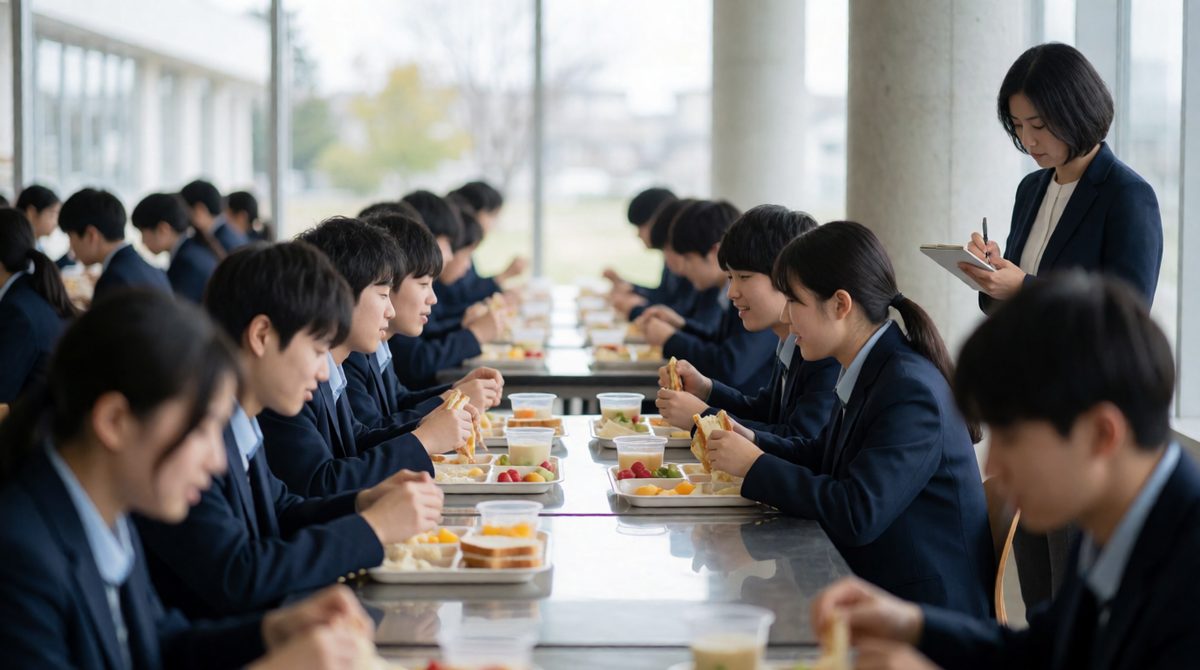
Observation shows what people actually do, not just what they say they do - like how students really behave in the canteen
Questionnaires and interviews rely on what people say they do. An observation is different. The researcher watches what people actually do and records it. Imagine a researcher who wants to know how students behave in a school canteen. She could ask them, but she could also sit in the canteen and watch.
Observation is a primary research method, because the researcher collects the data first hand. It is mostly used by interpretivists, who want to understand behaviour as it happens in a natural setting.
Key terms:

A participant observer joins the group - like a researcher sitting with the fans at every match to see the world as they do
The first choice is how close to get.
The researcher becomes part of the group. A researcher studying a football supporters' club might join the club, go to matches and sit with the fans. They see the world as the members do.
The researcher stays outside. A researcher might sit at the back of a classroom with a notepad, or watch a playground from a window, and take no part in what happens.
The second choice is whether the group knows. In overt observation the researcher is open about the research. In covert observation the researcher hides it and may pretend to be an ordinary member of the group.
The two choices can be combined, which gives four types:
Participant observation is a long process with three stages, and each has its own problems.
Observation mainly gives qualitative data. The researcher records rich description in field notes: what was said, what was done and what the atmosphere felt like. Non-participant observation can also give quantitative data. For example, the researcher can use a tally chart to count how many times students put their hand up in a lesson.
It shows real behaviour, not what people say they do, so it is high in validity. It gives rich, detailed data and a deep understanding of the group. It can study people who cannot or will not answer questions, such as young children. A covert researcher avoids the Hawthorne effect, because nobody knows they are being watched.
It takes a lot of time, so only a small sample is studied and the results are hard to generalise. It is not reliable, because no other researcher can repeat it exactly. The researcher may be biased in what they notice. An overt researcher may cause the Hawthorne effect, and a covert researcher may face ethical problems and may be unable to take notes openly.
Strength: the researcher experiences what the group experiences, so the understanding is deep.
Limitation: the researcher may go native, lose objectivity, and affect the group's behaviour by joining in.
Strength: the researcher stays detached, so it is easier to be objective and to take notes or count.
Limitation: the researcher is an outsider, so may misunderstand the meaning of what they see.
Strength: it is honest, so the group can give consent, and the researcher can ask questions and take notes openly.
Limitation: people may act differently because they know they are being watched, and the group may refuse access.
Strength: people behave naturally and may allow access to groups that would normally refuse.
Limitation: it involves deception, and the researcher may be caught, which could end the research or put them at risk.
Mixing up participant and overt. "Participant" is about taking part, and "overt" is about whether the group knows. A researcher can be a participant and covert, or a participant and overt. Another mistake is saying observation always gives qualitative data. Non-participant observation can use a tally chart to give numbers. Do not say observations are "high in reliability". Because each situation is unique, they are low in reliability.
Source A
A researcher wanted to study how the members of a youth sports club treated each other. She joined the club as a volunteer coach and spent a year at training sessions and matches. She told nobody at the club about her research, so everyone just thought she was another coach. She wrote her field notes in a private diary each evening.
(a) Identify two types of observation used in Source A. [2]
(b) Explain one strength and one limitation of the type of observation used in Source A. [4]
(a) Participant observation (1) because she joined in as a volunteer coach. Covert observation (1) because nobody at the club knew she was a researcher.
(b) Strength: the members behaved naturally because they did not know they were being studied (1), so the data is high in validity and avoids the Hawthorne effect (1). Limitation: she deceived the members (1), which raises ethical problems, and she could have been found out, which would have ended the research (1).
In (a), use the source to prove your choice. Write "participant because she joined in as a coach" rather than just naming the type.