🛍 Everyday norms
Queueing at a shop till, being quiet in a library and arriving on time for a lesson are norms in many societies.
Sign up to access the complete lesson and track your progress!
Unlock This Course
Nobody is born knowing to wait their turn - queueing is a rule people created and passed on, which is social construction
Think about a simple rule such as "wait your turn in a queue". No law of nature says people must do this. Nobody was born knowing it. People in a society created the rule, shared it and passed it on.
This is what sociologists mean when they say society is a product of social construction. The shared ideas, rules and ways of life in a society are not natural or fixed. They are built up by people over time, and they can change.
Key terms:
Four of the main building blocks are culture, norms, values and customs. Each one is explained below. Roles, status and stereotypes are the next lesson, Roles, Status and Stereotypes.
Key terms:
Culture is the big idea. Norms, values and customs are all parts of it. When you speak your language, eat your food, celebrate a festival or follow the rules of your community, you are living your culture.
Cultures can be very different. In some societies people traditionally eat the main meal with their hands. In others they use chopsticks, and in others a knife and fork. Each one is part of the way of life of the people who use it.
Key terms:
Norms tell us what is "normal" and acceptable. Most of the time we follow them without thinking.
Queueing at a shop till, being quiet in a library and arriving on time for a lesson are norms in many societies.
In some societies people take their shoes off before going into a home. In others, people keep shoes on indoors.
Another example is how close people stand when they talk. In some societies people stand quite close. In others they keep more distance. These are different norms, not right and wrong.
Key terms:
Values are the deeper beliefs behind our behaviour. A value is general, while a norm is specific.
Different societies may rank values differently. In some societies, loyalty to the family or community is placed above personal ambition. In others, personal achievement and the freedom of the individual are stressed more.
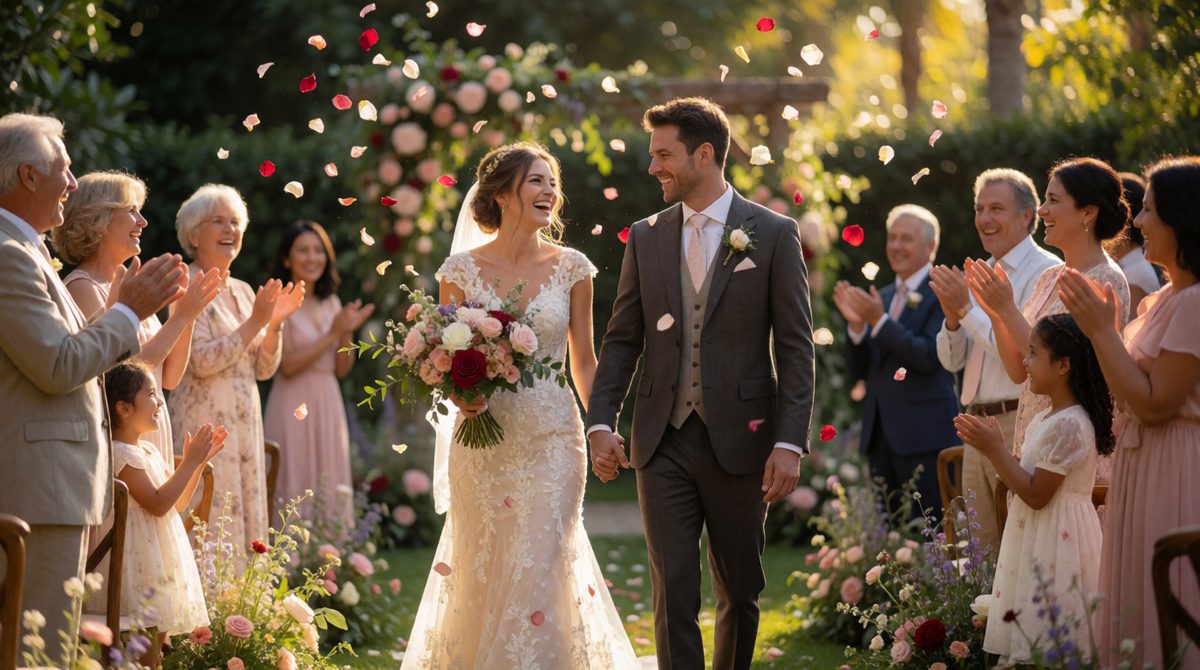
Customs like wedding traditions are passed down from one generation to the next, often marking special occasions
Key terms:
Customs are the traditions of a society. They are usually linked to important events such as weddings, religious festivals, births and funerals.
Lighting lamps at Diwali, sharing a meal at Eid and giving gifts at Christmas are customs.
The clothes, the music and the rituals at a wedding follow customs that differ between societies and religions.
People greet each other with a handshake, a bow, or the Maori hongi, which is touching noses. These are customs of greeting.
A custom is a tradition that has been repeated for many years. A norm is a rule about what is expected. The two overlap, but a custom is about tradition, while a norm is about expected behaviour.
These four ideas guide how we act each day.
Culture, norms, values and customs also help to make us who we are. They give us a sense of belonging to a group.
So someone's social identity is made up partly of the culture they belong to. A person may belong to several cultures at once, such as a family culture, a school culture and a national culture.
How these norms and values are learned is covered later, in Nature or Nurture? How Identity Is Socially Constructed.
Question: At a family gathering, the children stand up when their grandparent enters the room, and then greet them with a traditional bow that the family has used for generations. Identify a norm, a value and a custom shown here.
Norm: standing up when an older person enters the room.
Value: respect for elders.
Custom: the traditional bow, which has been passed down in the family.
Saying that a norm is the same as a law. Norms are usually unwritten and have no legal punishment. Mixing up values and norms: a value is a general belief about what is important, while a norm is a specific rule for behaviour. Writing only a definition when the question asks for an example. Using only examples from your own country.
(a) Define the term values. [2 marks]
(b) Give two examples of customs. [2 marks]
(c) Explain three ways in which norms influence the behaviour of individuals. [6 marks]
(a) Values are beliefs about what is important or worth having (1). They are general standards that guide behaviour, such as respect for elders or honesty (1).
(b) Any two from: lighting lamps at Diwali (1); exchanging gifts at Christmas (1); a traditional wedding ceremony (1); the Maori hongi greeting (1).
(c) Norms tell people how to behave in a situation (1), for example queueing at a shop rather than pushing in (1). Norms create pressure to conform (1), because people who break them may be stared at or criticised, so most go along with them (1). Norms make behaviour predictable (1), so people know what to expect from each other, such as raising a hand in class (1).
For a 6 mark "explain" question, make three separate points and add an example or a reason to each one. Keep each point short and clear.