Saying no to the rules
Most people follow most of society's rules most of the time, because of formal and informal social control. But not everyone goes along with them. Some people resist social control: they challenge the rules, or they live by a different set of norms from the rest of society. Two important ways of doing this are joining a protest group or joining a sub-culture.
Key terms:
- Deviance: behaviour that breaks a society's norms. It is not always against the law.
- Non-conformist behaviour: choosing not to follow the norms and expectations of the wider society, for example by dressing, thinking or acting differently.
- Protest group: a group of people who join together to publicly oppose something and to try to change it.
- Sub-culture: a smaller group within a society whose members share their own norms, values, style and interests, which are different in some ways from the mainstream culture.
- Mainstream culture: the main set of norms and values shared by most people in a society.
Deviant and non-conformist behaviour

Pyjamas at a job interview break a norm - that makes it deviant behaviour, but not a crime
Deviant behaviour breaks a norm. Eating loudly in a library, or wearing pyjamas to a job interview, would be deviant in many societies. Neither is a crime. Non-conformist behaviour is closely linked. It means a person or group deliberately chooses not to conform. A student who refuses to follow the latest fashions and creates their own style is being non-conformist.
Being deviant or non-conformist does not always mean doing something harmful. Many protest groups and sub-cultures are peaceful. They simply break or challenge some norms. For more on how crime and deviance differ, see the lesson called Crime, Deviance and Their Relativity.
Protest groups
A protest group tries to change a law, a policy or people's attitudes. Members may sign petitions, march, refuse to buy certain products or use social media. Some use civil disobedience, which means peacefully refusing to obey a law they think is unfair. Protest groups resist social control because they challenge the rules that governments or other powerful groups make.
📢 Protest group examples
Greenpeace is an environmental campaigning organisation, founded in 1971, well known for peaceful protests. Extinction Rebellion began in the UK in 2018 and uses peaceful disruption, such as blocking roads, to demand action on climate change. Fridays for Future is a school students' climate movement that grew from Greta Thunberg's school strike in Sweden in 2018.
🌍 Another example
The civil rights movement in the United States protested against racial segregation in the 1950s and 1960s. It used marches and refusals to use unfair services. Its protests helped to change laws, which shows that resistance can lead to social change.
Sub-cultures
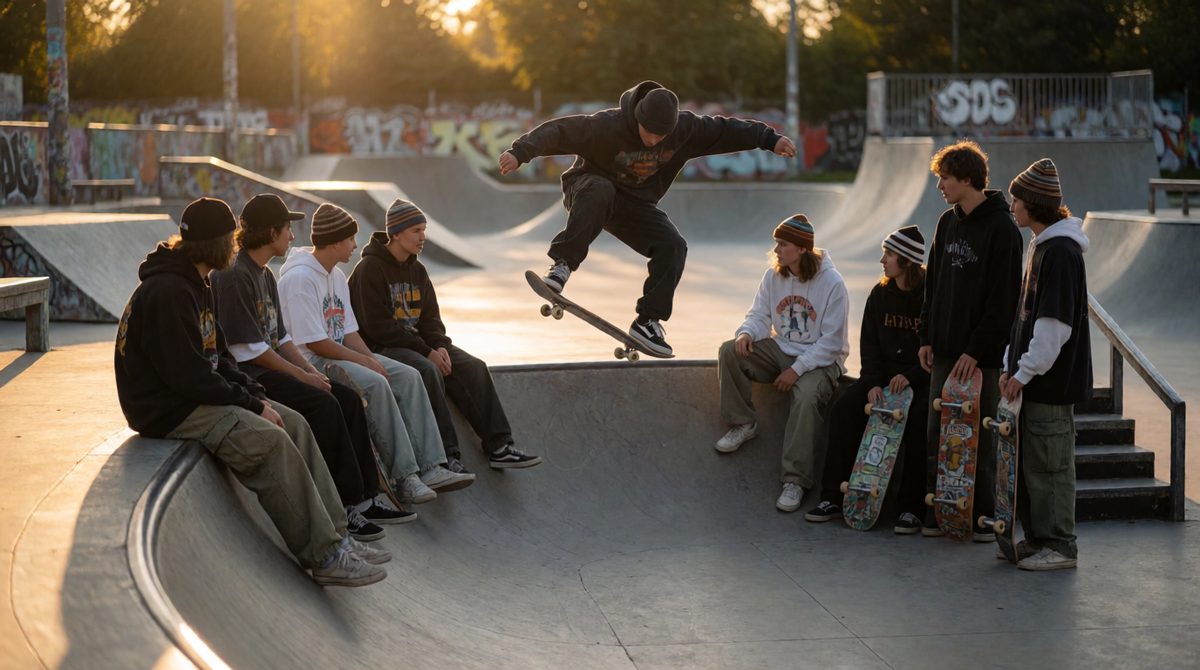
Skaters share most of mainstream culture but have their own style and slang - a classic youth sub-culture
A sub-culture is not a rejection of everything. Its members usually still share most of the mainstream culture, such as the language or the laws. The difference is that they also have their own style, music, beliefs or habits, and they feel they belong together. Some sub-cultures resist social control openly. Others just live by different norms.
💻 Online sub-cultures
These form on websites, games, forums and social media. Members may live in different countries but share slang, in-jokes, usernames and rules. Examples include online gaming communities and fan communities, such as K-pop fan groups. Because they are online, members can join from anywhere.
🎸 Youth sub-cultures
Young people often create styles that set them apart from older generations. Punks in 1970s Britain wore ripped clothes, safety pins and bright hair, and rejected authority. Goths wear dark clothes and make-up and share a love of a certain type of music. Hip hop began among young people in New York in the 1970s and combined music, dance and art.
🙏 Religious sub-cultures
Some religious groups live by norms that differ from the wider society. Many Amish communities in the USA and Canada wear plain clothes and limit their use of some modern technology. Rastafari, which began in Jamaica, has its own beliefs, diet and styles such as dreadlocks. Many Hasidic Jewish communities have distinctive dress and strong community rules.
🤝 Belonging
In all these examples, members share a sense of belonging. This is why sub-cultures can be powerful. Their members support and control each other through their own informal sanctions, such as praise or being left out.
Why do people join?
- Belonging and identity: people find friends and a sense of who they are.
- Shared interests or beliefs: the group shares music, hobbies, faith or political views.
- Disagreement with the rules: they think a law or norm is unfair and want to change it.
- Feeling left out: people who feel ignored by the mainstream may find acceptance in a group.
- Peer or family influence: friends or relatives are already members, or the person was brought up in the group.
- Fun and self-expression: a sub-culture lets people be creative with clothes, music or online identity.
Worked example
Question: Is a goth non-conformist, deviant, or both? Answer: A goth is non-conformist because they choose a style that is different from the mainstream. Their clothes may break the norms of what people usually wear, so some people would call it deviant. It does not break the law and it harms nobody, so being deviant here only means being different.
Common mistakes
Do not say all sub-cultures are criminal. Most are not. Do not say that a sub-culture rejects the whole of society, because members usually share most of it. For examples, always name the group and say what makes it different.
Exam-style question
(a) Define the term sub-culture. [2 marks]
(b) Give two examples of protest groups. [2 marks]
(c) Explain three reasons why some people join sub-cultures. [6 marks]
Model answer
(a) A group within a society (1) that has its own norms, values or style which differ from the mainstream culture. (1)
(b) Any two from: Greenpeace, Extinction Rebellion, Fridays for Future, the civil rights movement. (1) (1)
(c) Belonging: a sub-culture gives members friends and a sense of identity, so they join to feel part of a group. (2) Shared interests: members who love the same music or style, such as punk, join to be with people who share it. (2) Feeling left out: people who feel ignored by the mainstream may find acceptance in a group that welcomes them. (2)
Exam tip
In part (c) give each reason, then add a short explanation of why it makes someone join. A reason on its own gets only one of the two marks.