Who are you? Age and gender
When you meet someone new, two things are noticed almost at once: roughly how old they are and whether they seem to be a man, a woman or neither. Age and gender are two of the four key aspects of social identity, the way we see ourselves and the way others see us as members of social groups. The other two, ethnicity and social class, come in the next lesson, Ethnicity and Social Class Identity.
Both age and gender look biological. Sociologists point out that what each one means is made by society. That is social construction again: the meanings are learned, and they change from place to place and over time.
Key terms:
- Age identity: how we see ourselves, and are seen by others, because of the stage of life we are in.
- Childhood: the stage of life before adulthood, with its own expectations about how a child should behave and be treated.
- Youth: the stage between childhood and adulthood, often linked to teenagers and young adults.
- Old age: the later stage of life, often linked to retirement.
- Ageism: prejudice or unfair treatment of someone because of their age.
- Sex: the biological difference between males and females.
- Gender: the social and cultural expectations about how males and females should look and behave.
- Gender identity: a person's own sense of being male, female, or something else such as non-binary.
Age as a social construction
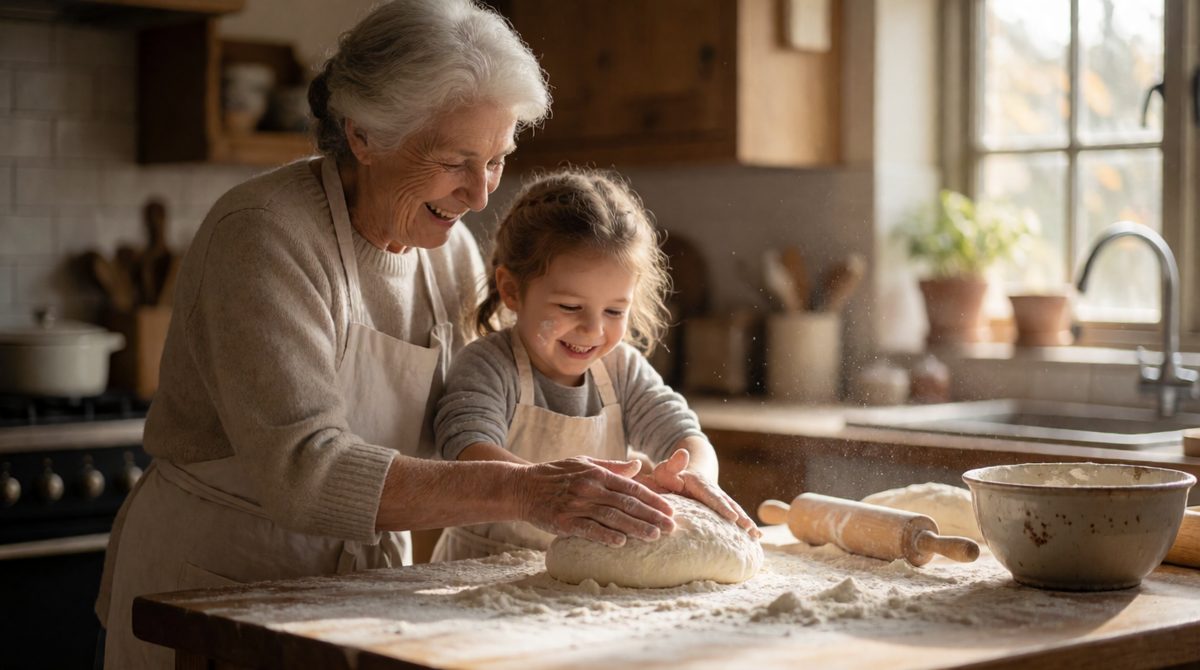
Being seventy means different things in different societies - the stages of life are socially constructed
Everyone has a birthday, but the meaning of being ten, sixteen or seventy is created by society. We can see this because the stages of life are not the same everywhere.
👶 Childhood
In many societies today, children are seen as needing protection, school and play. In some societies and in the past, children were expected to work and help support the family from a young age. Same biological age, very different identity.
🎧 Youth
Youth is often seen as a stage of freedom and fun, but also of risk. Young people are sometimes stereotyped as rebellious or lazy. Youth culture, such as music and fashion, helps young people share an identity.
👴 Old age
In some societies older people are respected for their wisdom and lead the family. In others they can be seen as a burden or pushed out of work. Retirement ages also differ between countries.
The law also constructs age. The age at which someone can vote, marry, drive or be treated as an adult in court is set by each society, and it differs between countries. In some societies a rite of passage marks the move to a new stage. Coming of Age Day in Japan and the bar and bat mitzvah in Jewish communities are examples. These ceremonies show that society, not biology alone, decides when someone counts as an adult.
The impact of age identity
- On individuals: expectations shape how people act and how they feel about themselves. A teenager may be told to "act your age". An older person may be treated as less capable than they are.
- On social groups: stereotypes can lead to ageism. Young people may be watched with suspicion in shops, and older workers may find it hard to be hired.
- Different societies: where elders are respected, old age can bring status. Where youth is admired, getting older can feel like losing it.
Gender as a social construction
Sex is about biology, but gender is about what society expects. A baby's sex is usually noted at birth. The expectations that follow, such as colours, toys, jobs and ways of speaking, are learned. Masculinity and femininity, defined in the lesson on socialisation theories, are therefore not the same everywhere.
The anthropologist Margaret Mead studied three societies in Papua New Guinea. She argued that ideas of what is masculine or feminine were very different in each of them, which suggests gender is shaped by culture. Her work has been debated, but it is often used to make this point.
Gender expectations also change over time inside one society. In many countries, caring for young children was once seen as women's work. Today more men take time off work to look after their children, and more women work in jobs such as engineering and firefighting. This varies between societies.
Changing gender identities
Traditional ideas of gender gave people two fixed identities, male and female, each with its own roles. Today gender identities are more varied in many societies:
- Some people do not feel that the sex recorded at birth matches their gender identity.
- Some people identify as non-binary, meaning a gender identity that is not exclusively male or female.
- Many people stretch traditional masculinity and femininity, for example a man who is gentle and caring, or a woman who is a firefighter.
Not every society accepts this. In some, laws and social attitudes support only two genders. In others, there are long-standing traditions of recognising more than two. Say "in some societies" when you write about this in the exam.
The impact of gender identity
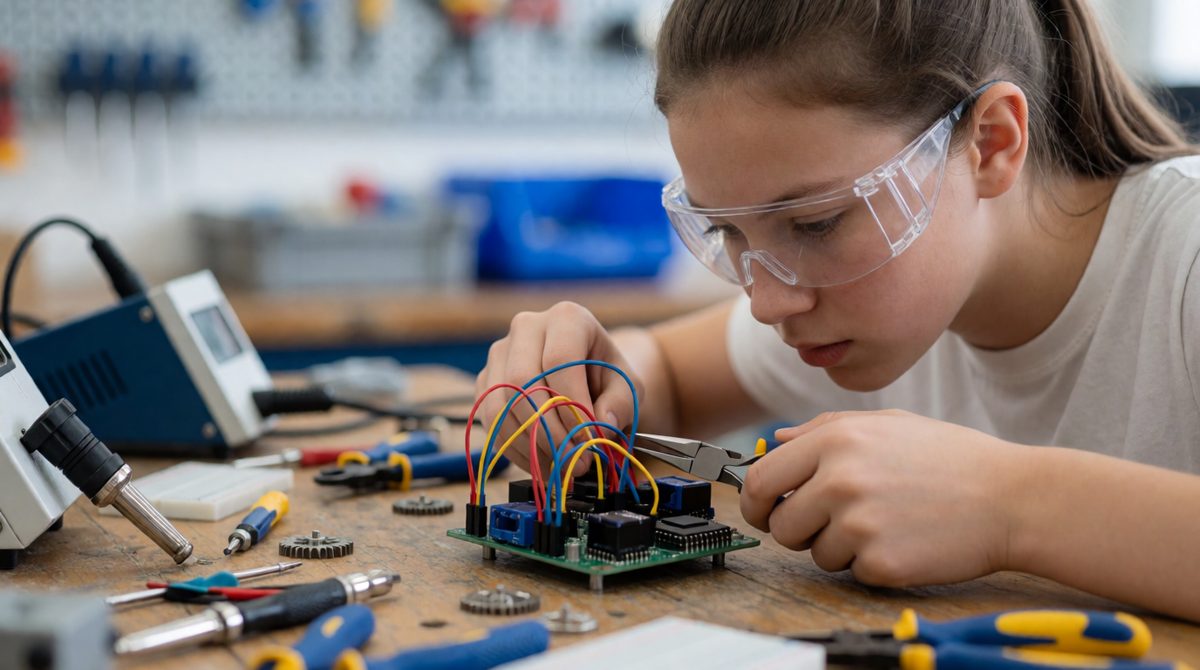
Girls are often steered away from engineering - gender expectations can shape the careers people choose
👤 Individuals
Gender expectations affect clothes, hobbies, friendships and careers. A boy may feel pressure not to show emotion. A girl may be steered away from engineering. People who do not fit the expectations may feel pressure or be treated unfairly.
👥 Social groups
Gender gives people a group to belong to, such as a team or a women's network. It can also create unequal treatment, for example when jobs are seen as "men's work" or "women's work". How gender affects life chances is covered later, in Life Chances, Age and Gender.
Worked example
Question: Why is gender a social construction? Answer: Gender is a social construction because what is seen as masculine or feminine is learned from society, not fixed by biology. It differs between societies, as Mead's study suggested, and it changes over time, for example as more fathers take time off work to care for children.
Common mistakes
Do not mix up sex and gender: sex is biological, gender is social. Do not say all societies treat age or gender the same way. Name a society or say "in some societies". And do not retell gender role socialisation here, because that was in an earlier lesson.
Exam-style question
(a) Define the term gender identity. [2 marks]
(b) Give two examples of how childhood is different in different societies. [2 marks]
(c) Explain three ways in which age or gender identity can affect individuals. [6 marks]
Model answer
(a) A person's own sense (1) of being male, female or something else, such as non-binary. (1)
(b) Any two from: in some societies children are expected to go to school and play, while in others they are expected to work and help the family; the age at which a child is treated as an adult differs; some societies mark adulthood with a ceremony. (1) (1)
(c) Stereotypes: young people may be seen as rebellious, so they may be watched in shops and feel they are not trusted. (2) Expectations: boys may be told not to show emotion, so they may hide their feelings. (2) Ageism: older workers may be seen as less capable, so they may find it hard to get a job or be forced to retire. (2)
Exam tip
In part (c) name the identity, say what people expect of it, then say how that affects the person. Three clear steps usually earn both marks for each point.