A connected world

Same game, different continents - globalisation links young people's lives across the world
Imagine a teenager in Lagos, one in Seoul and one in Santiago. All three may watch the same streaming series, wear similar trainers and talk to each other in an online game. A hundred years ago this would have been almost impossible. Today the world is far more connected, and that changes how people see themselves.
Key terms:
- Globalisation: the process by which the world becomes more connected, as trade, travel, technology and media let goods, ideas and people move easily across borders.
- Cultural diversity: the variety of different cultures, languages, beliefs and ways of life found in a society or in the world.
How globalisation influences identity
Globalisation can affect both individual identities (how a person sees themselves) and social or cultural identities (the identity of a whole group, such as a community or a nation). The spec asks you to know three possible influences.
🛡️ Cultural defence
When people feel their culture is under threat from outside influences, they may protect it and hold on to it more strongly.
🤝 Hybrid identities
When people mix parts of two or more cultures to make a new identity of their own.
🌐 Homogenisation
When different cultures and identities become more and more alike, so the differences between them fade.
Cultural defence
Cultural defence is a reaction to globalisation. People who worry that their language, religion or traditions are being swamped by outside influences may work harder to keep them alive.
- A community may teach its traditional songs and dances to children so they are not forgotten.
- In Quebec in Canada, laws protect the use of the French language, partly because many people there want to defend their own culture within a mostly English-speaking continent.
Sometimes cultural defence makes a group identity stronger and more proud. However, it can also lead to people feeling cut off from others, or being hostile to outsiders.
Hybrid identities
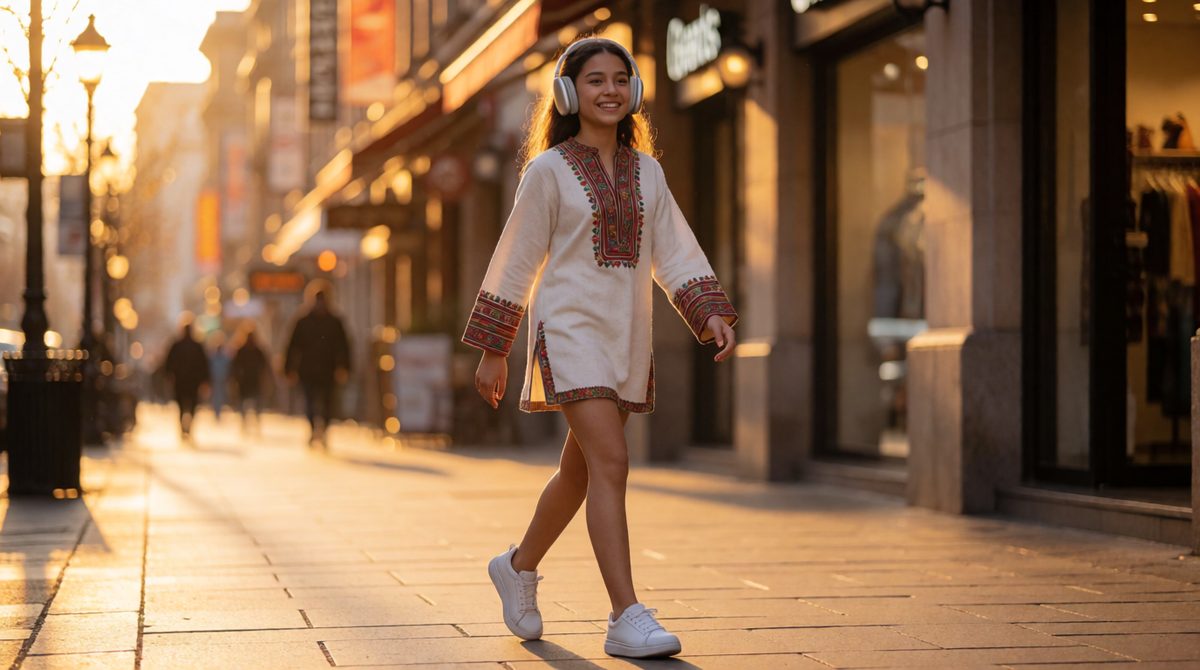
Traditional dress and street trainers - a hybrid identity mixes the cultures of family and the wider society
A hybrid identity is a mixture. A young person may speak one language at home and another at school, follow the customs of their family and also enjoy the music and fashions of the country where they live. They do not choose one culture over another. They combine them.
Everyday examples of hybrid culture include Tex-Mex food, which mixes Mexican and American cooking, and music styles that blend the sounds of different parts of the world. A person with a hybrid identity may feel at home in more than one culture. Some sociologists see this as a creative and positive result of globalisation. Others point out that some people feel torn between cultures and not fully accepted by either.
The homogenisation of identities
Homogenisation means becoming the same. Global companies sell the same drinks, clothes and phones in almost every country, and the same films, songs and social media trends reach people everywhere. As a result, young people in very different places may dress, eat and talk in similar ways, and local differences may fade.
Some people worry that this will wipe out unique local cultures and identities. Others argue that people do not simply copy what they see. A global brand often changes its products to suit local tastes, for example by offering vegetarian menus in countries where many people do not eat meat.
Worked example
Question: Explain one way in which globalisation may lead to the homogenisation of identities. Answer: Global media and companies spread the same products and images around the world. For example, young people in many countries now watch the same series and wear the same brands of trainers. This means their tastes and appearance become more alike, so local differences in identity may fade.
Impacts of cultural diversity, multiculturalism and global culture
Part (b) of the spec asks for the positive and negative impacts on identity of three ideas.
Key terms:
- Multiculturalism: a society in which people from many cultures live side by side, and each culture is respected and allowed to keep its own traditions.
- Global culture: a shared culture spread across the world by global media, brands and technology, such as the same films, music, foods and social media.
👍 Positive impacts
Cultural diversity: people can learn about other ways of life and may gain a wider, more open sense of who they are.
Multiculturalism: minority groups feel respected and are free to express their identity with pride.
Global culture: people share interests across borders, so they may feel part of something bigger than their own country.
👎 Negative impacts
Cultural diversity: some people feel confused about where they belong, or feel their own culture is being pushed aside.
Multiculturalism: critics say groups may live separately and that a shared national identity may be weakened.
Global culture: local traditions and languages may be lost, and people may feel pressure to fit in with a worldwide style.
Remember, impacts depend on the person and the society. The same change can feel exciting to one person and threatening to another.
Common mistakes
Do not say that globalisation always destroys cultures. Good answers show both sides, including cultural defence and hybrid identities. Do not mix up multiculturalism (different cultures living side by side) with homogenisation (cultures becoming the same). And keep your answer focused on identity rather than describing the causes of globalisation in detail.
Exam-style question
(a) Define the term globalisation. [2 marks]
(b) Give two examples of hybrid identities or hybrid culture. [2 marks]
(c) Explain three ways in which global culture may have a negative impact on identity. [6 marks]
Model answer
(a) The process by which the world becomes more connected (1) through trade, travel, technology and media. (1)
(b) Any two from: a young person who mixes the customs of their family with those of the country where they live; Tex-Mex food; music that blends styles from different parts of the world; speaking two languages in daily life. (1) (1)
(c) Loss of local culture: global brands and media may replace local traditions and languages, so people may lose a part of their cultural identity. (2) Cultural defence reaction: some groups may feel threatened and hold on to their culture more tightly, so they may feel cut off from others. (2) Pressure to fit in: young people may feel they must follow worldwide trends, so they may feel less able to express their own culture. (2)
Exam tip
In a "three ways" question, give three clearly different points and link each one to identity in a short extra sentence. The word "so" is a good way to add that link and earn the second mark.