🎓 Young people
Young people are often paid less, are more likely to be unemployed, and find it harder to afford a home of their own.
Sign up to access the complete lesson and track your progress!
Unlock This CourseIn the last lesson you saw how social class affects life chances. Social class is not the only thing that sorts people. Two people from the same class can still have very different life chances because one is young and the other old, or because one is male and the other female.
The same five areas are used again: education, employment, health, housing and life expectancy. Remember that these are patterns across large groups, not what happens to every individual.
Key terms:

Older workers can face age discrimination - being passed over for jobs or training just because of how old they are
Age affects what a person can do and what society allows them to do. Both the young and the old can face disadvantages.
Young people are often paid less, are more likely to be unemployed, and find it harder to afford a home of their own.
Older people may face age discrimination at work, may live on a small pension, and are more likely to have health problems and to feel lonely.
Education. Children and teenagers are expected to be in education, but many adults find it hard to return later because of cost, time or the belief that they are 'too old' to learn. Older people may also have less access to new technology and training.
Employment. Young people often have fewer qualifications and less experience, so employers may offer them low-paid or short-term work. At the other end, some employers prefer younger workers and may not hire or promote people they see as too old. This is age discrimination. In some societies there are laws against it, but it still happens.
Health. Older people are more likely to need healthcare, so their health life chances depend on whether their society can provide it and whether they can afford it. Younger people usually have fewer health needs, but they still depend on their family or society to pay for care.
Housing. In many societies, house prices and rents are high compared with the wages of young people. They may have to rent, share with others, or stay in the family home for longer. Older people are more likely to own their home, though some live in homes that are cold, hard to move around in or expensive to heat.
Life expectancy. Life expectancy is about how long people live, so age is built into it. Living to an old age is itself a life chance. It depends on having enough food, safety, income and healthcare across a whole lifetime, so it is not equal for everyone.
Gender also affects life chances. In many societies, women have had fewer opportunities than men for a long time. Some inequalities affect women and girls, and some affect men and boys.
In some societies, girls are less likely to go to school. In many societies, women are paid less on average and do more of the unpaid care at home.
Men are more likely to work in dangerous jobs and are often less likely to visit a doctor early. In many societies, they have a shorter life expectancy.
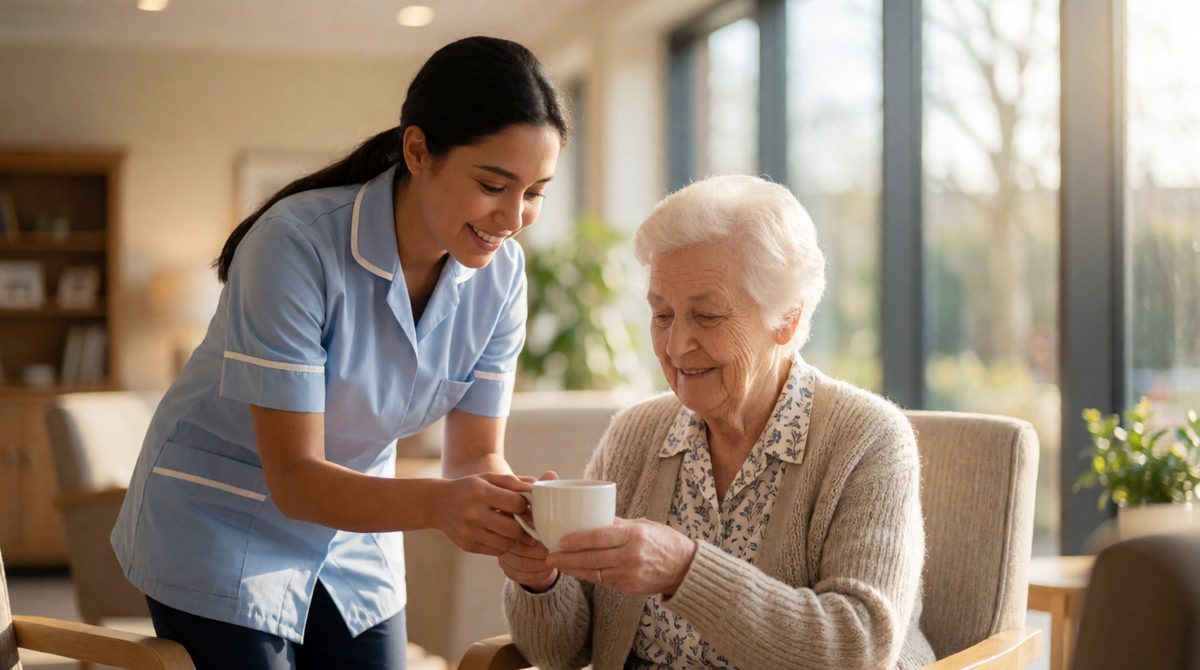
Many women work in caring jobs that are lower paid - one reason the gender pay gap still exists
Education. In some societies, families may spend money on a son's schooling before a daughter's, or girls may leave school early to marry or to care for relatives.
Employment. Many women work in jobs that are lower paid, such as caring work, and many do part-time work around family duties. Men are more likely to be in the highest paid and most senior roles. This is one reason for the gender pay gap. Another is that some women are paid less than men even when they do the same kind of work. Some men also meet disapproval if they choose jobs seen as 'women's work', such as nursing.
Health. Women and girls may find some healthcare harder to reach in places where they have less money or less freedom to travel. Men are more likely to be injured at work and to put off seeing a doctor, which can mean illness is found later.
Housing. Women are more likely to be lone parents, and lone-parent households tend to have lower incomes. This can make good housing harder to afford.
Life expectancy. In most societies, women live longer than men on average. But where girls and women have poor nutrition or healthcare, or little say in their lives, this advantage can be reduced.
Age and gender work alongside social class, so a person may be disadvantaged in more than one way. A young woman from a low-income family, for example, may face several barriers at once. Remember too that life chances change over a person's life. Someone who is young today will be older later.
1. Writing 'women always earn less than men'. Say 'on average' or 'in many societies'.
2. Only writing about women. Men and boys can also be disadvantaged, for example in health.
3. Thinking age only means old age. Young people also face disadvantages.
4. Describing age or gender identity (an earlier topic) instead of life chances.
5. Not naming the area of life chances, such as employment or housing.
(a) Define the term: (i) gender pay gap [2]
(b) Give two examples of ways in which age can affect a person's life chances. [2]
(c) Explain three ways in which a person's gender can affect their life chances. [6]
(a)(i) The gender pay gap is the difference between the average pay of men (1) and the average pay of women (1).
(b) Older people can face age discrimination when they apply for jobs (1). Young people may find it hard to afford a home of their own (1).
(c) First, in some societies girls are less likely to stay in school, because families may put a son's education first, so they have fewer qualifications and fewer job chances (1)(1). Second, women are more likely to do low-paid or part-time work around family duties, so they earn less on average (1)(1). Third, men are more likely to work in dangerous jobs and to delay seeing a doctor, so they may have worse health and a shorter life expectancy (1)(1).
In (c), cover three different areas of life chances, such as education, employment and health. Each point needs 'because' or 'so' to earn the second mark.