🏭 Possible benefits
A TNC can bring jobs, wages, new skills and investment to a poorer country. Some TNCs also invest in cleaner technology.
Sign up to access the complete lesson and track your progress!
Unlock This CourseSmoke does not stop at a border and neither does a warming climate. Global ecological issues are problems with the natural environment that affect many societies at once. Sociologists are interested in them because the causes and the effects are not shared out equally. Some societies and groups cause more of the damage. Others suffer more of the harm.
This lesson looks at four of these issues: transnational companies, climate change, pollution and urbanisation. As the lesson goes on, ask one question each time: who causes it, and who pays for it?
Key terms:
Transnational companies are powerful. Some are very large and wealthy, and they make decisions about where to build factories, where to mine and what to produce. This is part of globalisation, which you met in an earlier lesson.
A TNC can bring jobs, wages, new skills and investment to a poorer country. Some TNCs also invest in cleaner technology.
A TNC may move production to a country with weaker environmental rules. It may then cause pollution or clear land, because it is cheaper and less likely to be punished.
Here is the sociological point. The company's profits usually go to shareholders (the people who own part of the company) and managers, often in richer countries. The damage, such as polluted rivers or damaged farmland, is felt by local people in poorer countries. Some richer countries also send their waste, such as old electronics, to poorer countries to be dealt with.
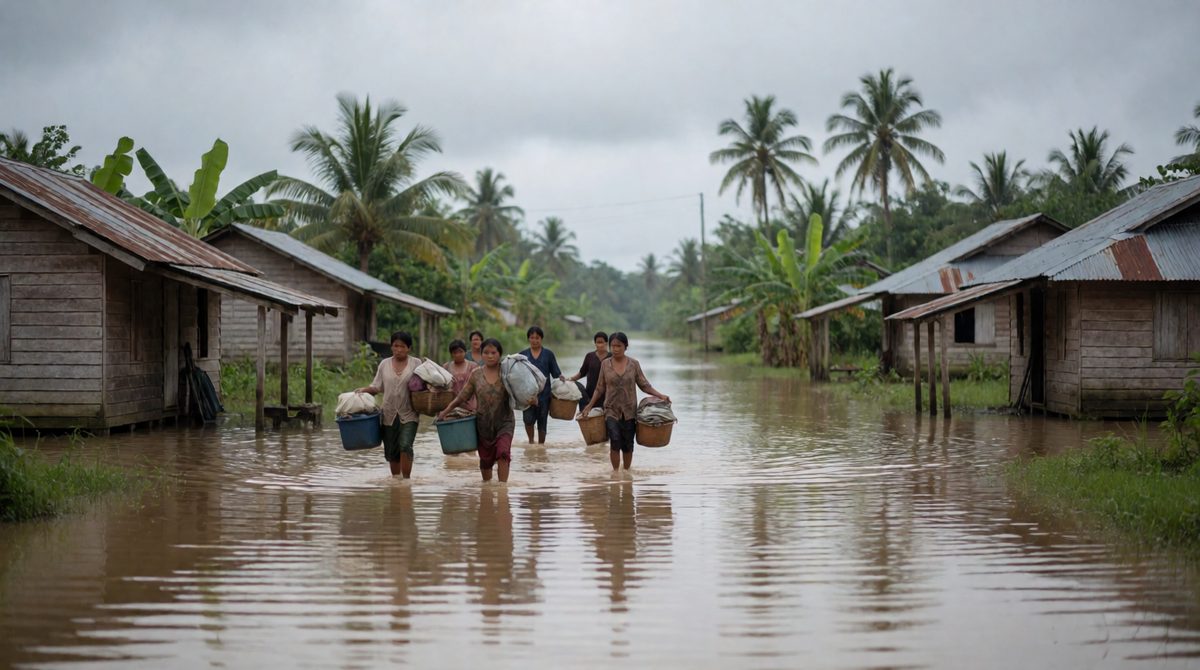
Richer societies produce most emissions, yet poorer communities often suffer the worst floods from climate change
Burning fossil fuels such as coal, oil and gas releases gases (called emissions) that trap heat in the atmosphere. The result is a warming planet, more extreme weather, droughts, floods and rising sea levels.
The effects fall unequally in three ways:
Groups within a society differ too. A wealthy household can insure its home or move away from a flood zone. A poor household that farms for its food may lose its whole income in one drought.
Pollution can mean smoke and fumes in the air, chemicals in rivers or plastic waste in the sea. Industry, traffic, mining and rubbish all contribute.
Within societies, poorer people are often more likely to live near factories, busy roads or waste sites, because land there is cheaper. Cleaner areas cost more to live in. So pollution can add to the inequality between social classes, and it harms health, which affects life chances.
Between societies, many of the most polluted cities are in poorer and quickly industrialising countries, where rules may be weaker or hard to enforce. Many of the products made there are bought by consumers in richer countries.
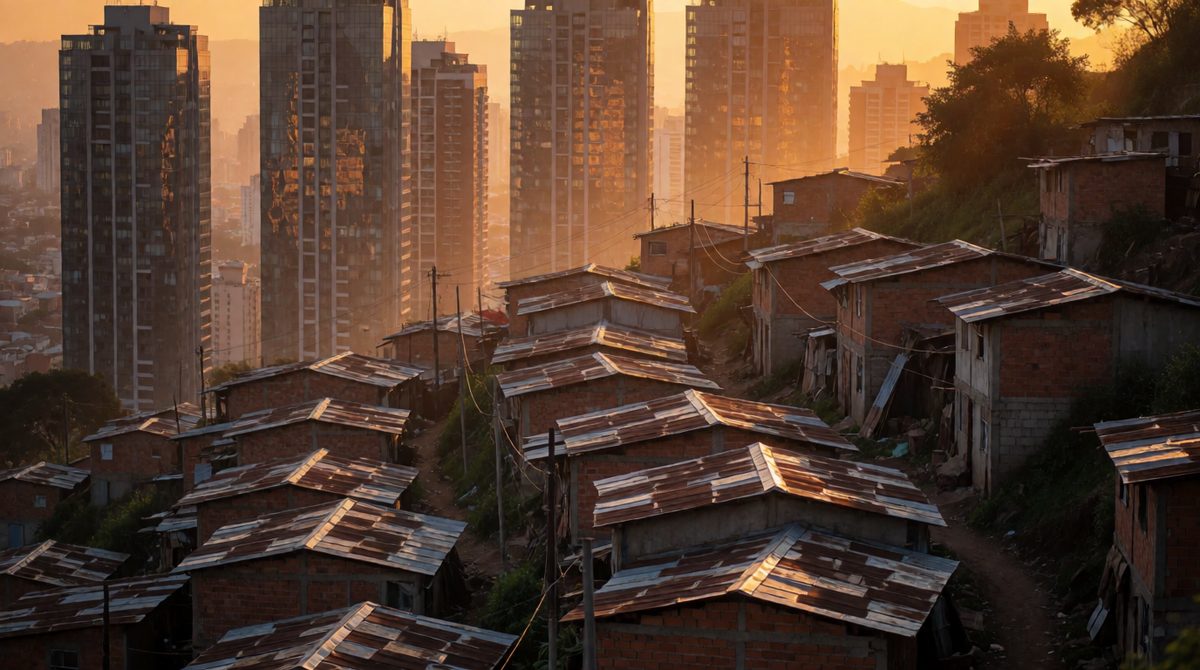
Cities in poorer societies can grow faster than governments can provide housing, clean water and sanitation
All over the world people are moving from the countryside to cities, in search of jobs, schools and healthcare. Cities can offer real opportunities. In many poorer societies, however, cities are growing faster than governments can provide housing, clean water, sanitation (toilets and safe waste disposal) and transport.
Within a city, the poorest groups usually live in the most crowded and most polluted areas, and are the most at risk from floods or disease.
Question: Explain one way climate change affects poorer societies more than richer societies.
Answer: Poorer societies often have less money to protect themselves (1). For example, a richer country can build sea walls against flooding, but a poorer country may not be able to afford them, so more people lose their homes and their way of earning a living (1).
Writing only about the environment and forgetting to link it to social groups or inequality. Saying all TNCs are bad: they can also bring jobs and investment. Saying only poorer societies cause pollution, when richer societies are responsible for most climate emissions so far. Writing about urbanisation and the family, which is taught in another lesson.
(a) Define the term transnational company. [2 marks]
(b) Give two examples of global ecological issues. [2 marks]
(c) Explain three ways in which the effects of global ecological issues fall unequally on richer and poorer societies. [6 marks]
(a) A business that operates in more than one country (1), for example with its head office in one country and factories in others (1).
(b) Any two from: climate change, pollution, urbanisation, the activities of transnational companies (1 each).
(c) First, richer societies have produced most of the emissions that cause climate change, but poorer societies are often in places most exposed to floods and droughts (1). Second, richer societies have the money to build sea defences and recover from disasters, while poorer societies often cannot afford this, so the harm lasts longer (1). Third, TNCs may move production to poorer countries with weaker environmental rules, so local people suffer the pollution while profits go to owners elsewhere (1). Each point developed with a reason earns the further marks (3).
For "explain three" questions, make each point a different one and always say who is affected and why. Naming both richer and poorer societies in each answer shows the examiner you understand the inequality.