🏭 Cheap labour
Companies set up factories where wages are low. Workers are paid little for products that sell for much more in richer countries. The difference is profit for the owners.
Sign up to access the complete lesson and track your progress!
Unlock This CourseSome societies are far wealthier than others. In some, most people have clean water, schools and healthcare. In others, millions of people go without. Sociologists ask why. They do not simply say "some countries work harder". They look at how societies are connected, and who gains from those connections.
Three explanations are on your syllabus: Marxist views of capitalist exploitation, colonialism, and feminist ideas of patriarchy. Each one points to a different cause of global inequality.
Key terms:
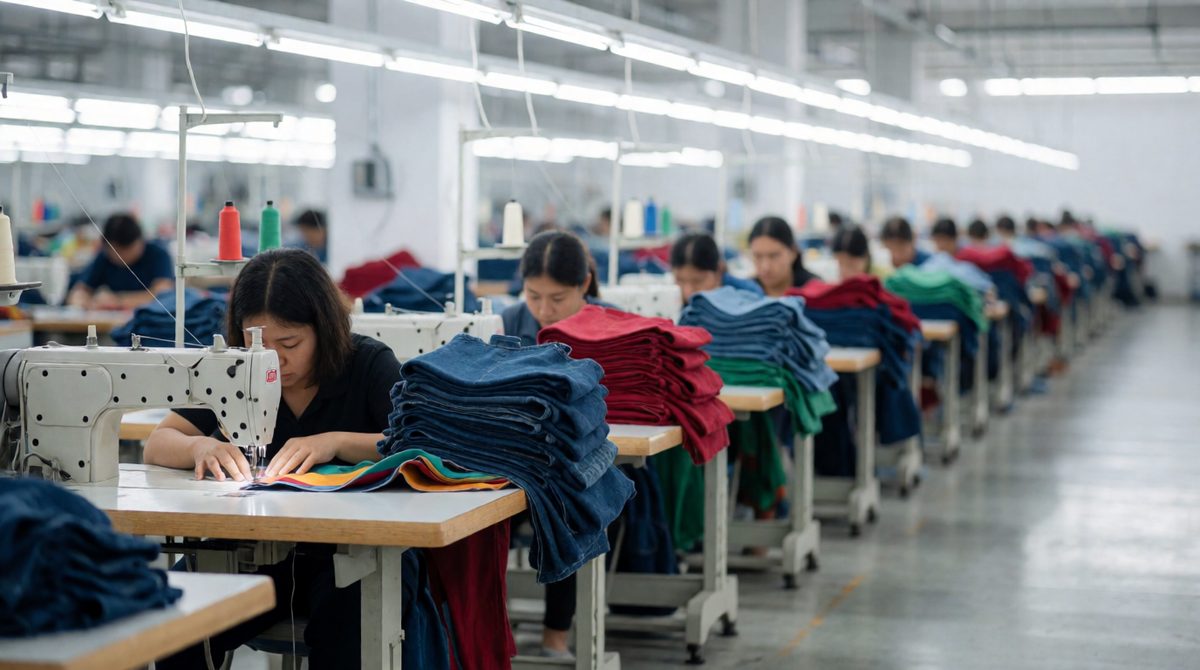
Marxists say global capitalism keeps profits flowing to rich countries while workers in poorer ones earn very little
You have met Marxism already, including its view that business owners exploit workers inside a society (see the lesson Marxism and Inequality). Marxists apply the same idea to the whole world.
They argue that the world economy is capitalist. Capitalism is built on making profit. In a global capitalist system, wealthy countries and the companies based in them gain by using the cheap labour and cheap resources of poorer countries.
Companies set up factories where wages are low. Workers are paid little for products that sell for much more in richer countries. The difference is profit for the owners.
Poorer countries often sell raw materials, such as minerals or crops, at low prices. Richer countries turn them into products worth much more.
As a result, profits flow out of poorer countries to owners and shareholders elsewhere. Marxists say poorer countries stay poor because richer ones grow wealthy this way. Inequality is not an accident. It is how the system works.
It explains how wealth moves from poorer to richer places. It fits the power of transnational companies, which can choose where to produce. It shows that inequality has causes in the system, not only in the choices of poorer countries.
Some countries that took part in global trade have grown richer, so exploitation cannot be the whole story. Foreign companies can bring jobs and skills. The theory pays little attention to gender or ethnicity, or to the choices of governments, including corruption inside poorer countries.
From the 1500s onwards, many European countries took control of lands in Africa, Asia and the Americas. Later, most colonies won their independence, often in the twentieth century. Colonialism has mostly ended, but its legacy has not.
Sociologists who use this explanation say that the way colonies were run left poorer societies at a disadvantage:
The legacy can continue today. Trade links, language and ownership of land or companies may still tie former colonies to their old rulers. Some writers use the word neo-colonialism for this, meaning that richer countries still hold influence over poorer ones through economic power, even without ruling them directly.
It uses real history to explain why many poorer countries are where they are. It explains patterns in trade, language and borders. It shows that the starting point of a society matters, not just its present choices.
Some former colonies, such as Singapore, have become wealthy. Some countries that were never colonised, such as Thailand, have faced poverty too. It does not explain inequality in countries that were never ruled by others, and it can ignore the part played by recent governments.
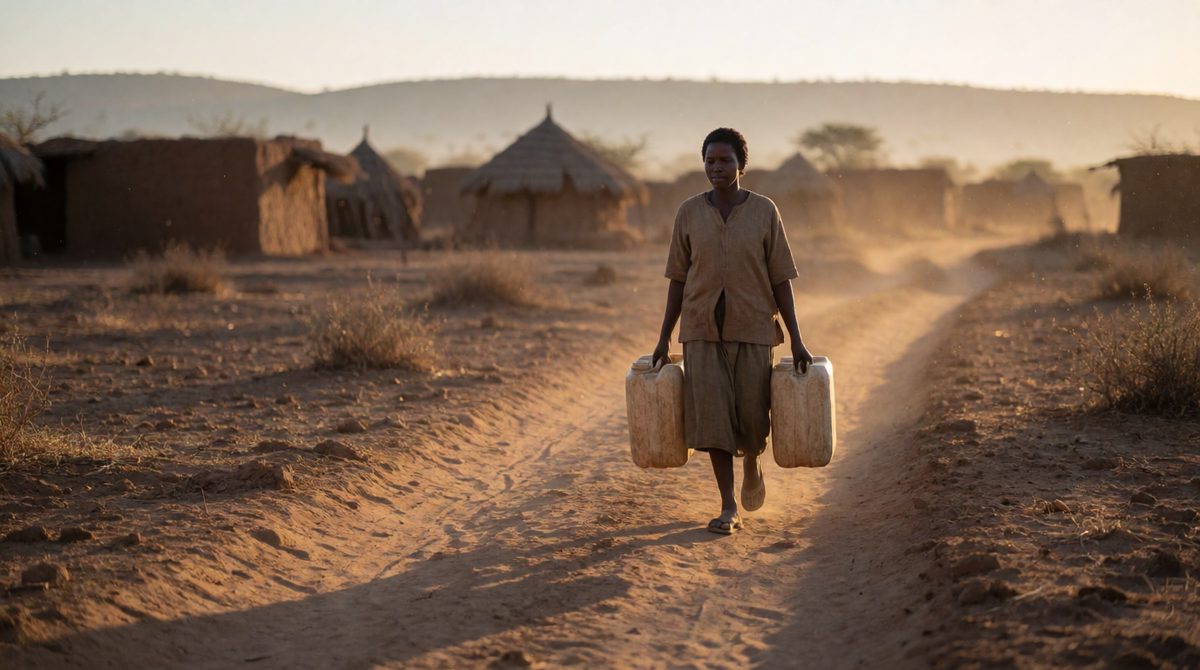
Feminists point out that many of the world's poorest people are women, often doing long hours of unpaid work
You met patriarchy earlier: a society in which men hold most of the power. Feminists argue that patriarchy works at a global level, so women are disadvantaged across the world, and many of the world's poorest people are women.
Feminist arguments about global inequality include:
Feminists say that, because women are about half of the world's people, global inequality cannot be understood without looking at gender.
It brings the unequal position of women into the picture. It highlights unpaid work, which other theories often ignore. It links the family to the world economy.
It may overlook the poverty of many men and the role of social class. Women's experiences differ greatly between societies, so one idea may not fit everywhere. It does not explain by itself why whole countries, men and women together, are poor.
Question: Explain one strength of the Marxist view of global inequality.
Answer: One strength is that it explains how wealth moves from poorer to richer places (1). For example, a transnational company can pay low wages in a poorer country and send the profits to its owners in a richer country, which shows how inequality is built into the global system (1).
Saying that Marxists blame poorer countries for their own poverty, when they blame the capitalist system. Writing that colonialism is still happening in the same way, when the point is its legacy. Listing strengths and limitations without a reason. Writing about inequality inside one society when the question asks about global inequality.
(a) Define the term colonialism. [2 marks]
(b) Explain three ways in which the legacy of colonialism may cause global inequality. [6 marks]
(a) When one country takes control of another land and its people (1) and rules it for its own benefit (1).
(b) First, colonial rulers set up economies to export raw materials, so many former colonies still depend on selling cheap goods and have few industries of their own (2). Second, colonies often received little investment in education and healthcare, so at independence there were few trained workers, which held back development (2). Third, colonial rulers often drew borders to suit themselves, which grouped or split peoples in ways that later caused conflict, and conflict makes it harder for a society to grow wealthy (2).
For "explain three" questions, make each point different and give a reason for each. Three developed points score better than five short ones.