✅ Strengths
Arranged marriage can bring family support and shared values. Love marriage gives the couple freedom of choice. Serial monogamy lets people leave an unhappy marriage and try again. Living alone or with friends gives independence.
Sign up to access the complete lesson and track your progress!
Unlock This CourseNot everyone lives in a family. Some people choose to live in other ways, and some end up there because of life events. Sociologists call these alternatives to the family. They matter because they show that a household is not always the same thing as a family.
Key terms:

Friends as family: shared households like this are one alternative to living in a traditional family
One person lives alone. This might be a young adult who has just started work, someone who is not in a relationship, or an older person whose partner has died. Some people choose it for independence. Others find themselves alone and may feel lonely.
Unrelated people live together, often to share the rent and bills. Students, young workers and some older people do this. The people are usually housemates, not relatives, and they may move on after a few months or years.
Friends look after each other, share celebrations and help in a crisis, as relatives would. This is sometimes called a family of choice. It can matter a lot to people who live far from relatives, or who do not get on with them.
These alternatives fit with what you have already seen about family diversity. People are now free to choose from more ways of living, and many move between them in their lives. A person might live in a shared house at 20, alone at 30 and in a family at 40.
Calling a shared household a family just because people live together. In a shared household the people are not related and are not a family unit. Also, do not say that living alone is always sad. Many people choose it and are happy.
Marriage is a legal or religious agreement that joins people as partners or spouses. Societies have many different ideas about how people should marry and why. You need to know three types of marriage and two patterns of partnership.
Key terms:
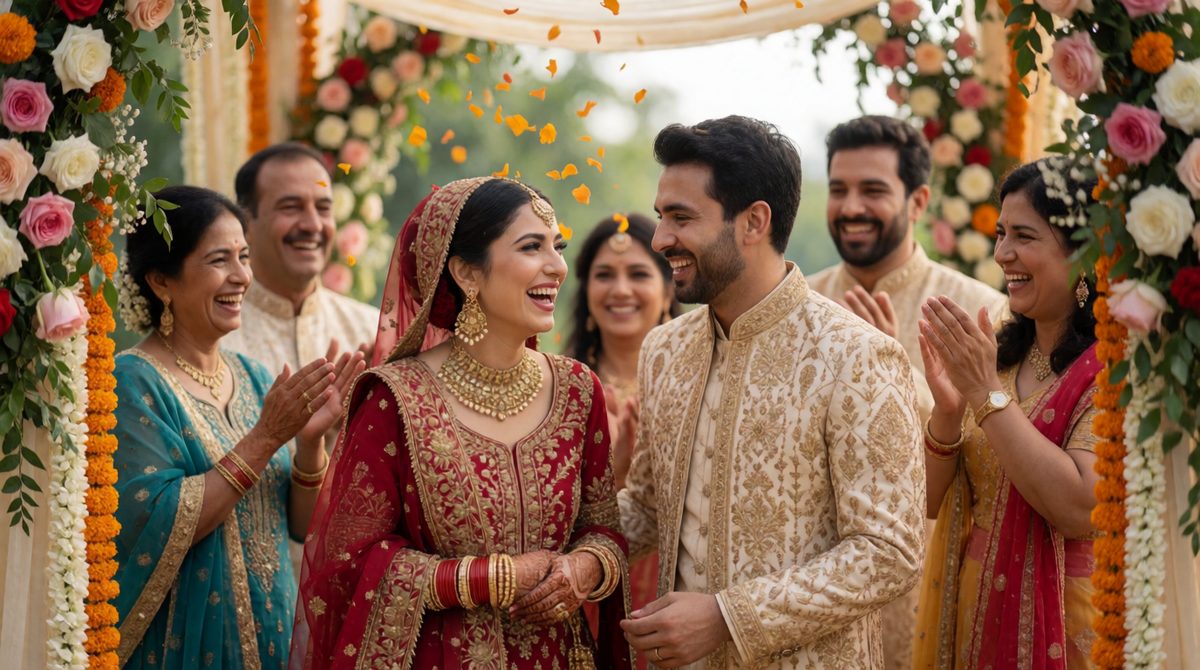
In an arranged marriage, families help find a suitable partner, often looking at education, religion and shared values
Parents or relatives look for a suitable partner, and the couple may meet before they decide. Families often consider things such as education, religion, background and shared values. In many societies this has a long tradition and is seen as a way to link two families as well as two people.
Two people meet, fall in love and decide for themselves to marry. This is common in many modern societies, where individual choice is highly valued. The couple, not their families, make the decision.
The couple are still legally married, but the love has gone. They may stay together for the children, for religious reasons, for money or because of what others would think. The marriage exists on paper but has little emotion in it.
Do not mix up an arranged marriage with a forced marriage. In an arranged marriage the couple agree. A forced marriage takes place without the free consent of one or both people, and it is against the law in many countries.
Notice that these three types answer different questions. Arranged and love marriages are about how the partner is chosen. An empty shell marriage is about what the marriage is like after some years. A marriage can begin as an arranged marriage or a love marriage and later become an empty shell.
Monogamy means having one husband or wife at a time. It is the only legal form of marriage in many countries. Serial monogamy is a pattern where a person marries, divorces and then marries again, so over a lifetime they have more than one partner, but never more than one at once. It is linked to divorce and remarriage.
One short note: in some societies where the law allows, there are other types of marriage too. Polygamy means being married to more than one person at the same time, and same-sex marriage is marriage between two people of the same sex. These are not assessed, but you may meet them in your reading.
Arranged marriage can bring family support and shared values. Love marriage gives the couple freedom of choice. Serial monogamy lets people leave an unhappy marriage and try again. Living alone or with friends gives independence.
Arranged marriage may put pressure on young people if they feel they cannot say no. Love marriage may end if the feelings fade. An empty shell marriage can leave people unhappy. Living alone can lead to loneliness, especially for older people.
Question: Explain one difference between an arranged marriage and a love marriage.
Answer: In an arranged marriage the families help to choose or introduce the partner (1), whereas in a love marriage the couple choose each other freely because they have fallen in love (1).
Saying arranged marriage means forced marriage. Saying serial monogamy is the same as polygamy: it is not, because the partners come one after another, not at the same time. Saying empty shell means a couple has divorced. They are still married.
(a) Define the term serial monogamy. [2 marks]
(b) Give two alternatives to the family. [2 marks]
(c) Explain three differences between an arranged marriage and a love marriage. [6 marks]
(a) A pattern of having a series of marriages (1), with only one partner at a time (1).
(b) Any two of: single person households (1); shared households (1); friends as family (1).
(c) First, in an arranged marriage the families help to choose the partner, whereas in a love marriage the couple choose for themselves (2). Second, an arranged marriage is often based on matching things like background and values, whereas a love marriage is based on romantic love between the two people (2). Third, an arranged marriage is often seen as linking two families as well as two people, whereas a love marriage mainly links the two individuals (2).
In part (c), do not just describe each type. Use words such as "whereas" or "but" to show a clear difference in every point, and write exactly three points.