👶 Effects on family life
Smaller families mean fewer brothers and sisters. Parents can spend more time and money on each child. Households are smaller, so the average home has fewer people in it.
Sign up to access the complete lesson and track your progress!
Unlock This CourseFamilies do not change on their own. They change because the society around them changes. One of the biggest forces is the size and make-up of the population. Sociologists use the word demography for this. Demographic changes affect how big families are, who lives in them and who looks after whom.
Key terms:
In many societies the birth rate has fallen over the last hundred years or so, and families have become smaller. Several reasons are linked to this:
Smaller families mean fewer brothers and sisters. Parents can spend more time and money on each child. Households are smaller, so the average home has fewer people in it.
Birth rates differ between societies and between groups within one society. In some societies large families are still common.

Living longer plus fewer births means an ageing population, so more families care for older relatives
Remember, life expectancy is the average number of years a person is expected to live. In many societies it has risen because of better healthcare, food, housing and sanitation. When life expectancy rises and the birth rate falls together, the population becomes an ageing population: there are more older people and fewer young people.
More generations are alive at the same time, so more families have three, four or even five generations. Couples have more years together after the children leave. More older people are widowed and live alone.
Older people may need help with shopping, health and daily tasks. In many families this care falls on adult children, who may also have jobs and children of their own. Some older people move in with relatives and some move into care homes.
In many societies, people now have their first child at an older age than their grandparents did. Reasons include:
Effects on family life: families tend to be smaller, because there is less time to have several children. Parents are often more settled and have more money. There may be a larger age gap between parents and children, and between children and their grandparents. Older parents may find themselves caring for their own parents at the same time as bringing up young children.
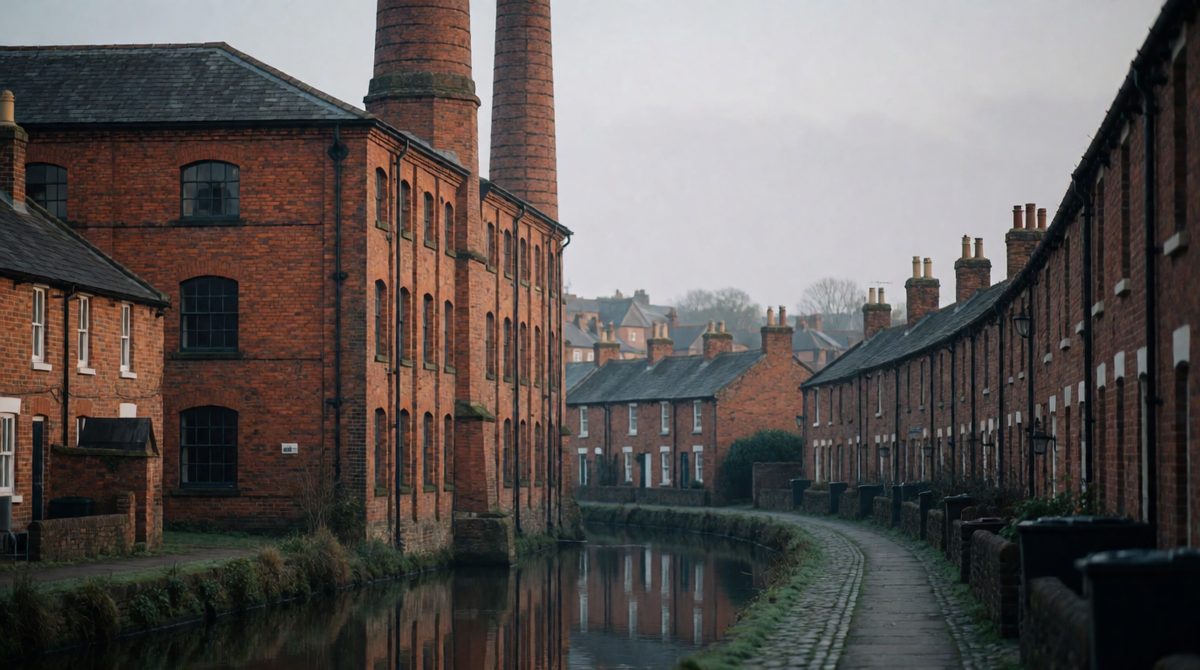
Factories and city jobs pulled families off the land: industrialisation and urbanisation reshaped family life
Industrialisation is the change from an economy based mainly on farming and handmade goods to one based on factories, machines and mass production. Urbanisation is the growth of towns and cities as people move there to find work. The two usually happen together.
Before industrialisation, many families lived and worked together on the land. The family was a unit of production: everyone, including the children and grandparents, helped to grow food or make goods. Extended families were common in many societies.
With industrialisation, the main work moved out of the home to factories and offices. People moved to cities for jobs, often leaving their wider family behind. Homes in cities were smaller, which suited small households, and relatives lived further apart, so there was less daily contact with the wider family. Work became separate from family life.
In many industrial societies, the man became the main wage earner who went out to work, while the woman looked after the home and children. Children went to school instead of working on the farm. Later, more women took paid jobs, which is covered in the lesson on changing conjugal roles.
The functionalist Talcott Parsons argued that the nuclear family fits the needs of an industrial society. This is called the fit thesis. He said that industrial society needs:
So, Parsons said, the family changed from extended to nuclear. His views on the key functions of the family are covered in the lesson on functionalist views of the family.
Saying that "the extended family died out". Many extended ties remain, and the change was partial. Mixing up industrialisation (factories and machines) with urbanisation (growth of cities). Describing a demographic change without saying what it does to family life: always add the effect.
(a) Define the term demography. [2 marks]
(b) Explain three ways in which an ageing population can affect family life. [6 marks]
(c) Explain three reasons why industrialisation may have led to more nuclear families. [6 marks]
(a) Demography is the study of populations (1), such as their size, age structure, births and deaths (1).
(b) Any three explained: Older people may need care (1), which often falls on adult children and puts pressure on them (1). More generations are alive at once (1), so families have more members across several generations (1). More older people live alone after being widowed (1), so families may need to support them or they may move to a relative's home or a care home (1).
(c) Any three explained: Factories created jobs in cities (1), so workers moved away from their wider family (1). Industrial society needed a mobile workforce (1), and a small nuclear family can move for work more easily than a large extended family (1). Jobs were given for skills and not family background (1), so people did not need to rely on relatives for work (1). City homes were smaller (1), which suited small households and left relatives further apart (1).
For "explain" questions, each point needs two parts: the point itself, then a "because" or "which means" that links it to family life. "Birth rates have fallen" earns one mark; "so families are smaller and parents can spend more on each child" earns the second.