💼 Past: a contributor
Children worked from a young age, helped to support the family, and often looked after their parents when they grew old.
Sign up to access the complete lesson and track your progress!
Unlock This CourseIn the last lesson you looked at how the roles of partners have changed. Family roles are not only about couples. Children and grandparents have roles too, and in many societies these have changed a great deal.
Key terms:
In the past, and in some societies today, children were expected to work. Many helped on the family farm or in the family business, or went out to earn wages. A child was an economic asset, because the family gained from their work.
In many societies this has changed. Laws now ban or limit child labour, and children are expected to go to school instead. Children no longer bring in money, yet they must still be fed, clothed and educated. So sociologists describe them as an economic burden, or cost, to their parents.
Children worked from a young age, helped to support the family, and often looked after their parents when they grew old.
Children are in school for many years. Parents pay for food, clothes, books, activities and often later study.
This is one reason families in many societies choose to have fewer children, because each child is a long-term cost.

Cheering from the sidelines: in a child-centred family, lots of time, money and attention goes to the children
As children became fewer and more costly, they also became more valued. In a child-centred family, a lot of time, money and attention goes to the children. Parents think about children's education, health, activities and feelings when they make decisions.
Notice the link: because children no longer earn, the family's reason for having them has shifted. Children are now wanted for the happiness and love they bring, not for the work they do.
A boomerang comes back to the person who threw it. Boomerang children are adults who move out of the family home, then come back. This used to be less common, because young adults were expected to leave and stay away.
Reasons why adult children may return home include:
So the parents' job as carers does not always end when the child turns 18. The child may stay an economic burden for longer.
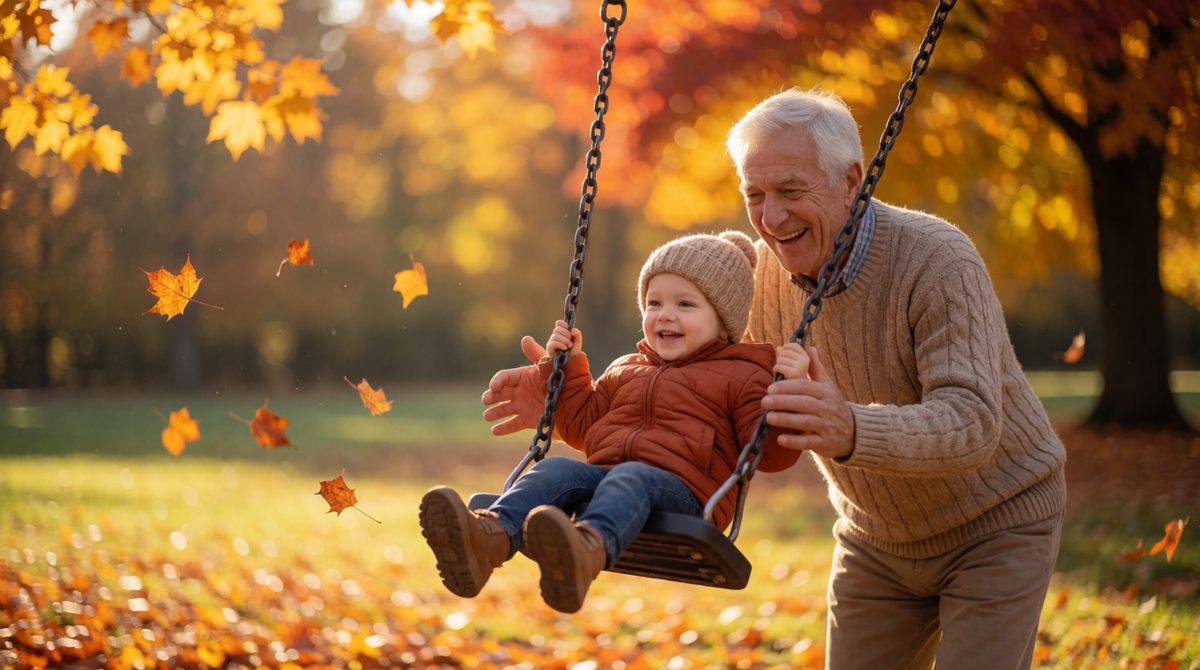
Grandad on the school run: many grandparents now provide childcare so both parents can work
In many societies people are living longer, so grandparents are often healthy and active for many years. Their role has become more varied, and it can be positive or negative.
Many grandparents look after grandchildren while parents are at work. This lets both parents earn and saves the cost of paid childcare.
Some grandparents give money, pay for school trips or help with housing costs. Some also pass on savings or property.
Grandparents can share life experience, family history, traditions and advice with both parents and children.
Remember the pivot or sandwich generation from the last lesson. Grandparents' help with childcare can ease the pressure on this middle generation.
The role is not always one of giving. As grandparents become older and frailer, they may need care themselves. Then they may be seen as dependent on their family or even as a burden.
A careful answer does not say that older people are always dependent. Many are healthy and keep giving help for many years.
Do not say children are an economic burden in every society. In some societies children still work to help the family. Also, do not mix up boomerang children (adults who return home) with children who never left. Always say who is changing role and how.
(a) Define the term boomerang children. [2 marks]
(d) Explain three ways in which the role of grandparents has changed in some societies. [6 marks]
(a) Adult children who have left the family home (1) and then return to live with their parents (1).
(d) First, many grandparents provide childcare (1), looking after grandchildren while parents are at work, which lets both parents earn (1). Second, some give economic support (1), such as money towards housing or school costs, which eases pressure on younger family members (1). Third, grandparents may offer wisdom and advice (1), passing on life experience and traditions to parents and children (1).
In a "three ways" question, name each change in a short opening phrase, then add one sentence that explains the effect. Each way is worth 2 marks, so naming it without explaining it earns only 1.