🏫 Tourism as a Tool for Environmental Education
Most people think of tourism as something that damages the environment litter, pollution, trampled habitats. But when it's managed well, tourism can actually teach people to care about the natural world. When visitors see a rainforest, a coral reef, or a wild animal up close, they often come away with a deeper respect for nature. That emotional connection can last a lifetime.
Key Definitions:
- Environmental education: Learning about the natural world and how to protect it, often through direct experience.
- Interpretation: The way information about a place or ecosystem is presented to visitors through signs, guided tours, visitor centres and interactive displays.
- Eco-literacy: Understanding how ecosystems work and why they matter.
- Sustainable behaviour: Actions that reduce harm to the environment, such as not dropping litter, staying on paths, or reducing water use.
💡 Why Education Matters
Research shows that people who visit natural environments and receive good interpretation are far more likely to donate to conservation, support environmental policies and change their own habits. Tourism doesn't just fund conservation it creates conservationists.
📚 How Interpretation Works in Practice
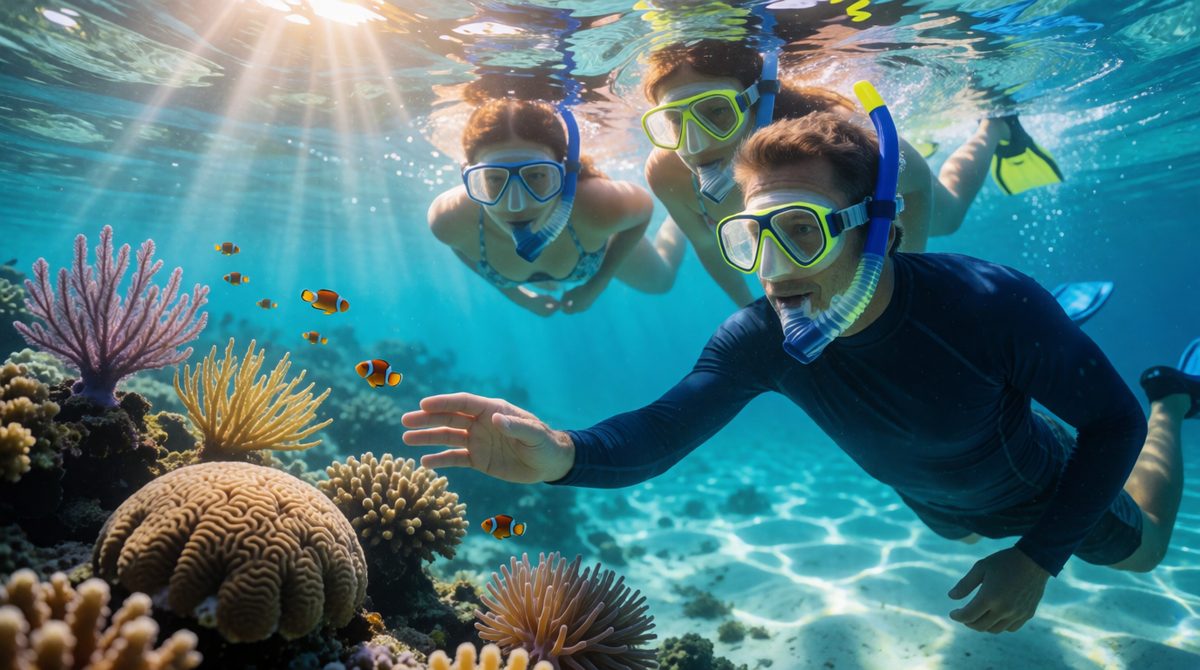
Tourism can educate visitors about nature
Good interpretation turns a walk in the woods into a learning experience. It helps visitors understand what they're seeing, why it matters and how they can help protect it.
🏭 Visitor Centres
Most national parks and nature reserves have visitor centres at the entrance. These use maps, models, videos and interactive displays to explain the ecosystem before tourists even set foot on a trail. For example, the Cairngorms National Park in Scotland has visitor centres that explain the fragile alpine habitat and the importance of the Caledonian pine forest.
👨🏫 Guided Tours and Rangers
Trained guides and park rangers are one of the most effective tools for environmental education. They can answer questions, point out wildlife and explain conservation challenges in a way that no sign can. In Kenya's Maasai Mara, rangers lead safari tours and explain the importance of the Great Migration and the threats facing lions and elephants.
📷 Signage, Trails and Information Boards
Even simple information boards along a trail can make a big difference. They explain which plants are rare, why visitors should stay on the path and what animals might be spotted nearby. Well-designed trails guide visitors through an environment while minimising damage and teach them something along the way.
📌 Waymarked Trails
Colour-coded paths that keep visitors away from sensitive areas like nesting sites or rare plant communities.
📝 Information Boards
Boards at key points explain the ecology of the area what lives there, why it's special and what threatens it.
📱 Digital Guides and Apps
Modern parks use QR codes and apps to deliver rich multimedia content without cluttering the landscape with signs.
🔍 Case Study: The Eden Project, Cornwall, UK
The Eden Project is built inside a former clay quarry and is one of the UK's most visited tourist attractions. Its giant biomes house thousands of plant species from around the world. But it's not just a garden it's a massive environmental education centre. Visitors learn about climate change, biodiversity, sustainable farming and the importance of plants to human survival. Since opening in 2001, it has welcomed over 22 million visitors and inspired countless people to think differently about the environment. It also helped regenerate a deprived area of Cornwall, creating thousands of jobs.
📍 Visitor Management: Protecting Places from Too Many Tourists
Here's the problem: the more beautiful and special a place is, the more tourists want to visit it. But too many visitors can destroy the very thing that makes it special. Visitor management is the set of strategies used to control how many people visit, where they go and what they do so the environment is protected for the future.
Key Definitions:
- Visitor management: Strategies used to control tourist numbers and behaviour to reduce environmental damage.
- Carrying capacity: The maximum number of visitors a place can handle without causing unacceptable damage to the environment or visitor experience.
- Honeypot site: A very popular tourist destination that attracts large numbers of visitors, often causing congestion and environmental pressure.
- Zoning: Dividing an area into different zones with different rules for example, a strict no-entry zone for wildlife, a quiet zone for walkers and a busier zone for facilities.
🚫 Controlling Visitor Numbers
Some of the world's most fragile environments now limit the number of visitors allowed in at any one time. This protects the ecosystem and actually improves the experience for those who do visit.
🎫 Timed Entry Tickets
Visitors must book a specific time slot in advance. This spreads people out through the day and prevents overcrowding. Used at Stonehenge, UK and Machu Picchu, Peru.
💳 Entry Fees and Permits
Charging for entry reduces casual visitors and raises money for conservation. Bhutan charges tourists a high daily fee, keeping numbers low and funding environmental protection.
🚫 Quotas and Permits
Some areas require a permit to enter. Only a set number are issued each day. The Inca Trail to Machu Picchu limits trekkers to 500 per day to protect the trail and surrounding cloud forest.
🔍 Case Study: Machu Picchu, Peru
Machu Picchu is one of the world's most iconic sites an ancient Inca city high in the Andes. For years, it was overwhelmed by tourists: up to 10,000 visitors per day were eroding paths, damaging stonework and disturbing the surrounding cloud forest ecosystem. In 2019, Peru introduced strict new rules: a maximum of 5,940 visitors per day, mandatory timed entry slots and one-way walking routes through the site. Visitors must now follow set paths and cannot wander freely. These measures have significantly reduced erosion and allowed vegetation to recover in previously trampled areas.
🌿 Zoning: Keeping the Right People in the Right Places
Zoning is one of the most powerful visitor management tools. By dividing an area into zones, managers can allow tourism in some parts while keeping other parts completely off-limits to protect the most sensitive habitats.
🔴 Strict Protection Zones
Areas where no visitors are allowed at all. These are usually the most sensitive habitats nesting grounds, rare plant communities, or areas recovering from damage. Scientists may be allowed in for research, but tourists are kept out entirely.
🟢 Managed Tourism Zones
Areas where visitors are welcome but must follow strict rules staying on marked paths, not picking plants, keeping noise down. These zones allow people to experience nature without causing serious harm.
🔍 Case Study: The Great Barrier Reef Marine Park, Australia
The Great Barrier Reef Marine Park covers 344,400 km² and uses a detailed zoning system to manage millions of tourists each year. The park is divided into zones including: General Use Zones (fishing and tourism allowed), Habitat Protection Zones (no trawling), Conservation Park Zones (limited fishing) and Preservation Zones (no entry except for research). This means tourists can still snorkel, dive and take boat trips in many areas, while the most fragile coral systems are completely protected. The Marine Park Authority also runs education programmes on boats and at visitor centres, teaching tourists about coral bleaching and how to dive without damaging the reef.
🏛 Protected Areas: The Ultimate Environmental Protection
One of the most powerful ways tourism helps protect the environment is by supporting the creation and maintenance of protected areas places where nature is given legal protection from development, hunting and other threats. Tourism provides the income and political will to keep these areas protected.
Key Definitions:
- National Park: A protected area of land managed by the government for conservation and public enjoyment. Development is strictly controlled.
- Biosphere Reserve: A UNESCO-designated area that protects biodiversity while allowing sustainable human use in buffer zones around a core protected area.
- Marine Protected Area (MPA): A section of ocean where human activity is restricted to protect marine ecosystems.
- World Heritage Site: A place designated by UNESCO as having outstanding universal value cultural or natural and therefore deserving international protection.
🌎 How Tourism Justifies and Funds Protected Areas
Governments are more likely to protect an area if it generates income. Tourism makes conservation economically worthwhile. Without the income from tourism, many protected areas would face pressure to be converted to farmland, mining, or development.
💰 Park Entry Fees
Fees paid by tourists go directly to park management, ranger salaries and habitat restoration. In Uganda, gorilla trekking permits cost $700 each funding the entire national park system.
🏢 Tourism Infrastructure
Roads, visitor centres and lodges built for tourism also benefit conservation by giving rangers better access to remote areas and improving monitoring of wildlife.
👥 Community Support
When local communities earn money from tourism, they have a reason to support conservation rather than poaching or clearing land. Protected areas become economically valuable to local people.
🔍 Case Study: Serengeti National Park, Tanzania
The Serengeti is one of Africa's greatest wildlife areas, covering 14,763 km² of savannah. It was designated a national park in 1951 and a UNESCO World Heritage Site in 1981. Today, it receives around 350,000 tourists per year, generating over $75 million annually for Tanzania. This income funds anti-poaching patrols, ranger training, wildlife monitoring and community development projects in villages around the park. The Serengeti's protected status has allowed lion, elephant and wildebeest populations to remain stable in stark contrast to unprotected areas nearby where wildlife has declined sharply. Visitor education programmes run by guides and at the Serengeti Visitor Centre explain the ecosystem, the annual wildebeest migration and the threats from climate change and poaching.
🌿 Biosphere Reserves: Balancing People and Nature
A UNESCO Biosphere Reserve is a clever model that doesn't just lock nature away it tries to show that people and nature can coexist. The reserve is divided into three zones:
- 🔴 Core Zone: Strictly protected no tourism, no farming, minimal human activity. Pure conservation.
- 🟡 Buffer Zone: Surrounds the core. Limited tourism and research allowed. Visitors can experience nature but must follow strict rules.
- 🟢 Transition Zone: The outer ring where sustainable farming, tourism businesses and communities operate. Tourism here funds the whole system.
🔍 Case Study: Sichuan Giant Panda Sanctuaries, China
This UNESCO World Heritage Site and Biosphere Reserve in Sichuan Province, China, protects over 30% of the world's wild giant pandas. The reserve covers 924,500 hectares of mountain forest. Tourism particularly panda-watching and ecotourism generates significant income that funds breeding programmes, habitat restoration and anti-poaching measures. Visitor education programmes at the Chengdu Research Base of Giant Panda Breeding teach tourists about panda ecology, the threats from habitat loss and China's conservation efforts. The combination of strict protection in core zones and managed tourism in buffer zones has helped the giant panda's status improve from "Endangered" to "Vulnerable" on the IUCN Red List.
👥 Local Communities and Environmental Protection
Environmental protection only works long-term if local communities are on board. Tourism can help by giving people a financial reason to protect their environment rather than exploit it. This is sometimes called community-based conservation.
🏠 Community Rangers and Guides
When local people are employed as rangers, guides and lodge staff, they become active protectors of the environment. They have local knowledge, community respect and a personal stake in keeping the ecosystem healthy. In Namibia's communal conservancies, local communities manage wildlife and tourism together and poaching has fallen dramatically as a result.
🌿 Reducing Pressure on Natural Resources
When tourism provides income, local families are less likely to cut down trees for firewood, poach animals for bushmeat, or clear land for farming. In communities around Bwindi Impenetrable Forest in Uganda, tourism income has reduced illegal logging and helped protect the gorilla habitat.
💡 Key Concept: The "Use It or Lose It" Principle
Conservation experts often say that wildlife and wild places need to have economic value to survive. If a forest is worth more as timber than as a tourist destination, it will be cut down. If a wild animal is worth more to a poacher than to a safari operator, it will be hunted. Tourism changes this equation it makes living nature more valuable than dead nature and that is one of its most powerful environmental benefits.
✍️ Exam Tips: What You Need to Know
For your iGCSE exam, make sure you can confidently answer questions on education, visitor management and protection. Here's what the examiners are looking for:
📝 Know Your Key Terms
Be able to define: carrying capacity, zoning, interpretation, national park, biosphere reserve, Marine Protected Area, visitor management. Use these terms precisely in your answers.
🔍 Use Case Studies
Always back up your points with named examples. Machu Picchu, the Great Barrier Reef, the Serengeti and the Sichuan Giant Panda Sanctuaries are all excellent case studies for this topic.
⚖️ Both Sides
Remember that even visitor management has downsides entry fees can exclude poorer visitors and strict zoning can upset local communities. Showing you understand both sides earns higher marks.
🎯 Key Points to Remember
- 🏫 Tourism educates visitors about the environment through interpretation, guided tours, visitor centres and signage creating long-term conservationists.
- 📍 Visitor management strategies (timed entry, permits, zoning, carrying capacity limits) protect fragile environments from over-tourism.
- 🏛 Protected areas (national parks, biosphere reserves, MPAs) are funded and justified by tourism income.
- 👥 Local communities become environmental protectors when tourism gives them a financial stake in conservation.
- 🔍 Named case studies: Machu Picchu (visitor limits), Great Barrier Reef (zoning), Serengeti (national park funding), Sichuan Giant Pandas (biosphere reserve), Eden Project (education).
- 💡 The "use it or lose it" principle: tourism makes living nature economically valuable, reducing pressure to destroy it.
📚 Quick Summary: Education, Visitor Management and Protection
Tourism's positive environmental impacts go far beyond just raising money. When managed well, tourism teaches people to love and respect the natural world, controls visitor behaviour to prevent damage and creates protected areas that give wildlife and ecosystems a safe haven. From the Serengeti to Machu Picchu, from the Great Barrier Reef to the Eden Project, the evidence is clear: well-managed tourism can be one of the most powerful tools we have for protecting the planet.