🔥 Introduction: When Tourism Hurts the Environment
Tourism brings millions of people to some of the world's most beautiful and fragile places. But all those visitors come with a cost. Planes burn fuel. Hotels dump waste. Tourists trample plants. Animals are disturbed. The very places people travel to see can be slowly or sometimes quickly destroyed by the act of visiting them.
This is one of the central tensions in travel and tourism: the places we love most are often the ones most at risk from our love of visiting them.
Key Definitions:
- Pollution: The introduction of harmful substances or energy into the environment, causing damage to ecosystems, wildlife or human health.
- Flora: The plant life of a particular region or habitat.
- Fauna: The animal life of a particular region or habitat.
- Ecological footprint: The total environmental impact of a person or activity, including resources used and waste produced.
- Habitat degradation: The process by which a natural habitat becomes less able to support the species that live there.
👁️ The Four Types of Pollution Caused by Tourism
Pollution from tourism comes in several different forms. Each type affects the environment in different ways and some are less obvious than others.
✈️ Air Pollution
Aviation is one of the biggest contributors to carbon emissions worldwide. A single return flight from London to New York produces roughly 1.7 tonnes of CO₂ per passenger more than many people in developing countries produce in an entire year. Beyond planes, tourist coaches, cruise ships and hire cars all burn fossil fuels. In heavily visited cities like Bangkok or Rome, tourist traffic adds significantly to already poor air quality. Air pollution contributes to climate change, acid rain and respiratory illness in local communities.
💧 Water Pollution
Hotels, resorts and cruise ships generate enormous amounts of wastewater. In many developing destinations, sewage treatment infrastructure cannot cope with the volume of tourists. Raw or poorly treated sewage is discharged into rivers, lakes and coastal waters. Sunscreen chemicals particularly oxybenzone wash off swimmers and damage coral reefs. Boat fuel and oil leaks contaminate marine environments. Litter dropped by tourists enters waterways and oceans, harming aquatic life.
🔊 Noise Pollution
Noise from tourist activity jet skis, speedboats, low-flying aircraft, crowded beaches and busy resort towns disrupts wildlife behaviour. Many animals rely on sound to communicate, find mates, hunt and detect predators. Whales and dolphins use echolocation and song; boat engine noise interferes with this, causing disorientation and stress. Nesting birds near popular beaches may abandon their eggs if disturbed by noise. Even in national parks, helicopter tours create noise that drives animals away from feeding and breeding areas.
📷 Visual Pollution
Visual pollution refers to the ugly, unsightly changes tourism brings to a landscape. Large resort hotels built on coastlines block natural views and alter the character of a place. Advertising hoardings, litter, graffiti and poorly designed tourist infrastructure can make once-beautiful places look cluttered and unattractive. In places like the Amalfi Coast in Italy or Santorini in Greece, overdevelopment has changed the visual character of the landscape significantly. This also affects the experience of future tourists reducing the very appeal that drew visitors in the first place.
🔍 Case Study: Cruise Ship Pollution in the Caribbean
The Caribbean is one of the world's most popular cruise destinations, welcoming over 30 million cruise passengers per year. But cruise ships are among the most polluting forms of transport per passenger kilometre. A single large cruise ship can produce as much air pollution as 13 million cars in a single day, according to research by Transport & Environment. Ships burn heavy fuel oil (bunker fuel), which releases sulphur dioxide, nitrogen oxides and particulate matter. In ports like Cozumel (Mexico) and Nassau (Bahamas), local residents suffer from poor air quality on days when multiple ships are docked. Wastewater from cruise ships including sewage, grey water and bilge water is sometimes discharged at sea, polluting the very coral reef ecosystems tourists come to see. Several Caribbean nations have begun lobbying for stricter international regulations on cruise ship emissions.
🌿 Damage to Flora: How Tourism Harms Plant Life
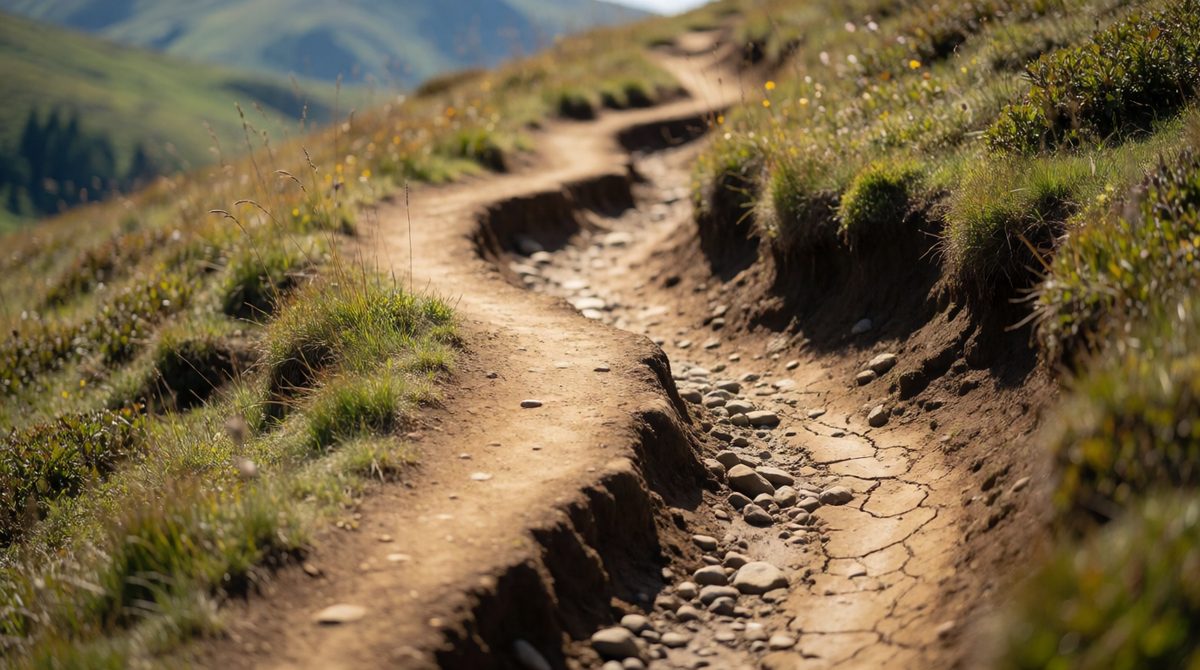
Trampling damages plants at popular sites
Plants and vegetation are often the first casualties of heavy tourist footfall. Unlike animals, plants cannot move away from disturbance they simply get trampled, uprooted or starved of the conditions they need to survive.
🐾 Trampling and Soil Compaction
When large numbers of tourists walk through natural areas particularly off designated paths they compact the soil beneath their feet. Compacted soil holds less water and oxygen, making it very difficult for plant roots to grow. Vegetation is crushed and eventually dies. Once plants are gone, bare soil is exposed to erosion by wind and rain, creating gullies and mudslides. This is a particular problem on popular hiking trails and in national parks.
🏔️ Mountain Trails
On popular routes like the Inca Trail in Peru or Snowdon in Wales, heavy footfall has widened paths and destroyed fragile alpine vegetation on either side. Mosses, lichens and slow-growing mountain plants take decades to recover once damaged.
🌊 Coastal Dunes
Sand dunes are held together by specialised grasses like marram grass. Tourists walking across dunes break these plants and destabilise the sand. Once dune vegetation is lost, the dune itself can collapse removing a natural sea defence and destroying a unique habitat.
🌳 Rainforest Floors
In ecotourism destinations like the Amazon or Borneo, uncontrolled tourist groups trampling off-trail damage the delicate understorey layer of the rainforest. Seedlings and ferns are crushed and the soil crust home to fungi and microorganisms is destroyed.
🔥 Deforestation and Vegetation Clearance
To build hotels, resorts, roads, airports and golf courses, natural vegetation is cleared. This is one of the most direct and severe forms of damage tourism causes to flora. Forests are felled, wetlands drained and grasslands concreted over. Golf courses are particularly damaging a single 18-hole course can require the clearance of hundreds of hectares of natural vegetation and uses enormous quantities of water and pesticides to maintain the grass.
🔍 Case Study: Deforestation for Tourism in Thailand
Thailand's tourism boom particularly on islands like Koh Samui and Phuket led to widespread clearance of coastal mangrove forests from the 1980s onwards. Mangroves were removed to build beach resorts, hotels and tourist infrastructure. By 2000, Thailand had lost over 50% of its mangrove forests compared to 1960s levels. Mangroves are critically important ecosystems: they protect coastlines from erosion and storm surges, provide nursery habitats for fish and store large amounts of carbon. Their loss has increased coastal erosion, reduced fish stocks (affecting local fishermen) and made coastlines more vulnerable to flooding. The 2004 Indian Ocean tsunami caused significantly more damage in areas where mangroves had been cleared for tourist development.
🐠 Damage to Fauna: How Tourism Harms Wildlife
Wildlife is one of the biggest draws for tourists but the act of watching, photographing and getting close to animals can cause serious harm. From behavioural changes to direct physical injury, tourism affects fauna in many ways.
🐇 Disturbance and Behavioural Change
When animals are repeatedly disturbed by tourists, their natural behaviour changes. Animals may abandon feeding, alter their migration routes, stop breeding in certain areas or become aggressive. These changes can reduce their chances of survival and reproduction.
🔍 Case Study: Sea Turtle Nesting Beaches in Greece
The island of Zakynthos in Greece is home to one of the most important loggerhead sea turtle (Caretta caretta) nesting beaches in the Mediterranean Laganas Beach. Female turtles return to the beach where they were born to lay their eggs. However, the same beach became a major tourist resort from the 1980s. Bright lights from hotels and beach bars disorient female turtles trying to come ashore at night they need darkness to navigate. Sunbeds and umbrellas left on the beach block nesting sites. Boat traffic injures turtles with propellers. Noise and activity during the day disturbs nests and can cause eggs to overheat. By the 1990s, turtle nesting numbers had dropped dramatically. Conservation pressure eventually led to the creation of the National Marine Park of Zakynthos in 1999, restricting tourist activity in key nesting zones but enforcement remains a challenge.
🐘 Wildlife Feeding and Habituation
Tourists often feed wild animals either deliberately (to get a good photograph) or accidentally (by leaving food waste). This causes animals to become habituated to humans, losing their natural fear. Habituated animals may become aggressive, dependent on human food (which is often nutritionally unsuitable), or more vulnerable to poaching. Monkeys in Bali's Ubud Monkey Forest have become aggressive due to tourist feeding. Bears in Yellowstone National Park, USA, have had to be relocated or euthanised after becoming "food-conditioned" by tourist litter.
🐇 The Wildlife Tourism Trade
Demand from tourists for wildlife experiences, souvenirs and photographs drives illegal and harmful practices. These include:
- Elephant riding elephants used for tourist rides are often captured from the wild and subjected to cruel training methods. Their spines are not designed to carry human weight.
- Tiger selfie parks in Thailand and elsewhere, tigers are drugged or chained to allow tourists to take photographs with them.
- Wildlife souvenirs the sale of products made from endangered species (coral jewellery, turtle shell accessories, ivory carvings) drives poaching and illegal trade.
- Snake charming and performing animals animals are kept in poor conditions and subjected to stress for tourist entertainment.
🔍 Case Study: Coral Reef Damage in the Red Sea, Egypt
Egypt's Red Sea coast particularly around Sharm el-Sheikh and Hurghada is one of the world's most visited diving and snorkelling destinations. The coral reefs here are extraordinarily biodiverse, supporting hundreds of species of fish, invertebrates and marine mammals. However, mass tourism has caused severe damage. Inexperienced snorkellers and divers stand on, grab and break coral. Boat anchors dragged across reef systems crush and destroy coral structures that took centuries to grow. Sunscreen chemicals bleach and kill coral polyps. Overfishing by tourist boats removes key species that keep the reef ecosystem balanced. Studies have found that heavily dived reef sites in the Red Sea show up to 40% more coral damage than less-visited sites. Some sections of reef near popular resorts have been almost entirely destroyed.
🌎 Wider Ecosystem Impacts
It is important to understand that damage to flora and fauna does not happen in isolation. Ecosystems are interconnected when one part is damaged, the effects ripple outwards.
📈 The Chain of Damage
Consider what happens when tourist activity destroys coastal vegetation:
- Plants are removed → soil erodes → sediment runs into the sea
- Sediment clouds the water → sunlight cannot reach coral reefs
- Coral dies → fish lose their habitat and food source
- Fish populations decline → local fishermen lose their livelihoods
- Tourists stop visiting → the local tourism economy collapses
This chain illustrates why protecting flora and fauna is not just an environmental concern it is also an economic one. Destinations that destroy their natural assets through unmanaged tourism ultimately destroy the very thing that made them attractive in the first place.
🔍 Case Study: Overtourism and Wildlife in the Galapagos Islands
The Galapagos Islands (Ecuador) are famous for their unique wildlife giant tortoises, marine iguanas, blue-footed boobies and Darwin's finches. The islands inspired Charles Darwin's theory of evolution. Because the animals evolved with no natural predators, they have no fear of humans making them incredibly easy to approach and photograph. This is a huge tourist draw, but also a major vulnerability. As tourist numbers grew through the 1990s and 2000s, problems multiplied: tourists walking off paths disturbed nesting birds; introduced species (rats, cats, goats) arrived on supply ships and devastated native wildlife; pollution from tourist boats contaminated coastal waters; and the sheer volume of human activity stressed the fragile ecosystem. The Ecuadorian government has since introduced strict visitor quotas, mandatory guides and biosecurity checks but the damage already done to some species populations cannot easily be reversed.
✍️ Exam Tips: What You Need to Know
🎯 Key Points to Remember
- Tourism causes four main types of pollution: air, water, noise and visual know an example of each.
- Damage to flora includes trampling, soil compaction, deforestation and vegetation clearance for tourist development.
- Damage to fauna includes disturbance, habituation, physical harm and exploitation for tourist entertainment.
- Use specific case studies in your exam answers Zakynthos turtles, Red Sea coral, Caribbean cruise ships and Thai mangroves are all strong examples.
- Remember that environmental damage is often interconnected damage to one part of an ecosystem affects others.
- The exam may ask you to evaluate so be ready to discuss both the scale of the problem and any attempts to manage it.
📝 Command Words to Watch For
- "Describe" say what the impact is and where it happens.
- "Explain" say why it happens and what the consequences are.
- "Evaluate" weigh up the severity of the problem, using evidence.
- "To what extent" give a balanced argument with a clear conclusion.
📚 Quick Summary: Pollution and Damage to Flora and Fauna
- ✈️ Air pollution from flights and transport contributes to climate change
- 💧 Water pollution from sewage and sunscreen damages aquatic ecosystems
- 🔊 Noise pollution disrupts animal communication and breeding
- 🌿 Trampling and development destroy plant habitats
- 🐠 Wildlife is disturbed, habituated and exploited by tourism
- 🌎 Ecosystem damage has economic as well as environmental consequences