🚫 Negative Sociocultural Impacts of Tourism
Tourism brings money, jobs and excitement but it also brings problems. When millions of tourists pour into a destination, local communities can be changed in ways that are hard to reverse. This lesson focuses on four of the most important negative sociocultural impacts: the demonstration effect, commodification, crime and culture clash.
These are not just exam topics they are real issues affecting real people in places like Cancún, Barcelona, Goa and many more.
Key Definitions:
- Sociocultural impact: A change to the way people live, behave, or think about themselves as a result of tourism.
- Host community: The local people who live in a tourist destination.
- Negative impact: A harmful or unwanted change caused by tourism.
👥 1. The Demonstration Effect
The demonstration effect happens when local people especially young people watch tourists and start copying their behaviour, clothing, values and lifestyle. Tourists "demonstrate" a way of living and locals want to imitate it.
This might sound harmless, but it can cause serious problems for local identity and traditional ways of life.
👀 What Locals See
Tourists often appear wealthy. They wear designer clothes, use the latest smartphones, eat in expensive restaurants and seem to have total freedom. To young locals, this lifestyle can look very appealing even if it is not realistic for them.
🔄 What Changes as a Result
Young people may reject traditional clothing, music, food and customs. They may prefer Western brands, fast food and pop music. Over time, this erodes local culture from the inside not because tourists forced it, but because locals chose to imitate them.
🇮🇷 Case Study: Goa, India
Goa is one of India's most popular beach destinations, attracting over 8 million tourists a year. The demonstration effect here has been dramatic. Young Goans have increasingly adopted Western dress, music and nightlife culture. Traditional fishing communities have seen younger generations abandon fishing in favour of working in bars, clubs and tourist shops jobs that seem more glamorous and better paid. Traditional Konkani music and festivals have declined in popularity among young people, who prefer Western pop and electronic music played in tourist clubs.
💡 Exam Point
The demonstration effect is a gradual process. It is not forced locals choose to change. But the long-term result can be the permanent loss of cultural identity. This makes it harder to reverse than other impacts.
📈 The Demonstration Effect and Inequality
There is another dimension to the demonstration effect: relative deprivation. When locals see tourists spending freely on things they cannot afford, it creates feelings of frustration, envy and inequality. This can damage community wellbeing and social cohesion and in some cases, it can even lead to crime (which we will cover shortly).
💰 Tourist Spending
Tourists may spend more in one day than a local earns in a week. This visible wealth gap creates tension.
😔 Local Frustration
Locals may feel excluded from the wealth tourism brings, especially if jobs are low-paid or seasonal.
🚫 Social Division
Communities can split between those who benefit from tourism and those who do not, causing internal conflict.
🏭 2. Commodification of Culture
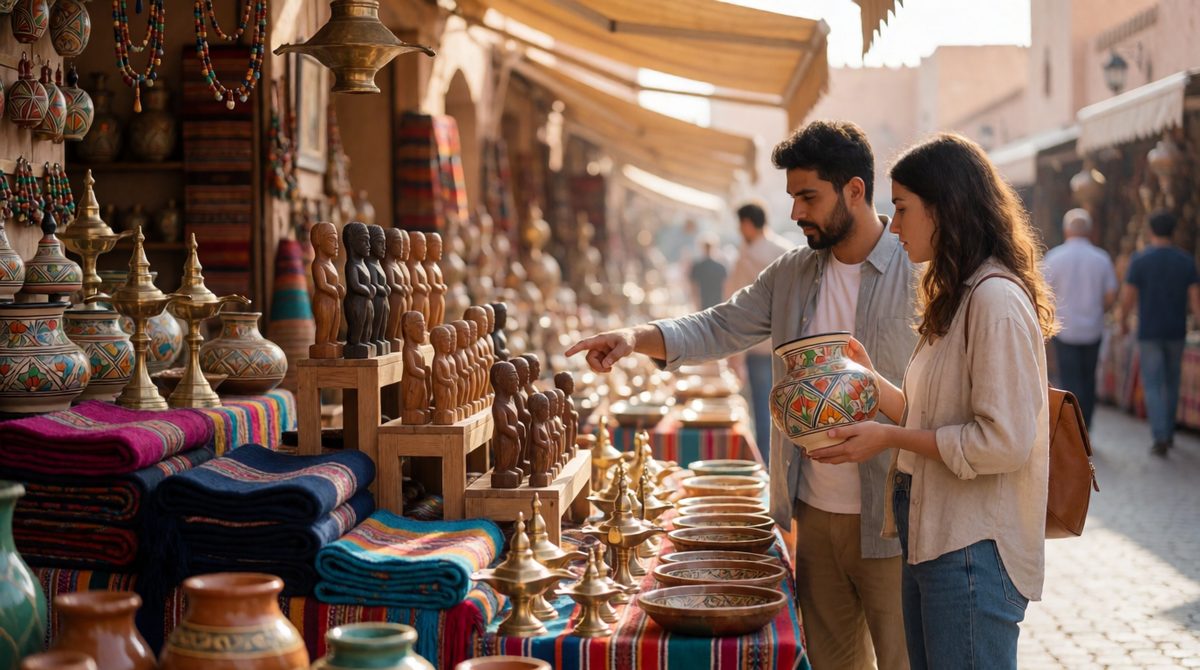
Culture can become commodified for tourists
Commodification means turning something into a product that can be bought and sold. When culture is commodified, sacred ceremonies, traditional crafts, dances and rituals are packaged and sold to tourists often losing their original meaning in the process.
The problem is not that culture is shared it is that it becomes shallow, fake, or disrespectful when it is purely done for money rather than meaning.
🎭 How Commodification Happens
Imagine a sacred harvest festival that has been performed for centuries as a religious ceremony. Tourism arrives. Now the festival is performed three times a week for tourist groups, shortened to 20 minutes and followed by a souvenir stall. The ceremony still looks the same on the outside but its meaning has been hollowed out.
🎪 Staged Authenticity
Sociologist Dean MacCannell coined the term "staged authenticity" where what tourists see is a performance designed for them, not a real cultural practice. Locals put on a show, but the genuine tradition happens elsewhere, away from tourists.
👓 Sacred Becomes Souvenir
Religious symbols, tribal patterns and ceremonial objects are mass-produced and sold cheaply. A Navajo pattern ends up on a mass-produced mug made in China. A Hindu deity becomes a fridge magnet. The cultural significance is completely lost.
🇮🇳 Case Study: Rio Carnival, Brazil
Rio's Carnival began as a genuine community celebration rooted in African Brazilian culture, religion and resistance. Today it is one of the world's biggest tourist events, attracting 2 million visitors a day during the festival. While it brings enormous economic benefits, critics argue the event has become increasingly commercialised with samba schools competing for tourist attention and corporate sponsorship rather than community expression. Ticket prices for the Sambadrome have risen so high that many local Brazilians can no longer afford to attend their own cultural event.
🌎 Commodification of Sacred Sites
Some of the most serious cases of commodification involve sacred or religious sites. When tourists visit these places purely for photos and entertainment, it can deeply offend local communities.
- 📷 Tourists taking selfies inside active places of worship
- 🚫 Climbing or touching sacred objects (e.g. Uluru in Australia now banned)
- 🏭 Performing sacred dances as entertainment in hotels
- 👓 Selling replicas of sacred objects as cheap souvenirs
In 2019, Australia permanently banned climbing Uluru (Ayers Rock), a site sacred to the Anangu Aboriginal people. For decades, tourists had climbed it despite requests not to. The ban was a significant step in protecting cultural dignity over tourist entertainment.
🔒 3. Crime
Tourism can lead to increased levels of crime in destination areas. This is one of the most direct and measurable negative sociocultural impacts. Crime affects both tourists and local residents and it can damage a destination's reputation permanently.
🔎 Why Does Tourism Increase Crime?
There are several clear reasons why crime tends to rise in tourist-heavy areas:
💰 Wealthy Targets
Tourists carry cash, cameras, phones and passports. They are often unfamiliar with local areas and may be distracted making them easy targets for pickpockets and thieves.
🚫 Inequality and Temptation
When locals see the wealth gap between themselves and tourists, some may turn to crime out of desperation or resentment. This is linked to the demonstration effect and relative deprivation.
🍻 Alcohol and Nightlife
Tourist resorts with bars and clubs attract drunk tourists who are vulnerable. This environment also encourages drug dealing, assault and antisocial behaviour.
🇮🇪 Case Study: Magaluf, Mallorca, Spain
Magaluf is a resort town on the island of Mallorca that became notorious for its "party tourism" culture. Throughout the 2000s and 2010s, the area saw significant rises in alcohol-related crime, drug use, sexual assault and antisocial behaviour almost entirely linked to the behaviour of young British tourists. Local residents complained that the resort had become unliveable during summer months. The Spanish government eventually introduced strict new laws limiting alcohol promotions and closing times. Mallorca's government also launched campaigns to attract a different type of tourist older, wealthier and more culturally respectful.
💡 Key Point
Crime linked to tourism is not always committed against tourists sometimes tourists are the ones committing crimes. This is an important distinction for your exam.
🔐 Types of Crime Linked to Tourism
- Petty theft and pickpocketing common in crowded tourist areas (e.g. Barcelona's Las Ramblas)
- Scams and fraud fake tours, overcharging, counterfeit goods
- Drug-related crime drug tourism in places like Amsterdam or parts of Southeast Asia
- Sex tourism exploitation of vulnerable people, particularly in parts of Thailand, Cambodia and the Philippines
- Vandalism graffiti on heritage sites, damage to natural environments
- Organised crime in some destinations, criminal gangs exploit the tourist economy through illegal tours, fake accommodation and trafficking
🇮🇷 Case Study: Cancún, Mexico
Cancún is Mexico's most visited tourist destination, with over 6 million visitors a year. While the hotel zone is heavily policed and relatively safe for tourists, the city behind it where local workers live has seen dramatic rises in crime linked to drug cartels and organised crime. The tourist economy has attracted criminal networks who profit from drug sales, human trafficking and extortion of local businesses. Local residents face violence and insecurity that tourists in the resort zone rarely see. This "dual city" effect safe for tourists, dangerous for locals is a serious sociocultural impact of mass tourism.
⚔️ 4. Culture Clash
Culture clash occurs when the values, behaviour, dress codes and attitudes of tourists conflict with those of the host community. It can cause offence, resentment and long-term damage to the relationship between tourists and locals.
Culture clash is particularly common when tourists come from very different cultural or religious backgrounds to the host community and when they fail to respect local customs.
👓 Common Causes of Culture Clash
📸 Dress and Behaviour
Tourists wearing swimwear in town centres, entering religious buildings without covering up, or behaving loudly in quiet communities can cause serious offence. In many Muslim, Hindu and Buddhist countries, modest dress is expected but tourists often ignore this.
📢 Noise and Disruption
Large groups of tourists can disrupt the daily rhythms of local life blocking streets, making noise at night and overwhelming small communities that are not built for mass tourism. Locals may feel like strangers in their own town.
🇮🇬 Case Study: Dubrovnik, Croatia
Dubrovnik's beautiful old city a UNESCO World Heritage Site receives over 1.5 million cruise ship visitors a year, despite having a local population of only around 1,500 people in the old town. Residents have reported being unable to sleep due to noise, unable to buy groceries because shops have been replaced by souvenir stalls and feeling like they live in a theme park rather than a real community. The mayor of Dubrovnik has described the situation as "unbearable," and the city has introduced visitor caps and banned large cruise ships from docking. This is a clear example of culture clash not through dramatic conflict, but through the slow erosion of normal community life.
📌 Resident Reaction
In 2017, residents of Barcelona, Venice and Dubrovnik all held protests against mass tourism carrying signs reading "Tourists Go Home" and "This Is Not a Theme Park." This shows how culture clash can turn into open conflict between hosts and visitors.
🏘️ Culture Clash in Religious Destinations
Religious sites are particularly sensitive to culture clash. When tourists visit places of active worship purely as sightseers, it can feel deeply disrespectful to local worshippers.
- 🚫 Tourists photographing worshippers during prayer at temples or mosques
- 📷 Taking selfies at war memorials or Holocaust sites
- 🚫 Entering sacred spaces without removing shoes or covering hair
- 🍻 Drinking alcohol near religious sites
In Kyoto, Japan home to hundreds of Buddhist temples and Shinto shrines the city has introduced no-photography zones in certain geisha districts after tourists repeatedly harassed and photographed geisha without permission. Local residents described feeling like exhibits in a zoo.
🌎 Culture Clash and Overtourism
Overtourism when too many tourists visit a place makes culture clash much worse. When a destination is overwhelmed, the relationship between tourists and locals breaks down. Locals stop seeing tourists as welcome guests and start seeing them as an invasion.
📍 Venice, Italy
30 million visitors a year to a city of 250,000. Locals are leaving the permanent population has halved since the 1950s. The city is becoming a museum, not a living community.
📍 Santorini, Greece
Up to 18,000 cruise passengers arrive on a single day overwhelming the island's infrastructure and local community. Residents have demanded visitor limits.
📍 Amsterdam, Netherlands
The city has banned new hotels in the city centre and launched campaigns telling disrespectful tourists to "Stay Away." It is one of the first cities to actively discourage certain types of visitors.
📋 Linking the Four Impacts Together
These four negative impacts are closely connected. Understanding how they link together will help you write stronger exam answers.
🔄 How They Connect
- The demonstration effect creates desire for tourist lifestyles → this can lead to crime as locals try to access wealth they cannot earn legitimately
- Commodification strips culture of meaning → this causes culture clash when locals feel their heritage is being disrespected
- Culture clash leads to resentment → which can increase crime targeting tourists
- All four impacts are made worse by overtourism and lack of community control over tourism development
📚 Summary Table: The Four Negative Sociocultural Impacts
| Impact |
Definition |
Example |
| Demonstration Effect |
Locals copy tourist behaviour and lifestyle |
Young Goans abandoning traditional culture for Western lifestyle |
| Commodification |
Culture is packaged and sold as a product |
Rio Carnival becoming a commercial event; Uluru climbing ban |
| Crime |
Tourism increases criminal activity |
Magaluf alcohol crime; Cancún drug cartel activity |
| Culture Clash |
Tourist and local values/behaviour conflict |
Dubrovnik overtourism; Kyoto geisha harassment |
💡 Exam Tips: Writing Strong Answers
✍️ How to Structure Your Answer
For a question asking you to explain negative sociocultural impacts of tourism, use this structure:
- Name the impact e.g. "One negative sociocultural impact is the demonstration effect."
- Define it "This is where local people copy the behaviour and lifestyle of tourists."
- Explain the consequence "As a result, traditional customs and values may be abandoned, leading to a loss of cultural identity."
- Use a named example "For example, in Goa, India, young people have increasingly adopted Western dress and music, moving away from traditional Konkani culture."
🌟 The Magic Formula
Name it → Define it → Explain the consequence → Support with a named example. This formula works for every negative sociocultural impact question on the iGCSE paper.
📋 Key Vocabulary Checklist
Make sure you can use all of these terms accurately in your exam answers:
📚 Must-Know Terms
- Demonstration effect
- Commodification
- Staged authenticity
- Culture clash
- Overtourism
- Relative deprivation
- Host community
- Sociocultural impact
🌟 Strong Exam Phrases
- "This leads to a loss of cultural identity..."
- "As a result, local traditions may be eroded..."
- "This creates tension between tourists and the host community..."
- "The visible wealth gap can lead to resentment and crime..."
- "Sacred practices become commercialised, losing their original meaning..."
📚 Final Summary
Tourism's negative sociocultural impacts are real, complex and interconnected. The demonstration effect changes how locals see themselves. Commodification hollows out cultural meaning. Crime rises when inequality and opportunity collide. Culture clash occurs when different values and behaviours meet without respect or understanding. Understanding all four with real examples is essential for your iGCSE Travel and Tourism exam.